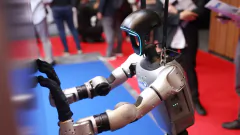
Japan has long been recognized for its technological advancements in the fields of robotics and artificial intelligence (AI). Now, Japan's new robot technology is once again in the spotlight, particularly regarding humanoid robots being developed to walk like humans, control their limbs, and operate in various situations. A humanoid robot is essentially a machine designed based on the human body structure; it features components such as a head, torso, arms, and legs, while modern robots incorporate technologies like AI, sensors, cameras, and machine learning.
Why is there such a strong emphasis on humanoid robots in Japan?
Social challenges in Japan, such as a rapidly aging population and a shrinking workforce, are key drivers behind the development of robotics. Consequently, efforts are underway to deploy robots not only in sectors like industry, healthcare, logistics, and research but also for everyday tasks. Japanese companies and research institutions are developing robots capable of performing a variety of tasks in changing environments, rather than being limited to a single, specific function.
What is a humanoid robot?
A humanoid robot is a robot designed with the human body's structure and movements in mind. Its objective is to develop the capability to operate in environments created for humans.
- Camera and visual sensors
- AI and machine learning systems
- Motorized movement of hands and fingers
- Balance and motion control systems
- Voice recognition technology
- Object detection
- Navigation systems
The Role of AI in Japan's New Robot Technology
AI is one of the most important technologies for modern humanoid robots. Traditional robots typically operate according to pre-set instructions, whereas AI-based robots are being designed to comprehend situations and respond to them based on information gathered from their sensors.
Technique for walking like humans
1. ManufacturingRobots are already being used in factories for tasks such as assembly, welding, and packaging. Humanoid robots can be created for workplaces where the environment and equipment are designed for humans.
2. HealthcareHumanoid robots could play a significant role in areas such as elderly care and hospital assistance. However, meeting safety, reliability, and regulatory standards will be essential for such applications.
3. LogisticsHumanoid robots can also be used for tasks such as lifting, moving, and organizing goods in warehouses.
4. Household choresIn the future, such robots could assist with cleaning, lifting objects, or performing other routine tasks in homes. However, for domestic use, it is essential that these robots be safe, reliable, and easy to control.
5. Education and ResearchHumanoid robots can be used in universities and research institutions for research on AI, machine learning, computer vision, and human-robot interaction.
Why is Japan's robotics industry significant?
Robotics has been evolving in Japan for several decades. From industrial robots to those used in entertainment, research, and services, Japanese companies have developed significant technology in this field. Now, with the rapid advancement of AI, the nature of robotics is also changing. Future robots could be designed to operate in complex environments, going far beyond machines that merely perform repetitive tasks.
Can humanoid robots replace humans?
This question often arises in discussions about humanoid robots. According to experts, robots can automate tasks that are repetitive or pose risks to humans. However, completely replacing humans is a distinct and complex issue. It requires considering various aspects such as cost, safety, reliable performance, legal regulations, and human-robot collaboration alongside technical capabilities.
Also Read: Asian Games 2026 Esports: Schedule, Games & India Squad