Image Source: ICC
ICC New Tournament Formats: The excitement of the ODI and T20 World Cups is set to change—here’s a look at the new rules and structures
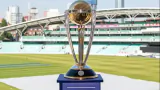
The International Cricket Council (ICC) has decided to make historic changes to the formats of its two premier tournaments: the ODI World Cup and the T20 World Cup. This announcement followed the ICC's annual meeting held in Edinburgh.
According to the ICC, the aim of these changes is to make matches more thrilling, raise the level of competition, and enhance the experience for both fans and players. Let’s break down exactly what is changing for both World Cups in simple terms.
1. What has changed for the Men's ODI World Cup?
The ODI World Cup will now feature four rounds of play. Additionally, the number of participating teams has been increased back to 14 (only 10 teams competed in 2019 and 2023; the last time 14 teams played was in 2015).
- Round 1 (Qualifier): This round will be contested by the three lowest-ranked teams (ranked 12, 13, and 14). Only the top team from this group will advance to the next round.
- Round 2 (Group Stage): The winner of Round 1 will join the remaining 11 teams. Here, the total of 12 teams will be divided into two groups of six. The top three teams from each group, along with the next highest-placed team overall (combining both groups), will progress to the next stage.
- Round 3 (Super 7): A 'Super 7' round will now replace the previous 'Super 6' format. This stage will follow a round-robin format, making every single match crucial.
- Round 4 (Semi-finals and Final): The top 4 teams from the Super 7 stage will advance to the semi-finals. The first semi-final will be played between the No. 1 and No. 4 ranked teams, and the second semi-final between the No. 2 and No. 3 ranked teams.
2. What has changed in the T20 World Cup (Men's T20 World Cup)?
The biggest change in the T20 World Cup is that 10 teams will now play in the second stage instead of 8. This will provide Associate and emerging teams with a greater opportunity to advance.
- New Group Stage: At the start of the tournament, 20 teams will be divided into five groups of four (previously, there were four groups of five). The top two teams from each group will progress to the next round.
- Super 10 instead of Super 8: There will now be a 'Super 10' stage instead of 'Super 8', featuring two groups of five teams each.
- IPL-style Eliminator: The top-ranked teams from both groups will qualify directly for the semi-finals. Meanwhile, Eliminator matches—similar to the IPL format—will be played to determine the remaining two semi-finalists. These matches will be played in a cross-group format between the second and third-placed teams (e.g., Group A No. 2 vs. Group B No. 3).
- Knockout: The two winners of the Eliminator matches will face the teams that qualified directly for the semi-finals.
3. Changes to T20 World Cup 2028 Qualification
The qualification pathway for the 2028 T20 World Cup has also been revised:
- Scotland (who replaced Bangladesh at the last minute) will gain direct entry into the 'Europe Regional Final'.
- Teams that participated in the previous edition but failed to qualify directly will have to go through the Global Qualifier.
- The remaining 8 spots in the Global Qualifier will be filled through regional qualifiers from the Africa, Asia, Europe, Americas, and East Asia-Pacific regions.
- In total, 12 teams will qualify directly and 8 teams will come through the qualifiers, making a total of 20 teams participating in the tournament.
Important Note: Although the ICC's Development and Chief Executives' Committees have approved these changes, final ratification will only occur after a review by the ICC's 'Finance and Commercial Affairs Committee' in November this year.