


The history of international cricket has featured many exceptional fast bowlers—players who have dominated batters through their pace, swing, seam movement, and precise line and length. From the remarkable consistency of James Anderson to the pinpoint accuracy of Glenn McGrath, fast bowlers have played a pivotal role in shaping the game across Test matches, One Day Internationals (ODIs), and T20 Internationals (T20Is).
Australian left-arm fast bowler Mitchell Starc recently reached another significant milestone by claiming his 775th international wicket. This achievement has further solidified his place among the most successful fast bowlers in the history of the sport. It has also drawn attention to other legendary fast bowlers who have taken hundreds of wickets for their respective countries.
Top 10 Fast Bowlers with the Most Wickets in International Cricket
| Rank | Fast Bowler | Country | International Wickets | Bowling Average |
|---|---|---|---|---|
| 1 | James Anderson | England | 991 | 27.28 |
| 2 | Glenn McGrath | Australia | 949 | 21.76 |
| 3 | Wasim Akram | Pakistan | 916 | 23.57 |
| 4 | Stuart Broad | England | 847 | 27.83 |
| 5 | Shaun Pollock | South Africa | 829 | 23.73 |
5. Shaun Pollock

South African fast bowler Shaun Pollock established himself as one of the most successful bowlers of his era, thanks to his precise line and length, discipline, and consistency. He claimed a total of 829 wickets across the three major international formats. Although Pollock was not always the fastest bowler on the field, his pinpoint accuracy made it extremely difficult for batters to score runs. He frequently compelled batters to take risks, which often led them to make mistakes and provided Pollock with opportunities to take wickets.
He was highly effective in both Test and ODI cricket. In Test matches, his accurate bowling allowed him to sustain pressure on batters over long spells. In ODIs, he excelled at curbing the scoring rate—both during the middle overs and the death overs—while maintaining an economical bowling record. Pollock also served as captain of the South African team, where he skillfully balanced his bowling duties with his leadership responsibilities. Following South Africa’s return to international cricket, his experience and composure proved invaluable to the team's development.
His international bowling average of 23.73 demonstrates that he was not only adept at taking wickets but also highly skilled at controlling the flow of runs. Pollock’s career serves as proof that a fast bowler does not need to rely solely on sheer pace to achieve success; precision in line and length, consistency, and the ability to identify a batter’s weaknesses can be just as decisive.
4. Stuart Broad

Stuart Broad was another outstanding fast bowler for England, enjoying a long and successful international career. Across all formats of international cricket, he claimed a total of 847 wickets at an average of 27.83. Broad was renowned for his precise length, the bounce he extracted from the pitch, and his ability to bowl lethally against top-order batters. When conditions favored seam movement, he could generate significant lateral movement off the surface; on other occasions, he would outfox batters by cleverly varying his length and bounce.
A defining feature of Broad’s career was his partnership with James Anderson. Together, they formed one of England’s most successful fast-bowling duos, particularly in Test cricket. Broad also delivered several memorable performances in the Ashes series, where his knack for taking wickets at regular intervals made him a major threat to Australia.
3. Wasim Akram
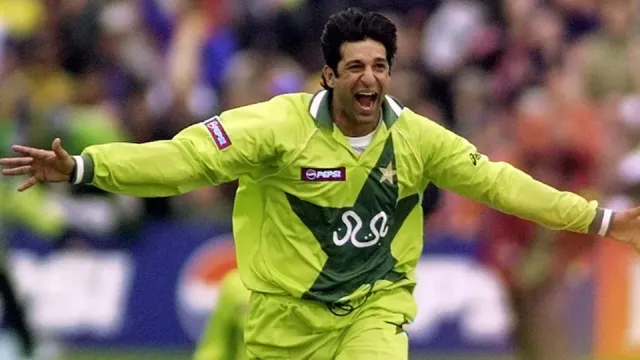
Pakistan’s Wasim Akram is considered one of the greatest left-arm fast bowlers in the history of cricket. He claimed 916 wickets in international cricket at an average of 23.57. Akram was renowned for his ability to swing the ball at high speed. His mastery of both conventional and reverse swing made him a lethal bowler with both the new and the old ball.
He could attack the stumps, target the outside edge of the bat, and generate 'late movement'—making it extremely difficult for batters to predict the direction in which the ball would move. His variations made him an invaluable asset in limited-overs cricket, particularly during the final overs of an innings. Akram played a pivotal role in Pakistan's victory in the 1992 Cricket World Cup. His performances in the decisive stages of the tournament established him as a bowler capable of turning the tide of a match at crucial moments.
2. Glenn McGrath

Glenn McGrath was one of Australia’s most consistent and successful fast bowlers. He claimed 949 wickets in international cricket and played a pivotal role in Australia’s dominance during the late 1990s and early 2000s. Unlike bowlers who relied primarily on raw pace, McGrath built his success on accuracy, a disciplined line and length, and the ability to extract movement from the pitch.
He repeatedly compelled batsmen to play the ball around the off-stump—an area where they often felt uncomfortable. Even when he did not get much swing, his exceptional control made scoring difficult and frequently created opportunities for catches behind the stumps.
McGrath also made significant contributions to Australia’s successful World Cup campaigns. His performances in major tournaments proved that he could excel against the strongest batting line-ups, even under immense pressure. His international bowling average of 21.76 is the lowest among the top 10-ranked bowlers. This statistic highlights his extraordinary effectiveness: he consistently took wickets while conceding very few runs.
1. James Anderson
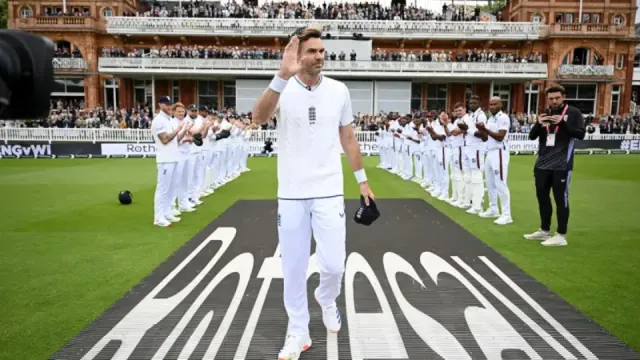
James Anderson is one of the greatest fast bowlers in the history of cricket. The former English pacer concluded his international career with a total of 991 wickets across Test, ODI, and T20 formats—a tally that places him at the top of the list—achieved at an average of 27.28. Anderson made his mark through his exceptional swing bowling, precise line and length, and an innate ability to trouble batters across a wide variety of conditions. While he was most lethal in English conditions, he also proved his mettle overseas throughout his long international career.
His greatest strength was his ability to swing the ball in both directions. With the new ball, he could move it away from right-handed batters or bring it sharply back in, frequently inducing edges or claiming bowled dismissals. As his career progressed, he developed the control and experience necessary to remain effective even against the world’s best batters. Anderson’s Test career was particularly remarkable; for over two decades, he served as the cornerstone of England’s bowling attack. He played a pivotal role in numerous series victories and helped his team compete fiercely against the world’s top cricketing nations.
His 991 international wickets rank him among the most successful bowlers of all time, regardless of bowling style. His longevity, discipline, and technical prowess establish him as a benchmark for future generations of fast bowlers.
Also Read: Chaminda Vaas cricket career and coaching experience










Disclaimer
Possible11 is a sports news and analysis platform designed purely for entertainment and educational purposes. All match previews, player insights, and team analyses are based on publicly available information and expert opinions. We do not promote or support betting, gambling, or real-money gaming in any form. Users are encouraged to enjoy our content responsibly and use it for informational purposes only.











Give Your Feedback