

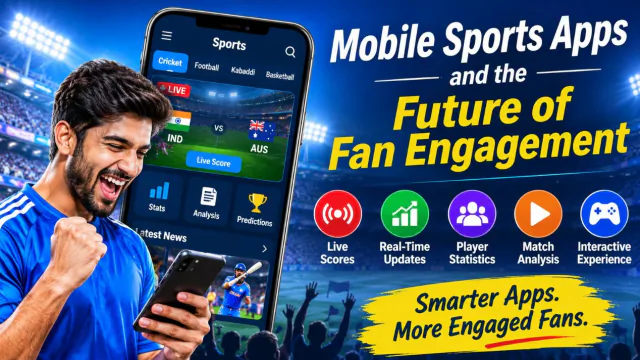
Sports fans today have access to a range of tools that have fundamentally changed how they follow the game. Live score apps, stats trackers, fantasy league platforms, and entertainment services like the 1win app sit side by side on the same home screen, each serving a different dimension of the sports experience. The smartphone has become the primary screen through which millions of fans engage with sport — before the game, during it, and long after the final result.
This shift was not driven by any single innovation but by a gradual layering of capabilities. As mobile hardware improved, data connections became faster, and developers understood more about what fans actually wanted from a digital experience, the category evolved from simple score notifications to something far more interactive and immersive. The fan who once checked the morning paper for yesterday's scorecard now refreshes live ball-by-ball data mid-over.
From Passive Viewer to Active Participant
The traditional fan relationship with sport was essentially passive — you watched, you cheered, and you discussed the result afterward. Digital platforms have reconfigured that dynamic considerably. Fantasy sports, prediction games, and in-play engagement tools all require the fan to take positions, make decisions, and think analytically about the sport they love.
This shift toward active participation has deepened engagement in ways that benefit both fans and the sports they follow. Fans who have something riding on a player's performance pay closer attention to squad selections, injury updates, pitch conditions, and form guides. What was once casual watching becomes something closer to informed analysis conducted in real time.
The side effect is that sport literacy has risen among engaged fans. The kind of statistical knowledge that was once the domain of coaches and broadcasters now circulates through fan communities, fantasy leagues, and sports apps as a matter of daily conversation.
What Modern Sports Apps Actually Deliver
Live Data and In-Play Statistics
The live data layer inside modern sports apps represents a substantial shift in how the game is experienced. Ball-by-ball cricket statistics, real-time football heatmaps, shot charts, and player movement data are all made available to fans in formats previously accessible only inside broadcast trucks and analytics departments.
For fans who enjoy analytical engagement with sport, this is transformative. Rather than relying on the commentary team's interpretation of what just happened, an engaged fan with the right app can form their own read of a match in progress. Trends become visible — which bowler is finding swing, which side is winning the territorial battle — in a way that enriches the viewing experience rather than replacing it.
Fantasy and Prediction Features
Fantasy sports features represent the most interactive layer of sports app design. Building a team, allocating a budget across a squad, managing transfers, and responding to late injury news are all decisions that reward genuine sports knowledge. The best fantasy platforms are designed so that research and strategic thinking produce better outcomes over time, which is why the communities around them tend to be intensely engaged.
Prediction features extend this further. Rather than simply tracking results after they happen, fans who use prediction tools are actively engaging with form, context, and probabilities before play begins. This kind of forward-looking engagement keeps attention on the sport between fixtures, not just during them.
Building a Competitive Fantasy Team: What Experienced Players Focus On
The gap between casual fantasy participation and consistently competitive performance comes down to a handful of repeatable habits. Experienced players tend to approach team selection with a structure that casual participants rarely apply, and the differences are instructive for anyone looking to improve.
Differential picks — selecting players unlikely to appear in many rival teams — are one area where research time pays off disproportionately. When everyone in your league selects the same captain, that choice becomes neutral rather than advantageous. Finding the player who is slightly under-the-radar but positioned well for a strong performance can deliver outsized returns relative to the risk involved.
Fixture context matters as much as raw form. A batsman averaging well in certain conditions may underperform against a particular bowling attack or in a format that does not suit their style. Reading fixture difficulty into selection decisions, rather than simply picking the highest-ranked players available, is a habit that separates consistent fantasy performers from those who rely primarily on variance.
Choosing the Right App for Your Sports Experience
Not all sports apps are built with the same user in mind, and choosing the right combination depends on how you want to engage with the sport. Some useful factors to consider when deciding what earns a place on your home screen:
- Coverage depth: does the app follow the leagues, formats, and teams you actually care about, or is it optimized for a different market or sport entirely?
- Data freshness: live sport is unforgiving about delays — an app that updates several minutes behind real-time is considerably less useful than one with genuine near-real-time data
- Fantasy and prediction depth: casual prediction features and full fantasy management serve different needs, so matching the tool to how seriously you want to participate saves frustration
- Interface speed: an app you will use multiple times during a match needs to load quickly and navigate intuitively — a cluttered or slow experience becomes a distraction rather than an asset
The Social Dimension of Digital Sports Communities
Sport has always been a communal experience, and digital platforms have extended rather than replaced that communality. Fan forums, league group chats, in-app community features, and social media threads all serve the function that terraces and pubs used to serve — a space to process what just happened with people who care about the same things.
This social layer is part of what makes well-designed sports apps genuinely useful over the long term. An app that connects you to a community of fans competing in the same fantasy leagues, following the same teams, and trading the same analysis gives you a reason to return daily rather than only on match days. The platforms that understand they are building communities alongside delivering information tend to hold user attention more durably than those focused solely on data delivery.
The tone of these communities varies considerably. At their best, sports fan spaces are analytical, generous with knowledge, and good-natured about rivalry. Experienced fans tend to develop an instinct for which communities are worth their time and which are better left alone.
Responsible Participation on Sports and Entertainment Platforms
Digital sports platforms — including fantasy leagues, prediction apps, and entertainment services connected to sport — attract participants across a wide range of ages and backgrounds, and responsible platform design accounts for this. The standard age restriction of 18+ applies to platforms involving wagering, prediction for prizes, or entertainment services of an adult nature, and enforcing this clearly is a baseline obligation, not an optional feature.
For participants, responsible engagement means approaching these platforms with clear expectations. Fantasy and prediction features reward sports knowledge and analysis, but outcomes carry an element of chance regardless of how well-researched a decision was. Treating participation as a form of entertainment rather than a reliable source of income is the frame that keeps the experience enjoyable and sustainable over time.
Practical habits worth building include setting clear session limits, monitoring how much time the app occupies in your day, and reflecting honestly on whether participation is adding to or detracting from your enjoyment of sport. Platforms that make these kinds of controls accessible rather than buried in settings menus are demonstrating a genuine commitment to their users' long-term wellbeing.
Beyond the Match: Keeping Engagement Going Year-Round
The challenge for sports platforms is maintaining engagement through off-seasons, international breaks, and the gaps between major tournaments. The apps that handle this well tend to offer content and community features that keep fans occupied even when there is no live sport on the schedule.
Transfer market analysis, pre-season squad previews, historical statistics, and player development tracking are all content categories that extend the engagement window. For fantasy sports in particular, the period before a season begins is often when the most preparation happens — scouting new signings, evaluating captaincy options, and planning squad structures before the first ball is bowled. The fans who arrive at round one already prepared tend to outperform those who build their teams in a rush, and a good app makes that preparation possible without requiring specialist tools or external spreadsheets.











Disclaimer
Possible11 is a sports news and analysis platform designed purely for entertainment and educational purposes. All match previews, player insights, and team analyses are based on publicly available information and expert opinions. We do not promote or support betting, gambling, or real-money gaming in any form. Users are encouraged to enjoy our content responsibly and use it for informational purposes only.











Give Your Feedback