In NBA basketball, the three-second rule prevents players from staying in or around the lane for too long without meeting specific conditions. But there are actually two different three-second violations: offensive three seconds and defensive three seconds.
The difference is important. An offensive player cannot remain in the restricted lane area for more than three seconds while the team controls the ball in the frontcourt. A defensive player, meanwhile, can be in the lane, but must actively guard an opponent within three seconds unless one of the rule's exceptions applies.
That means simply saying 'you cannot stay in the paint for three seconds' is incomplete. The rule works differently depending on whether the player is on offence or defence.
How the NBA Offensive or Defensive 3 Seconds Rule Works?
- Offensive three seconds: Applies to offensive players in the free throw lane.
- Defensive three seconds: Applies to a defender positioned in the lane or the area extending four feet beyond the lane endline.
- Offensive count: Begins when the offensive team controls the ball in the frontcourt.
- Defensive count: Also begins when the offensive team controls the ball in the frontcourt.
- Defensive exception: A defender can remain in the lane if actively guarding an opponent within arm's length and in a guarding position.
- Penalty for offensive three seconds: Loss of possession.
- Penalty for defensive three seconds: Technical foul; the offensive team retains possession.
What Is an Offensive 3-Second Violation?
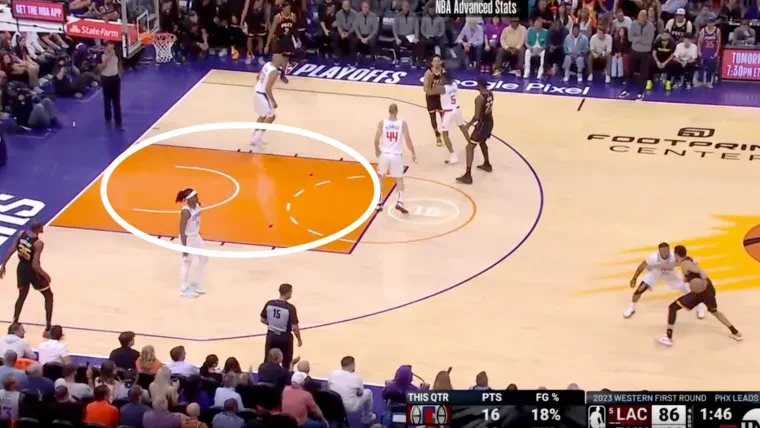
Image Source: Twitter
An offensive three-second violation occurs when an offensive player stays in the free-throw lane for more than three seconds while his team has control of the ball.
The NBA defines the relevant area as the free-throw lane between the end line and an imaginary line four feet beyond it, extending to the farther edge of the free-throw line. The count starts only when the offensive team has control of the ball in the frontcourt.
For example, imagine a centre standing in the paint while his teammate dribbles on the wing. If the centre remains there beyond the permitted three seconds without satisfying an exception, the officials can call an offensive three-second violation.
The penalty is a loss of possession, with the opposing team receiving the ball on the sideline at the free-throw line extended.
When Does the Offensive 3-Second Count Stop?
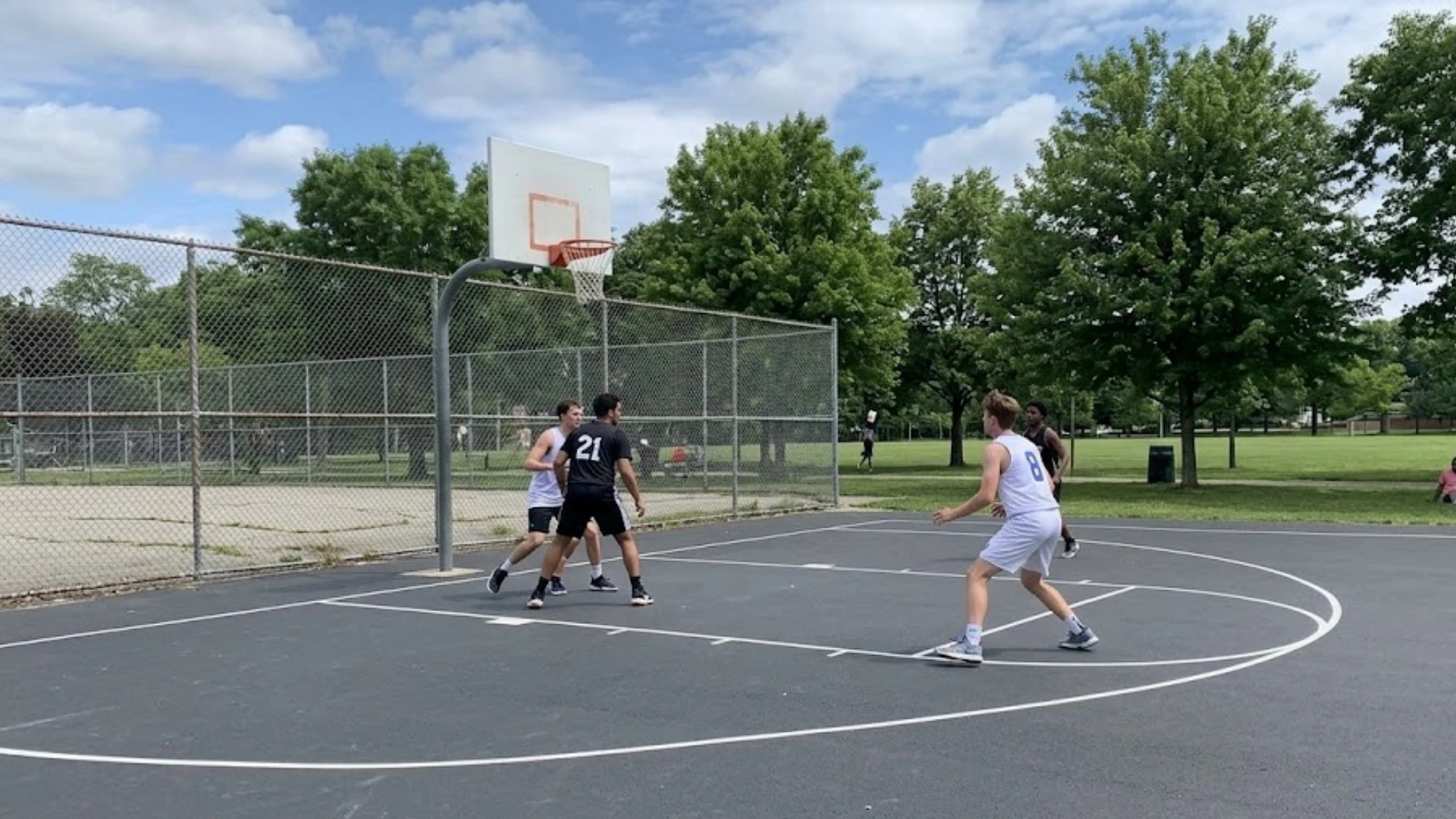
Image Source: Twitter
The NBA rule provides exceptions that can allow the offensive player to remain in the lane slightly longer.
If the player is in the act of shooting at the end of the third second and continues moving toward the basket, the count is discontinued during that continuous motion. The rule also allows the count to be discontinued when it is imminent that the player will exit the lane. If that movement stops, the previous count can continue.
This is why a player can sometimes appear to be in the paint for longer than three seconds without immediately being called for a violation.
What Is a Defensive 3-Second Violation?
The defensive three-second rule is different.
A defender positioned in the NBA's 16-foot lane or the area extending four feet past the lane endline must be actively guarding an opponent within three seconds.
The NBA defines active guarding as being within arm's length of an offensive player and in a guarding position. The rule applies after the offensive team gains control of the ball in the frontcourt.
This rule is particularly important when a defender is protecting the basket while not actually guarding an offensive player.
For example, suppose a centre stands in the paint waiting for a potential drive while his assigned offensive player is several feet away. If the defender remains in the lane without actively guarding an opponent for longer than the permitted period, a defensive three-second violation can be called.
The purpose is not simply to prevent defenders from standing in the paint. It regulates how a defender can occupy that area without actively guarding an opponent.
How Is Defensive 3 Seconds Different From Offensive 3 Seconds?
Image Source: Twitter
The easiest way to remember the difference is:
Offence: You cannot simply stay in the lane.
Defence: You cannot simply stay in the lane without actively guarding an opponent.
The two rules therefore look similar on the court but operate differently.
| Rule | Offensive 3 Seconds | Defensive 3 Seconds |
|---|---|---|
| Applies to | Offensive players | Defensive players |
| Main restriction | Staying in the lane too long | Remaining in the lane without active guarding |
| Count begins | Offensive team controls ball in frontcourt | Offensive team controls ball in frontcourt |
| Key condition | Player must leave the lane or satisfy an exception | Defender must actively guard an opponent or leave the lane |
| Penalty | Loss of possession | Technical foul |
| Offense retains possession? | No | Yes |
The NBA's rulebook specifically distinguishes the penalties and conditions for the two violations.
Can a Defender Stay in the Paint for 3 Seconds?
Yes, but not without restrictions.
A defender can legally remain in the lane if the player is actively guarding an opponent within arm's length and in a guarding position.
There is also an important exception for a defender guarding the player with the ball. Under the NBA rule, that defender may be located in the lane and does not have to meet the normal arm's-length active-guarding requirement.
However, if another defender actively guards the ball handler, the original defender must actively guard an opponent or leave the 16-foot lane. Once the offensive player passes the ball, the defender must again actively guard an opponent or exit the lane.
This is one reason defensive three seconds can be more complicated than it appears during a live game.
When Is the Defensive 3-Second Count Suspended?
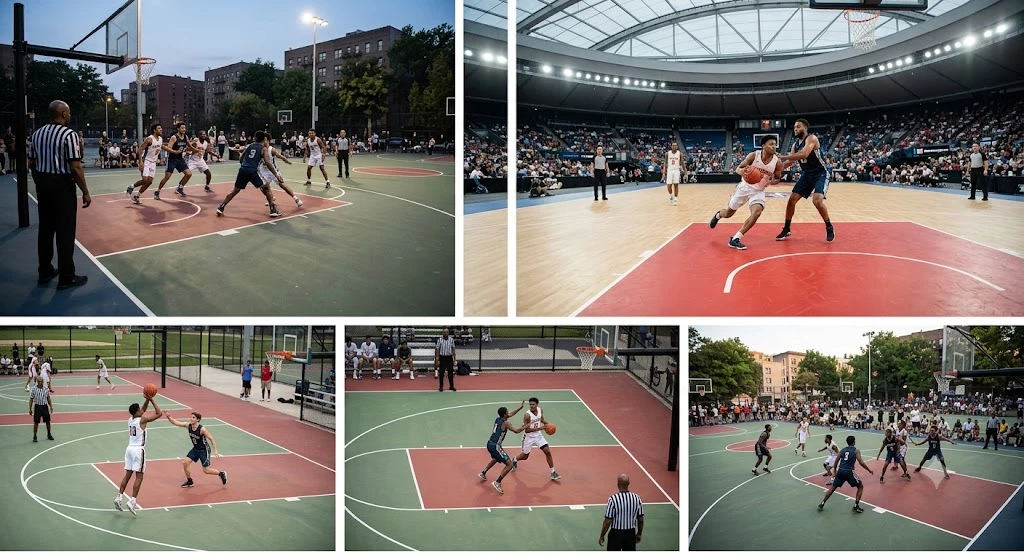
Image Source: Twitter
The NBA lists several situations that suspend the defensive three-second count.
The count is suspended when:
- A player is in the act of shooting.
- There is a loss of team control.
- The defender is actively guarding an opponent.
- The defender completely clears the 16-foot lane.
- It is imminent that the defender will become legal.
These exceptions matter because the count does not simply run continuously from the moment a defender enters the paint.
A defender can also move out of the lane and then return later. The critical question is whether the player remains in a position that violates the rule while the offensive team has control.
What Happens After a Defensive 3-Second Violation?
The penalty is very different from an offensive three-second violation.
A defensive three-second violation results in a technical foul. The offensive team retains possession and receives the ball on the sideline at the free-throw line extended nearest the point where the violation interrupted play. The NBA rulebook also specifies that the shot clock remains the same or is reset to 14 seconds, whichever is greater.
This is why a defensive three-second call does not result in a normal turnover.
The distinction is easy to miss when watching a game because both violations involve the lane and a three-second count, but their consequences are completely different.
Why Does the NBA Have a Defensive 3-Second Rule?
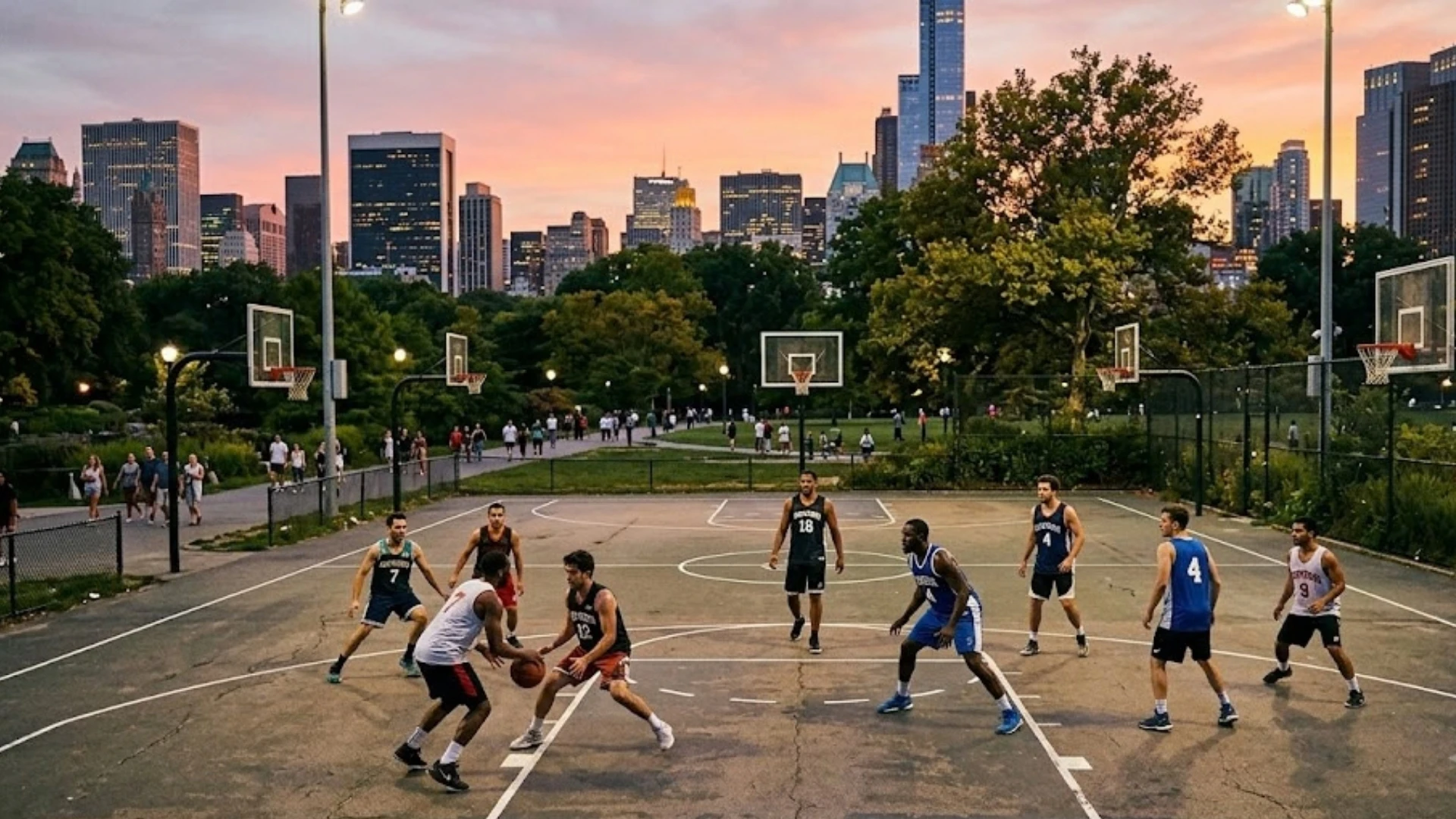
Image Source: Twitter
The defensive three-second rule affects how teams protect the basket.
Without this restriction, a defender could potentially remain near the rim for extended periods without actively guarding an opponent, making it more difficult for offensive players to attack the basket.
The NBA's referee guidance has specifically treated defensive three seconds as a rule requiring careful interpretation because the basic three-second concept includes several exceptions and conditions. NBA Referee Operations described the defensive three-second rule as having multiple caveats affecting both the legality of a defender's position and the count.
In practical terms, the rule encourages defenders to either guard an opponent, guard the ball under the specific rule exception, or leave the lane.
Is Defensive 3 Seconds the Same as the Paint Rule?
Not exactly.
People often call the lane the "paint," and the terms are frequently used interchangeably in casual basketball conversation. But the official NBA rule is more specific.
For offensive three seconds, the rule refers to the free throw lane. For defensive three seconds, the rule covers the 16-foot lane and an area extending four feet beyond the lane endline.
So "three seconds in the paint" is a useful shorthand, but it does not explain all the details of the NBA rule.
NBA 3-Second Rule: Offensive and Defensive Examples
Imagine a team has the ball in the frontcourt.
An offensive centre stands inside the lane while his point guard dribbles around the perimeter. If the centre remains there beyond three seconds without entering an allowed exception, the officials can call an offensive three-second violation. The team loses possession.
Now reverse the situation.
The defending centre stands in the lane while his opponent is positioned outside the paint and is not being actively guarded by that defender. If the defender remains there beyond the permitted time without becoming legal, officials can call defensive three seconds. The result is a technical foul, but the offence keeps possession.
That difference is the key to understanding the rule.
Offensive vs Defensive 3 Seconds: The Easiest Way to Remember
If you only remember one thing, remember this:
Offensive three seconds asks: "Has the offensive player stayed in the lane too long?"
Defensive three seconds asks: "Is the defender staying in the lane without actively guarding an opponent?"
The NBA treats them as separate violations with separate penalties. The offensive violation produces a turnover, while the defensive violation produces a technical foul and allows the offence to retain possession.
That distinction explains why a three-second call can produce very different outcomes depending on which team committed it.
Frequently Asked Questions
Does the 3-second rule apply to both teams?
Yes. The NBA has separate offensive and defensive three-second rules. They do not impose the same requirements or penalties.
Does the defensive 3-second count start when the defender enters the paint?
Not exactly. The count starts when the offensive team is in control of the ball in the frontcourt. The defender's position and whether the player is actively guarding an opponent then determine whether the rule is violated.
Is defensive 3 seconds a turnover?
No. A defensive three-second violation is a technical foul, and the offensive team retains possession.
Can a defender stand in the lane while guarding the ball handler?
Yes. The NBA specifically allows a defender guarding the player with the ball to be in the 16-foot lane without having to be within arm's length.
What happens after an offensive 3-second violation?
The offensive team loses possession, and the opposing team receives the ball on the sideline at the free-throw line extended.
Why do NBA players sometimes appear to stay in the paint for more than three seconds?
The rules contain exceptions and suspended counts. For example, the defensive count can be suspended when a defender actively guards an opponent, completely clears the lane, or when a shot is in progress. The offensive rule also contains exceptions involving shooting motion and imminent lane exit.
Also Read: How to Tape an Ankle for Basketball or Volleyball?