
Confused by soccer offside? Learn exactly how the rule works, when a player is penalised, key exceptions and simple diagrams in three minutes.
A player is not automatically offside just because they are standing close to the opponent’s goal. The key moment is when a teammate plays or touches the ball. Under IFAB Law 11, a player must be in an offside position and then become involved in active play before an offence occurs.
What Is Offside in Soccer?
A player is in an offside position when, at the moment a teammate plays or touches the ball, any part of their head, body or feet is in the opponents’ half and nearer to the goal line than both the ball and the second-last opponent.
The hands and arms do not count. A player is also onside if they are level with the second-last opponent or level with the last two opponents.
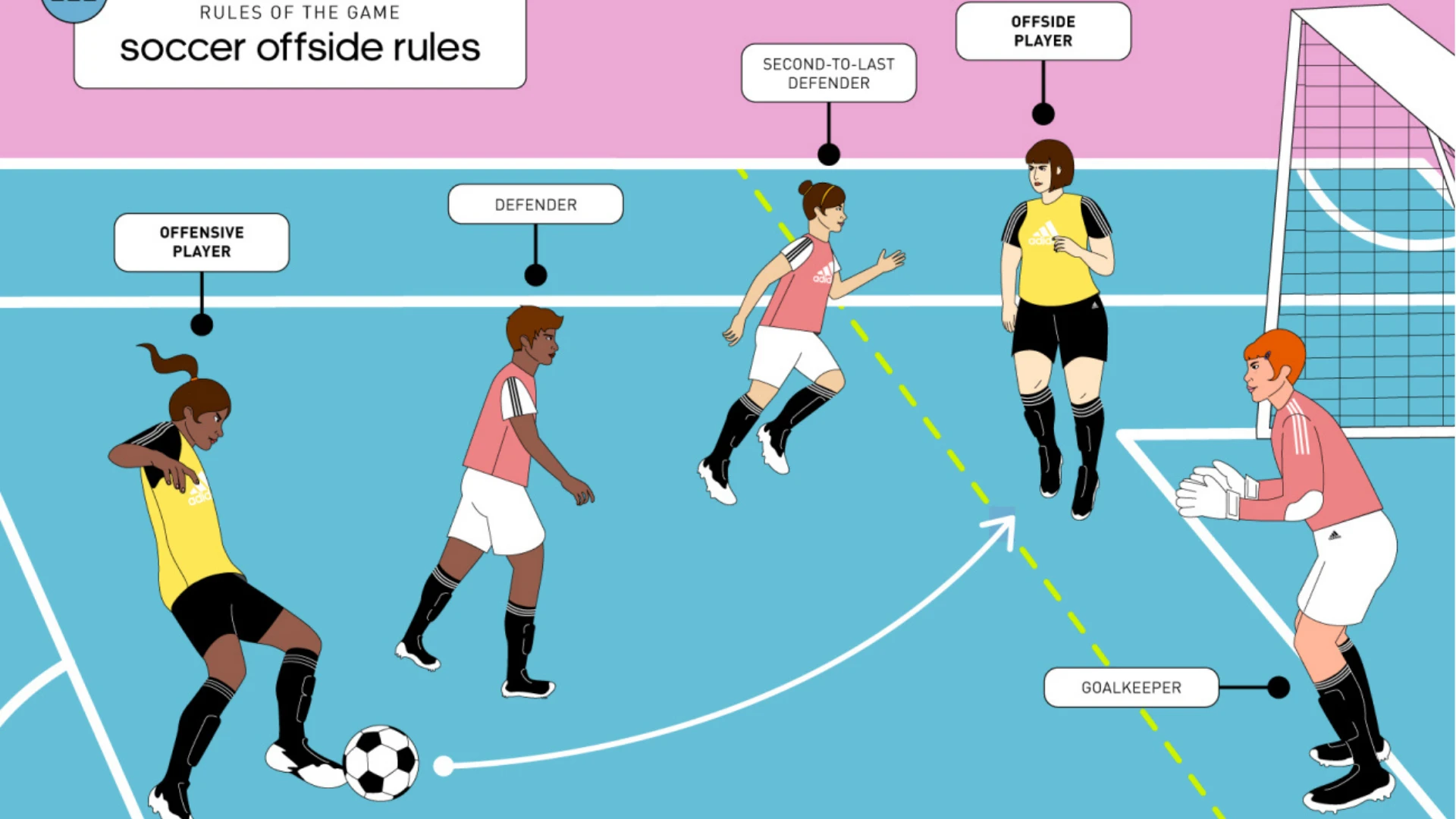
Image Source: Twitter
If attacker A is beyond the second-last opponent and closer to the goal than both the ball and that opponent when the teammate plays the ball, A may be in an offside position.
But simply being in that position is not an offence.
When Does Offside Become an Offence?
The player must become involved in active play.
This can happen by playing or touching the ball after a teammate passes or touches it. An offside-positioned player can also be penalised for interfering with an opponent, such as clearly obstructing an opponent’s line of vision or challenging an opponent for the ball.
Here, the important question is not simply, 'Where is A?' The referee must also ask, 'Was A involved in active play?'
The Offside Rule Has Three Key Checks
Think of offside as a three-step test:
- Is the player in the opponents’ half?
- Is any legal scoring part of the player’s body nearer the goal line than both the ball and the second-last opponent?
- Does the player become involved in active play?
If the answer to the first two is yes but the third is no, there is no offside offence.
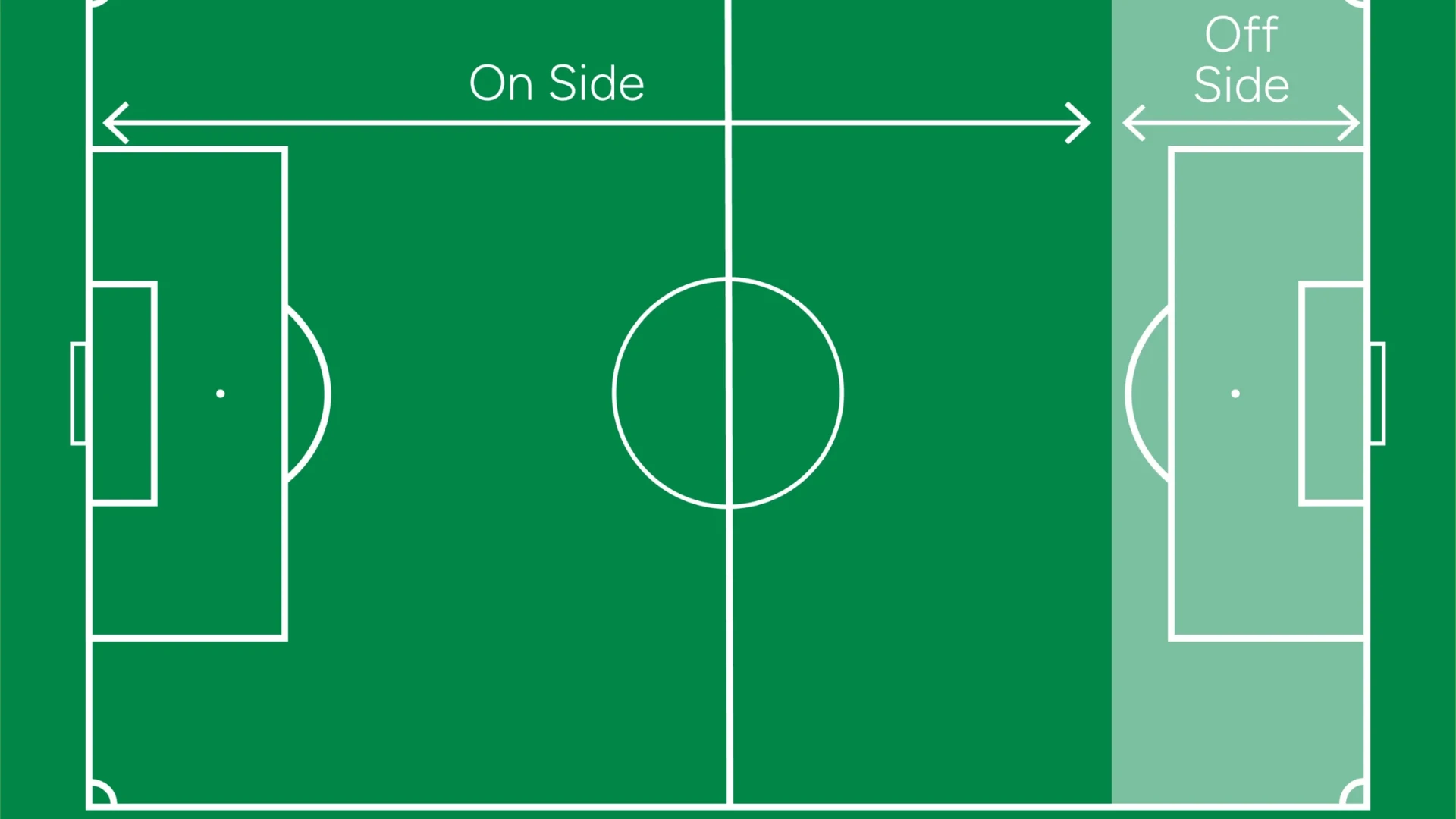
Image Source: Twitter
When Is There No Offside?
A player cannot be penalised for receiving the ball directly from a goal kick, throw-in or corner kick.
These are important exceptions because they can look like ordinary passes during a fast attack.
Why the Second-Last Defender Matters
Many viewers assume the goalkeeper is always the player used to judge offside. That is incorrect.
The rule refers to the second-last opponent. The goalkeeper can be one of those two players, but does not have to be.
That is why an attacker can sometimes appear to be behind the goalkeeper and still be onside if another defender is positioned correctly.
Also Read: Ibrahim Mbaye Net Worth 2026, Salary and Career
FAQ
Is a player offside if they are behind the last defender?
Not necessarily. Offside is judged against the second-last opponent, as well as the position of the ball, at the moment the teammate plays or touches it.
Can a player be offside in their own half?
A player cannot be in an offside position while in their own half. However, an offside offence can be sanctioned with an indirect free kick where the offence occurs, including in the player’s own half.
Do hands count for offside?
No. The hands and arms of players, including goalkeepers, are not considered when determining offside.
What happens after an offside offence?
The referee awards an indirect free kick to the defending team at the location of the offence.