Image Source: X
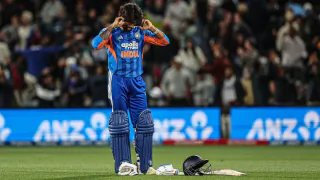
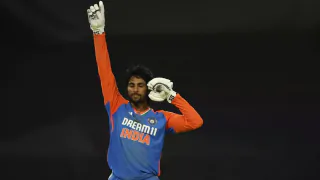
India defeated Sri Lanka by 72 runs in the Women's Asia Cup final to lift the title. However, the celebrations were overshadowed by a major controversy during the trophy presentation.
The Indian team refused to receive the trophy from Asian Cricket Council (ACC) president Mohsin Naqvi. The incident quickly became a major talking point and brought India-Pakistan cricket tensions back into focus.
Naqvi's presence attracted attention because he is not only the ACC president but also the chairman of the Pakistan Cricket Board (PCB) and Pakistan's interior minister.
With Pakistan not involved in the final, the controversy raised an obvious question: Why did a women's cricket final between India and Sri Lanka turn into another India-Pakistan-related dispute?
Women’s Asia Cup 2026 Final News: India Beats Sri Lanka by 72 Runs to Win Title
India produced a dominant performance in the Women's Asia Cup final, defeating Sri Lanka by 72 runs to secure the championship.
The result on the field was clear. India played the better cricket and finished the tournament as champions.
However, the post-match presentation created a separate controversy.
Instead of becoming a routine celebration of India's title victory, the trophy ceremony became a major news story after the Indian players refused to accept the trophy from Mohsin Naqvi.
Asia Cup Trophy Controversy: Why Did India Refuse to Take the Trophy From Mohsin Naqvi?
India's decision was reportedly linked to its position on Naqvi's involvement in the trophy presentation.
A similar situation had already occurred after the 2025 Men's Asia Cup final, when India refused to accept the trophy from Naqvi.
Ahead of the Women's Asia Cup final, the Board of Control for Cricket in India (BCCI) had reportedly communicated its position to the ACC.
The message was understood to be clear: if Naqvi was involved in the trophy presentation, the Indian team would not accept the trophy from him.
Naqvi nevertheless remained present at the ceremony in his capacity as ACC president.
India then followed through on its position, turning the trophy presentation into another major controversy.
Mohsin Naqvi News: Why His Role in the Trophy Presentation Matters
Mohsin Naqvi's multiple positions have made the incident much more sensitive.
He currently serves as:
- ACC President
- PCB Chairman
- Pakistan Interior Minister
His role as a senior Pakistani government figure means that his involvement in an India-related cricket ceremony carries a political dimension.
If Naqvi had only been an international cricket administrator, the controversy might have remained limited to sporting protocol.
However, his political position has ensured that the incident is being discussed in the wider context of India-Pakistan relations.
India vs Naqvi: How the 2025 Asia Cup Trophy Row Returned
The latest controversy has a direct connection with the 2025 Men's Asia Cup.
India had already refused to accept the trophy from Naqvi after that final. Therefore, the possibility of another disagreement during a future presentation was already known.
The situation became even more significant because the BCCI had reportedly communicated its position before the Women's Asia Cup final.
That makes the latest incident more than an unexpected disagreement during a post-match ceremony.
Both sides were aware of the potential problem, yet Naqvi remained part of the presentation.
The result was another highly publicised India-Naqvi confrontation.
BCCI News: India Had Already Made Its Stand Clear
The BCCI's reported communication before the tournament is one of the most important aspects of the controversy.
India's position was not apparently formed at the last moment. The board had already made its stance known regarding the presentation involving Naqvi.
That meant the trophy ceremony had the potential to become controversial even before the final was played.
Once India won the title, attention naturally shifted to what would happen during the presentation.
The eventual decision by the Indian players was therefore seen as a continuation of the position the board had already taken.
Women’s Asia Cup Latest News: Naqvi’s Presence Sparks Fresh Debate
The biggest surprise for many fans was that the controversy happened even though Pakistan had no role in the final.
India and Sri Lanka were competing for the title, yet a Pakistani political and cricket administrator became one of the central figures of the post-match discussion.
Naqvi's presence transformed a routine presentation into an India-Pakistan-related story.
The episode also highlighted the difficulty of keeping cricket and politics completely separate when officials have major responsibilities in both areas.
India-Pakistan Cricket News: How the Trophy Ceremony Turned Political
The controversy quickly moved beyond the cricket field.
India's decision can be interpreted as a clear statement that the team did not want to receive the trophy from Naqvi.
At the same time, the incident can be presented differently in Pakistan.
Supporters of Naqvi could argue that he continued to perform his official responsibilities as ACC president despite India's decision.
This creates two very different narratives around the same event.
In India, the focus may be on the decision to reject the presentation.
In Pakistan, the focus can shift towards Naqvi standing firm in his official role.
That is precisely how a sporting incident can become a political narrative.
Mohsin Naqvi Controversy: Did India’s Decision Give Him a New Narrative?
This is arguably the most interesting question surrounding the entire episode.
India made its position clear, but the controversy also put Naqvi back in the spotlight.
As PCB chairman, Naqvi has faced scrutiny over Pakistan cricket's performances, administrative decisions and selection-related issues.
The latest controversy has shifted attention away from some of those cricket-related discussions and towards his role in the India-Pakistan sporting relationship.
However, there is no concrete public evidence that Naqvi deliberately created the controversy for political benefit.
It would therefore be premature to claim that the incident was planned.
What is clear is that the controversy has given Naqvi significant visibility.
Asia Cup Final News: India Won the Trophy, But Naqvi Got the Headlines
India remains the clear winner on the cricket field.
The team defeated Sri Lanka by 72 runs and secured the Women's Asia Cup title.
But the trophy presentation became a story of its own.
Instead of the post-match headlines focusing only on India's achievement, much of the discussion shifted towards the Indian team's decision not to accept the trophy from Naqvi.
This meant that Naqvi, despite not being part of either team in the final, became one of the most discussed figures after the match.
India-Pakistan Controversy: Who Benefited Most From the Trophy Row?
The answer depends on how the incident is viewed.
From a sporting perspective, India is the obvious winner.
The team won the final, lifted the Women's Asia Cup and achieved its main objective.
But from a media and political perspective, the picture is more complicated.
The controversy placed Mohsin Naqvi at the centre of another India-Pakistan story and gave him considerable attention.
India refused to accept the trophy from him, but the incident also created a new platform for discussion around his role.
That is the central twist of the controversy.
Asia Cup Trophy News: India Won the Title, But Did Naqvi Win the Narrative?
There is no question about who won the Women's Asia Cup.
India won the trophy.
But the bigger question is who gained the most from the controversy surrounding its presentation.
India stood by its position and made its message clear. Naqvi, meanwhile, became the central figure in another India-Pakistan cricket controversy.
The Indian team walked away with the championship, while Naqvi walked away with renewed attention and visibility.
That does not mean Naqvi was responsible for creating the controversy. There is no solid evidence to support such a claim.
But the outcome is clear: his name became a major part of the conversation.
Final Verdict: India Won the Asia Cup, But Did Naqvi Win the Bigger Battle?
On the cricket field, India was the undisputed winner.
The team defeated Sri Lanka by 72 runs and lifted the Women's Asia Cup.
Away from the field, however, the story took a different turn.
India refused to accept the trophy from Mohsin Naqvi, maintaining its previously stated position. Naqvi could not hand over the trophy to the Indian players, but his role in the controversy ensured that he remained at the centre of the headlines.
The Women's Asia Cup final therefore became more than a cricket match.
It became another example of how quickly sport, politics and India-Pakistan relations can collide.
India won the Asia Cup. But in terms of headlines and political visibility, Mohsin Naqvi may have emerged as one of the biggest beneficiaries of the controversy.
Also Read: MS Dhoni CSK Stake News: Franchise Gives Big Update