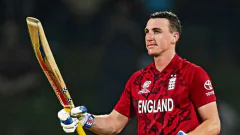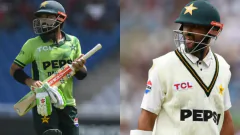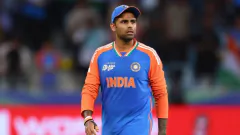
Image Source: X
The India-Pakistan no-handshake controversy has once again grabbed attention after the Marylebone Cricket Club (MCC) shared its response to the issue. MCC Head of Cricket Fraser Stewart has clarified that the organisation cannot interfere in decisions regarding handshakes between players, as such matters are beyond its authority.
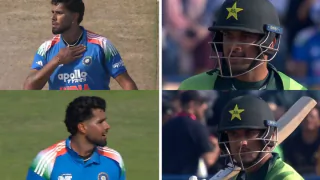
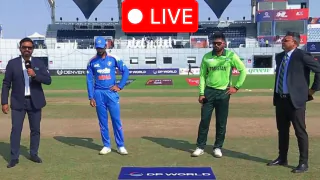
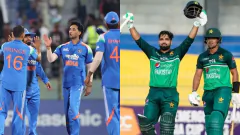
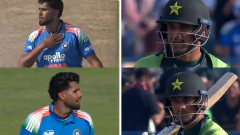
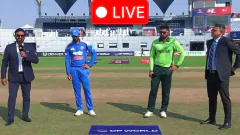
The discussion resurfaced during the Rising Stars Asia Cup 2025 match between India A and Pakistan A. At the toss on Sunday, India A captain Tilak Varma did not shake hands with Pakistan A captain Abdul Samad. This incident continued India's no-handshake approach, which has remained a talking point in international cricket for more than a year.
Stewart's comments have now brought fresh attention to the debate surrounding sportsmanship, cricketing traditions and the spirit of the game.
MCC Breaks Silence on India's No-Handshake Policy Against Pakistan
Fraser Stewart addressed the India-Pakistan handshake controversy while speaking during the World ILT20 tournament. He explained that some incidents involve matters beyond cricket and are not within the MCC's authority to comment on.
He highlighted that the organisation can only ensure that players respect their opponents, follow the authority of umpires and maintain respect for the game.
According to Stewart, the MCC's responsibility is to protect cricket's values and traditions rather than interfere in matters that extend beyond the sport.
Fraser Stewart Explains Why MCC Cannot Interfere in Handshake Decisions
Stewart also responded to questions about whether the MCC could intervene if teams received instructions from higher authorities regarding handshakes.
He clarified that such decisions would not fall under the MCC's control. While the organisation would like to see players maintain mutual respect, it understands that certain larger issues are beyond its influence.
His statement makes it clear that the MCC cannot force players from India and Pakistan to shake hands during matches.
Tilak Varma Continues India's No-Handshake Stance Against Pakistan
The latest incident took place during the India A vs Pakistan A encounter in the Rising Stars Asia Cup 2025. During the toss, Tilak Varma and Abdul Samad did not exchange a handshake.
This was another example of India's continued no-handshake approach towards Pakistan. The stance has remained in place since the Asia Cup 2025 and has attracted considerable attention during India-Pakistan cricket encounters.
The latest development has once again sparked discussions about whether sporting traditions should remain separate from issues outside the cricket field.
Why Has India Maintained Its No-Handshake Policy Against Pakistan?
India's no-handshake approach against Pakistan has been followed since the Asia Cup 2025. The Indian team has continued this stance during matches involving Pakistani players.
The issue has become one of the most discussed aspects of recent India-Pakistan cricket encounters, with the absence of pre-match and post-match handshakes drawing attention from fans and cricket experts.
The latest comments from the MCC have added another perspective to the debate, although the organisation has made it clear that it cannot influence the teams' decisions.
What Is MCC's Role in Cricket and the Spirit of the Game?
Founded in 1787, the Marylebone Cricket Club (MCC) is the custodian of the Laws of Cricket and holds their copyright. The club maintains the 42 Laws of Cricket and has the authority to make changes to them.
The MCC also plays an important role in promoting the spirit of cricket, which focuses on respect for opponents, umpires and the game itself.
However, Fraser Stewart's latest remarks clarify that the club's responsibility does not extend to controlling decisions or instructions that influence interactions between opposing teams.
Also Read: Rishabh Pant Breaks McCullum Record, Creates Test History