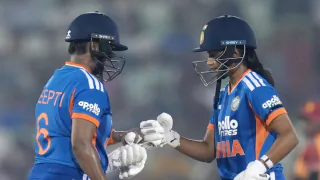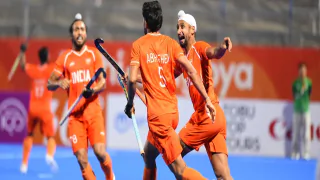
Asian Games 2026: India won a total of 85 medals, including 21 gold medals, at the 2026 Asian Games held in Japan. Indian athletes achieved several historic milestones during the event. The performance of female athletes was particularly outstanding, while new chapters were written in sports such as wrestling, boxing, golf, athletics, shooting, archery, and hockey.
Asian Games 2026: India Shines as Athletes Set New Records
The 2026 Asian Games were memorable for Indian sports in many ways. At these games held in Japan, India won a total of 85 medals—comprising 21 gold, 27 silver, and 37 bronze—and secured the fourth position on the medal tally. Although the total medal count was lower compared to the previous Asian Games, several Indian athletes achieved feats this time that will be remembered for a long time.
A major highlight of these Games was the success of Indian female athletes. Out of India's 21 gold medals, 11 were won by women, while seven were won by men. Additionally, India achieved success in team and mixed events as well.
Stellar Performances by Kumkum Mohot, Neeru Dhanda, and Gulveer Singh
Several Indian athletes made their mark by winning multiple medals. In archery, Kumkum Mohot won two gold medals and one silver medal. In shooting, Neeru Dhanda played a pivotal role in India's success by securing two gold medals and one silver medal.
In athletics, Gulveer Singh won two silver medals and one bronze medal. India had long awaited major success in long-distance running, and Gulveer’s three-medal haul has sparked new hope for the sport.
Pranavi Urs Makes History in Golf
The success of female golfer Pranavi Urs was one of the standout stories of these Asian Games. Pranavi made history by winning the gold medal in golf—marking the first time an Indian golfer has achieved this feat at the Asian Games.
Her success has given Indian golf a new identity. Although golf is less popular in India compared to sports like cricket, hockey, badminton, or wrestling, this historic achievement at the Asian Games could steer the sport in a new direction in the years to come.
India Wins Its First-Ever Pole Vault Medal
India also made history in the pole vault event. Bronica Allen Govan won a bronze medal, marking India's first-ever medal in pole vaulting in the history of the Asian Games. In this context, her bronze medal is no less significant than a gold medal.
India's achievements in athletics did not stop there. Vidya Ramraj won a bronze medal in the 400m hurdles and simultaneously set a remarkable record.
Vidya Ramraj Breaks PT Usha's 42-Year-Old Record
Delivering a stellar performance in the women's 400m hurdles, Vidya Ramraj surpassed one of the most prestigious records in Indian athletics. She broke the 42-year-old record set by PT Usha at the 1984 Los Angeles Olympics.
Vidya not only broke the record but also secured a bronze medal at the Asian Games. Sports expert and renowned commentator Manoj Joshi considers her the new sensation of Indian athletics. Joshi believes that this is just the beginning and that more records will be set in the future.
Marathon Medal After 44 Years
Sawan Barwal also made history for Indian athletics by winning a silver medal in the marathon. This marked the first time since 1982 that India won a medal in the Asian Games marathon event, ending a long 44-year wait.
Sarvesh Kushare also achieved a historic feat in the high jump. Thanks to his performance, India won an Asian Games medal in this event after a gap of 56 years.
These achievements are particularly significant because India has traditionally been considered strong in only a few track and field events. The success achieved across various events this time demonstrates the expanding scope of Indian athletics.
Neeru Dhanda Makes History in Trap Shooting
Neeru Dhanda delivered a stellar performance in shooting. She made history by winning the gold medal in the women's individual trap shooting event, becoming the first Indian shooter to achieve this feat at the Asian Games.
While India has traditionally been a powerhouse in Asian shooting, this achievement has opened a new path for the country in women's trap shooting as well.
Women's Hockey Team Ends 44-Year Wait
The Indian women's hockey team also made the 2026 Asian Games memorable by winning the gold medal—a feat achieved after a long gap of 44 years. With this victory, the team also qualified for the Los Angeles 2028 Olympics.
Similarly, the men's hockey team secured their spot in the Olympics by winning gold. Thus, it was a major achievement for Indian hockey that both the men's and women's teams won gold medals and booked their places for the Los Angeles Olympics.
However, Manoj Joshi believes that the Olympic challenge will not be easy for the men's team. Considering their recent World Cup performance, the team needs to make changes in certain areas. According to him, more players need international experience before the Olympics, and the team management should identify about four players who could strengthen the squad as crucial replacements.
India Challenges Korea in Archery
In archery, Indian athletes once again proved their ability to challenge the world's best teams. The women's compound team won the gold medal.
According to Manoj Joshi, the most encouraging aspect for Indian archery is that India has started defeating Korean athletes and teams. South Korea has long been a dominant force in global archery; consequently, the success of Indian archers raises hopes ahead of the Los Angeles Olympics.
History Repeats Itself in Wrestling: Memories of 1962 and 1978 Revived
Wrestling played a pivotal role in India's success at the 2026 Asian Games. According to Manoj Joshi, four Indian wrestlers reached the finals—a feat last achieved in 1962. Furthermore, India won two gold medals in men's freestyle wrestling, an achievement not seen since 1978.
India also ended a long drought in Greco-Roman wrestling; for the first time since 1962, an Indian wrestler reached the Greco-Roman final.
During these Games, Indian wrestlers defeated world and Olympic champions. Sujeet Kalkal's bout became a shining example of the fighting spirit inherent in Indian wrestling; despite trailing 9-2 at one stage, he staged a remarkable comeback to win the match 10-9.
Did the Pro Wrestling League Help?
Manoj Joshi considers the Pro Wrestling League instrumental in the success of Indian wrestlers. He notes that the league provided Indian wrestlers with the opportunity to compete alongside and against top wrestlers from various countries around the world.
This allowed Indian athletes to gain a close understanding of the techniques and styles of foreign wrestlers. Additionally, the mental pressure associated with facing renowned international athletes gradually diminished. This newfound confidence is now clearly evident in major international competitions.
Three Gold Medals in Boxing; Stellar Performance by Lovlina
India demonstrated its prowess in boxing by winning three gold medals. Star Indian boxer Lovlina also succeeded in winning a gold medal. Manoj Joshi believes that even though the competition at the Olympics will be far tougher than at the Asian Games, the performance of Indian boxers and wrestlers has raised hopes for the Los Angeles Olympics.
Haryana’s Pivotal Role in the Success of Female Athletes
The success of female athletes has captured everyone's attention this time. Manoj Joshi attributes this primarily to the shifting mindset regarding sports in Haryana and the improved social opportunities available to girls.
According to him, while girls previously had limited opportunities in sports, the consistent victories of female athletes have transformed family attitudes. Parents are now confident that their daughters can win medals at the international level.
Haryana’s government sports policies, cadet-level competitions, and the presence of a large number of female boxers and wrestlers across various weight categories have intensified the level of competition. The impact of this is clearly visible in India's performance on the international stage.
Despite 85 Medals: Where Did We Fall Short?
India secured fourth place with a haul of 85 medals; yet, performance in certain sports did not meet expectations. Manoj Joshi notes that India won fewer medals compared to the previous Asian Games because the performance of some athletes in athletics and shooting fell short of expectations.
Nevertheless, these Games offered several positive signs for the future. Historic achievements were recorded in golf and pole vault; long-standing waits of decades ended in the marathon and high jump; past records were matched in wrestling; India challenged major powerhouses in archery; and both the men's and women's hockey teams qualified for the Olympics.
Most importantly, the performance of female athletes reflects the changing landscape of Indian sports. The fact that women won 11 of the 21 gold medals is one of the most remarkable stories of these Asian Games.
Thus, India's journey at the Asian Games went far beyond the tally of 85 medals. The tournament witnessed the breaking of old records, the end of decades-long waits, and the emergence of new hope in sports where India was not previously considered a major international force. Leading up to the 2028 Los Angeles Olympics, this can be considered the greatest achievement for Indian sports at these Asian Games.