

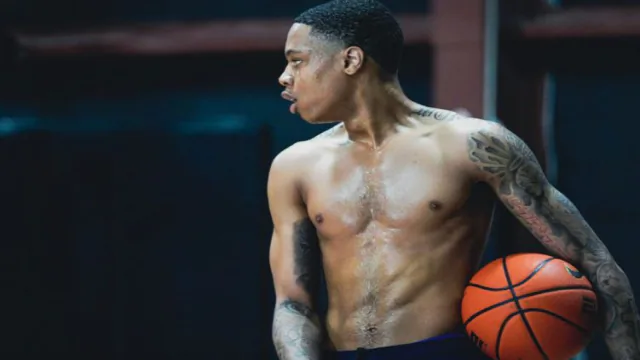
For most of basketball's history, the five positions were the operating system of the game. The point guard ran the offence, the shooting guard provided perimeter scoring, the small forward operated in the mid-range and transition, the power forward worked the high post and glass, and the centre controlled the paint and the rim. These were not just tactical categories - they were identity labels, training frameworks, and the basic vocabulary coaches used to construct rosters and design plays.
That vocabulary is now functionally obsolete at the highest levels of the game. In the modern NBA, teams routinely start lineups with no traditional centre, field point guards who play like power forwards, and deploy wings as primary playmakers. The revolution happened gradually and then very suddenly, and understanding it requires tracing both the strategic insight that drove it and the player archetypes that made it possible.
The Stretch Big and the Spacing Revolution
The single most transformative player type of the past fifteen years in basketball is the stretch big - a power forward or centre who can make three-point shots at a reliable enough rate to require a defender to follow them to the perimeter. The strategic effect of this one player type is difficult to overstate.
In the traditional five-out-two-in offensive structure, the two big men were anchored near the basket. This created defensive simplicity for opponents: their big men could sag off the basket, protect the paint, and help on drives without conceding meaningful open shots. The moment a big man becomes a genuine three-point threat, that defensive structure breaks down. His defender must follow him to the arc. The paint opens. The driving lanes widen. Players who previously had their driving paths clogged by a waiting defender now have clear lanes or at worst one-on-one situations rather than the two-on-one disadvantages of the traditional paint-heavy game.
Dirk Nowitzki was the archetype who made the position theoretically viable. Kristaps Porzingis, Kevin Durant, Anthony Davis, and the current generation of unicorn bigs - players seven feet tall who shoot threes with point guard fluency - are the full realisation of the concept. The stretch big did not just create a new player type. It restructured the offensive logic of the entire game.
LeBron James and the Point Forward
If one player embodies the positionless revolution, it is LeBron James - not because he invented the concept of the versatile forward but because he demonstrated at sustained elite level what the full realisation of that concept could do to a defence.
At 6'9" and 250 pounds, LeBron is a power forward by size. In practice, he has spent the majority of his career operating as a point guard, primary ball-handler, primary decision-maker, and first-option playmaker for teams built around his ability to do everything simultaneously. He creates off the dribble, passes from the post, shoots from the perimeter, finishes at the rim, and - crucially - defends multiple position types without meaningful drop-off. The position label became meaningless not because it was wrong but because no label was big enough to contain what he actually does.
The point forward concept he represents is now a roster-building template, not just an individual exception. Teams that build around a playmaking forward rather than a traditional point guard have structural advantages that the traditional position framework could not account for. Modern sports culture increasingly values this kind of flexibility and multi-functionality across entertainment industries as well, where adaptable systems and layered reward structures - from fantasy sports mechanics to promotions from Stay Casino - are designed to maximise engagement by giving users multiple ways to participate and progress simultaneously.
The Death of the Traditional Centre
The traditional centre - a seven-footer whose primary contributions were post scoring, rim protection, and rebounding, who was not expected to shoot from distance or handle the ball in space - was not eliminated from the NBA overnight. It was rendered obsolete by a specific trade-off that positionless offences forced upon defences: rim protection versus spacing.
A non-shooting centre creates a permanent defensive gift for opponents. His defender can leave him at the perimeter without consequence, parking in the paint to help on drives and deter rim attempts. Against a positionless offence with multiple shooting options, this gift becomes a liability: the centre's man is open on the perimeter, and if he cannot be left there because he can actually shoot, the defence loses a critical help element. The traditional centre became a tactical hole that sufficiently skilled positionless offences could target at will.
The response from teams was to either develop centres who could shoot - or stop starting traditional centres entirely. The small-ball revolution was not a philosophical preference. It was a rational response to what the analytics showed: lineups with non-shooting bigs were being outscored at a rate that made them unsustainable in playoff basketball.
The Warriors Dynasty and Small Ball's Proof of Concept
The Golden State Warriors dynasty from 2015 to 2019 served as the clearest single proof that positionless basketball was not a theoretical concept but a practical championship template. Their "death lineup" - featuring Draymond Green at centre despite being six feet seven inches and 230 pounds - was the most discussed tactical innovation in the sport for half a decade.
What made it work was the combination of shooting at every position and Draymond Green's specific skillset: he was too good a passer, defender, and communicator to replace with a taller but less versatile player. The lineup sacrificed size and conventional rim protection for switchability, floor spacing, and ball movement. Against defences built around the traditional centre role, it was devastating. The Warriors' success did not just win championships - it convinced front offices across the league to rebuild their rosters around the principles that made it possible.
EuroLeague's Contribution to the Positionless Vocabulary
The positionless revolution is often told as a purely American NBA story, but European basketball - specifically the EuroLeague system - contributed meaningfully to the conceptual vocabulary that NBA coaches adopted. European basketball has traditionally emphasised movement, off-ball screening, and pattern offences that require players to be interchangeable within systems rather than positioned in fixed roles. The spacing principles and the concept of the versatile big who can pass and facilitate from the high post were well-developed in European basketball before they became dominant in the NBA.
The influx of European players into the NBA - Nowitzki, Gasol, Jokic, Doncic - brought not just individual talent but stylistic influences that accelerated the move away from position-based thinking. Nikola Jokic in particular represents a synthesis of European passing and playmaking tradition with NBA-level physical dominance, producing a player whose position label (centre) actively misleads anyone trying to understand what he does.
The Defensive Response
Positionless offences created a specific defensive problem, and defences adapted in a specific way: by prioritising switchability above almost all other defensive attributes. A defence that can switch every screen, covering position mismatches without creating the help-and-recover situations that positionless offences exploit, neutralises the structural advantage of a switching-heavy attack.
The result is that switchability - the ability to defend point guards, wings, and bigs credibly within the same possession - became the most valuable defensive attribute in roster construction. Players who can guard one through five without meaningful drop-off command a roster premium that has reshaped the market for defensive talent. Big men who cannot switch onto guards are liability liabilities in playoff basketball. Guards who can contain drives but are easily bullied by posting bigs are similarly exposed in the mismatches positionless offences create deliberately.
What Positionless Basketball Means for Player Development
For player development programmes and scouts, the positionless revolution has created a more demanding evaluation framework. The question is no longer "what position does this player play" but "how many positions can this player guard, and how many offensive functions can he perform credibly." A wing who can score, pass, and defend positions one through four is worth significantly more than a wing who is elite at one of those things.
This places a premium on versatility from youth development programmes upward. Bigs who develop perimeter skills early - shooting, ball-handling, passing - are better positioned than those who specialise in post skills that become liabilities at higher levels. Guards who develop the strength and positional awareness to defend bigger players maintain value that one-dimensional perimeter scorers lose as schemes exploit their defensive limitations. The positionless game has made the game harder to play well, and considerably more interesting to watch as a result.












Disclaimer
Possible11 is a sports news and analysis platform designed purely for entertainment and educational purposes. All match previews, player insights, and team analyses are based on publicly available information and expert opinions. We do not promote or support betting, gambling, or real-money gaming in any form. Users are encouraged to enjoy our content responsibly and use it for informational purposes only.












Give Your Feedback