

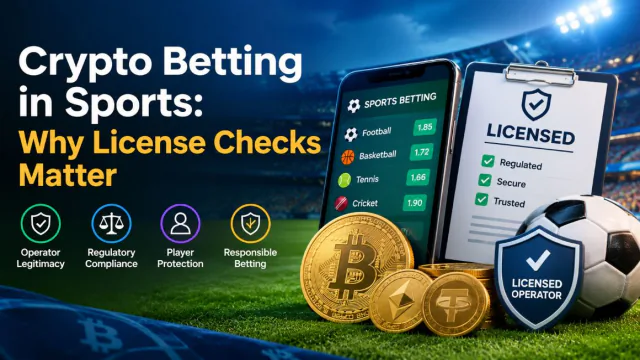
Crypto betting now sits beside Saturday football accumulators, UFC props, and live NBA totals. It feels normal. Yet a sportsbook that takes Bitcoin or USDT is still a gambling business first, so its license should be checked before any wallet connects. A Canadian bettor reading a crypto casino guide at crypto logos before betting should still look for the regulator name, company number, and complaint route. Those details beat a shiny token menu. Someone planning to play in zahraničné kasína for players from Slovakia faces the same test, because offshore branding does not replace a valid permit. Good checks take ten minutes. Bad skips get expensive fast, especially when a withdrawal review asks for ID after a lucky parlay lands.
The license line that separates play from trouble
Start with the footer, not the bonus banner. Serious casinos and sportsbooks name a regulator, show a license number, and list the operating company behind the site. Curaçao permits, Isle of Man approval, Kahnawake permits, Malta Gaming Authority licenses, and UK Gambling Commission licenses all mean different duties. A player should match the number on the site with the regulator’s public register, not a copied badge.
Names matter.
If the sportsbook says it is run by Blue River N.V., the register should show Blue River N.V., not a similar brand or a payment agent. The domain should match too. A mismatch between examplebet.io and examplebet365.com is a red flag, even if the logo looks polished. For sports bettors, this check matters during busy events like the Champions League final, when fake odds pages buy ads and push quick crypto deposits.
What a sports bettor should verify before depositing
A license check is the first gate. The second gate is the house’s own rulebook. It should state who can open an account, which coins are accepted, how odds are settled, and what happens if a match is abandoned after 62 minutes. Tiny print can decide a payout.
Look for withdrawal limits in plain numbers. A site that allows a 5 BTC deposit but pays out 0.05 BTC per day creates a trap for a hot streak. Bonus terms deserve the same cold reading. A 200 percent bonus tied to 40x wagering on accumulator bets is not friendly; it is a long lockup wearing bright colors.
KYC rules also belong in the check. If ID is required only after a win, the process should still be written clearly before deposit. No guessing.
Regulators, blacklists, and the problem with copied badges
Regulator websites are plain, sometimes ugly, and that is fine. They hold the facts. A real register lists license status, date, operator name, domain, and sometimes sanctions. If a sportsbook claims a Malta license, the Malta Gaming Authority register should show that domain. If it does not, the badge is decoration.
Blacklists help, but they are not a full screen. A brand can be new, rebranded, or split across several domains. Players should search the company name plus words like withdrawal, chargeback, voided bet, and terms dispute. Reddit noise needs care, yet repeated stories with screenshots deserve attention.
One more detail counts. Some licenses cover casino games but not sports betting. A site may hold permission for slots while sending football bets through another entity. The license page should say the activity, not just the brand name.
Crypto payments make speed look safer than it is
Blockchain transfers feel clean because they leave a public record. Still, a confirmed transaction does not prove the gambling site is honest. It only proves coins moved. Once a player sends ETH to a deposit address, the dispute is no longer like a card chargeback at a bank.
Stablecoins add another wrinkle. USDT on Tron, USDC on Ethereum, and Bitcoin Lightning all have different fees, confirmation times, and address formats. A licensed sportsbook should explain the network before payment, not after funds disappear into the wrong chain.
There is also pricing. Odds may be shown in euros while the account balance sits in crypto. The exchange rate at bet placement and settlement should be visible. Without it, a winning tennis bet can shrink because the site used a poor internal rate.
International access does not erase local law
Offshore does not mean borderless. A casino may accept a passport, but the player’s home rules still matter. Some countries block unlicensed operators. Others tax gambling wins, require age checks, or limit ads. A site licensed in one place can still break rules in another.
Sportsbooks know this. Their terms usually contain a restricted-country list, and that list changes after legal pressure or payment trouble. Players should read it before deposit, then save a screenshot with the date. Dry paperwork, yes. Useful paperwork too.
VPN use is a common trap. If terms ban location masking, a sportsbook can void bets after a win. The account may work for weeks, right until the withdrawal desk asks for proof of address. Real licensing and honest location data protect the payout better than any odds tip on social media.
A ten-minute check before the next kickoff
Before kickoff, the bettor can run a simple checklist. Find the license number. Open the regulator register in a separate tab. Match the company name, domain, and permitted activity. Read withdrawals, KYC, bonus rules, restricted countries, and crypto network notes. Then test support with one direct question: who handles disputes if a bet settlement is wrong?
Small deposits help. A first transfer should be closer to lunch money than rent money, even when odds on a derby look soft. The player can request a tiny withdrawal after a small win, because payout speed says more than a homepage badge.
If the site hides ownership, blames blockchain delays for every issue, or changes terms mid-promotion, the safest bet is no bet. The next match will still start on time. The license check can start now, with the footer. Save every screenshot before the odds move again.










Disclaimer
Possible11 is a sports news and analysis platform designed purely for entertainment and educational purposes. All match previews, player insights, and team analyses are based on publicly available information and expert opinions. We do not promote or support betting, gambling, or real-money gaming in any form. Users are encouraged to enjoy our content responsibly and use it for informational purposes only.












Give Your Feedback