The fastest way to enjoy pickleball is to understand a handful of core rules before stepping onto the court. Most beginner mistakes happen during the serve, around the kitchen, or because of the two-bounce rule. Once you know these fundamentals, rallies become longer, games become more enjoyable, and you'll play with far more confidence. This guide breaks down the official rules into simple, practical explanations that are easy to remember, whether you're playing doubles with friends or trying singles for the first time.
Pickleball Rules for Beginners
Pickleball has become one of the world's fastest-growing sports because it's easy to learn but challenging to master. It combines elements of tennis, badminton, and table tennis, yet its unique rules create a game focused on strategy rather than power.
If you're playing your first match, you don't need to memorise every rule. Understanding the basics of serving, scoring, the kitchen, and common faults will help you enjoy the game from the very beginning.
Quick Facts
- Pickleball can be played as singles or doubles.
- Doubles is the most popular format for beginners.
- Games are usually played to 11 points and must be won by two.
- Only the serving team scores points under traditional scoring.
- Every rally begins with the two-bounce rule.
- Players cannot volley inside the kitchen.
- A serve must travel diagonally into the opposite service court.
- One serve attempt is allowed per server.
What is Pickleball?
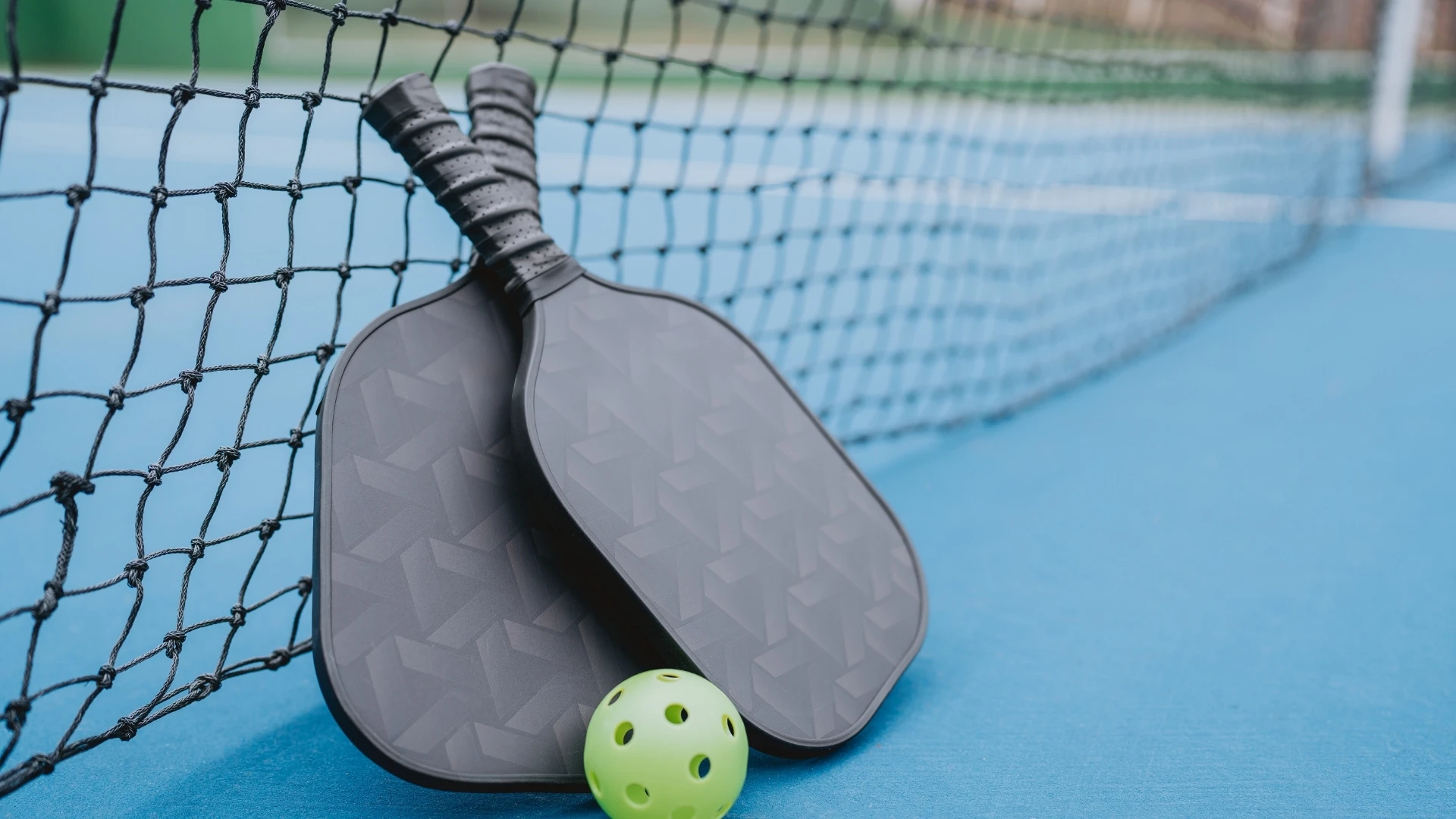
Pickleball is played on a rectangular court with a low net using a solid paddle and a lightweight plastic ball with holes. The court is smaller than a tennis court, making it easier for players of different ages and fitness levels to enjoy.
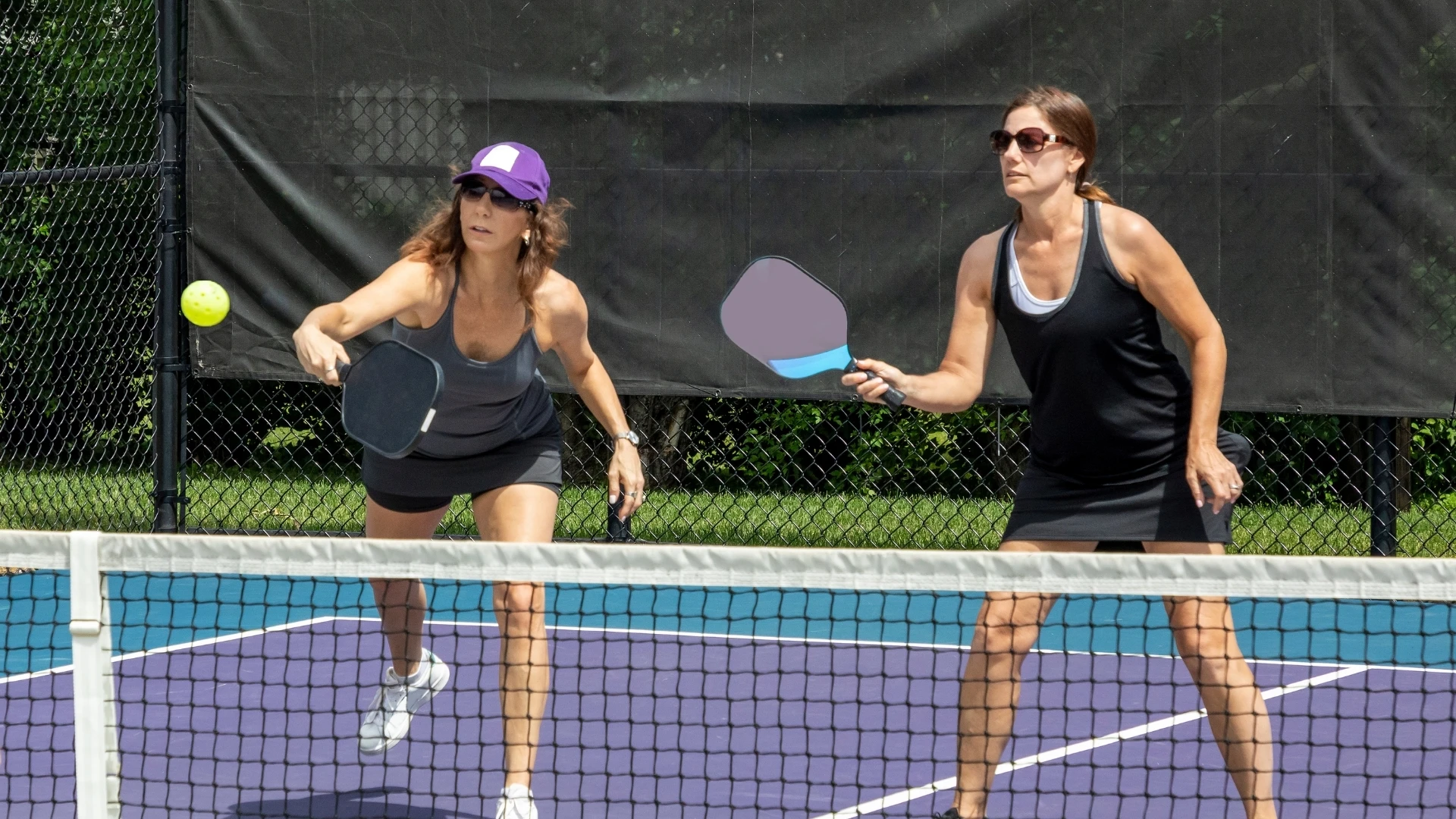
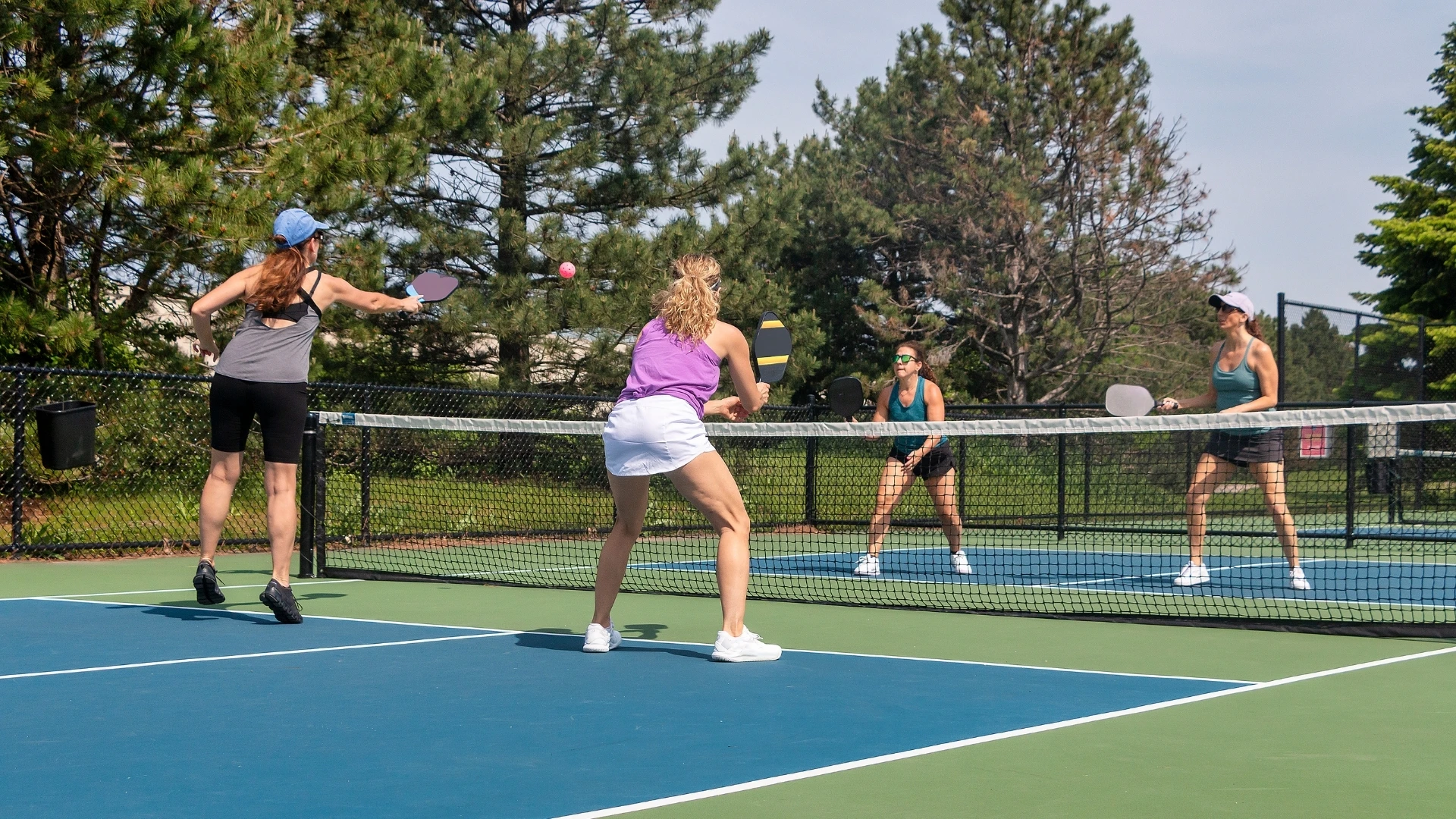
Beginners often choose doubles because each player covers less court, making rallies longer and teamwork more important.
Pickleball Court
Baseline
The baseline is the line at the back of the court. Every serve begins from behind this line.
Sidelines
These mark the outer edges of the court and determine whether a ball is in or out.
Service Courts
Each side of the net is divided into left and right service boxes. Every serve must land diagonally in the opposite service court.
The Kitchen
The seven-foot area on both sides of the net is called the kitchen, officially known as the non-volley zone. This is where one of pickleball's most important rules applies.
How to Serve in Pickleball?

Every point begins with a serve, and beginners should focus on consistency rather than power.
A legal serve follows these rules:
- The paddle should move in an upward motion when striking the ball.
- Contact with the ball must be below waist level.
- The paddle head cannot be higher than the highest part of the wrist at contact.
- A drop serve is also legal. In this type of serve, the restrictions above do not apply.
- At least one foot must remain behind the baseline when serving.
- The server cannot step on the baseline or outside the imaginary extension of the sidelines and centerline while making contact.
- The serve must travel diagonally across the court.
- Only one serve attempt is allowed.
Beginner Tip
Aim for accuracy instead of speed. A legal serve that starts the rally is much more valuable than a powerful serve that lands out.
Service Sequence in Doubles
The serving order is one of the most confusing parts of pickleball for beginners.
Here's how it works:
- The first serve of every side-out starts from the right side.
- If the serving team wins the rally, they score one point.
- The same server switches sides and serves again.
- This continues until the serving team commits a fault.
- The second partner then serves.
- After both players lose their serves, the other team gets the serve.
The only exception comes at the very beginning of the game, when only one player on the starting team serves before the first side-out.
Service Sequence in Singles
Singles is much simpler.
- If your score is even, serve from the right side.
- If your score is odd, serve from the left side.
This pattern continues throughout the match.
How Scoring Works?
Traditional pickleball scoring is straightforward once you understand one important rule.
Only the serving team can score points.
If the receiving team wins a rally, they do not earn a point. Instead, they gain the opportunity to serve after the current serving team loses its serve.
Most recreational games are played to:
- 11 points
- Win by at least two points
Some tournaments use games to 15 or 21 points, but the win by two rule still applies.
Rally Scoring
Some leagues and recreational events now use rally scoring.
Under rally scoring:
- Every rally produces a point.
- It does not matter which team served.
- The winning side of each rally earns one point.
This format speeds up games and has become increasingly popular in some competitions.
The Two Bounce Rule

The two bounce rule is unique to pickleball and creates longer rallies.
Here's how it works:
- The serve must bounce once on the receiving side.
- The receiving team's return must also bounce on the serving side.
- After these two required bounces, both teams may either volley the ball before it bounces or allow it to bounce first.
Without this rule, serving teams could immediately rush the net and dominate points.
For beginners, simply remember:
Serve, bounce. Return, bounce. Then play normally.
The Kitchen Rule
The kitchen is officially called the non-volley zone.
It extends seven feet from both sides of the net.
The biggest rule is simple:
You cannot hit a volley while standing inside the kitchen.
A volley means hitting the ball before it bounces.
Even if you strike the volley outside the kitchen, it's still a fault if your momentum carries you into the kitchen afterwards.
However, you are allowed to enter the kitchen whenever the ball has already bounced.
This encourages players to rely on placement, patience, and soft shots instead of standing at the net and smashing every ball.
Common Faults in Pickleball
A fault immediately ends the rally.
For the receiving team, a fault gives the serving team a point.
For the serving team, a fault usually results in losing the serve.
Common faults include:
- Serving into the net.
- Serving outside the correct service court.
- Serving onto the kitchen line.
- Hitting the ball out of bounds.
- Volleying before both required bounces.
- Volleying while standing in the kitchen.
- Allowing the ball to bounce twice before returning it.
- Touching the net while the ball is in play.
- Violating serving rules.
- Being struck by the ball while it is in play.
- Hitting the ball into a permanent object before it lands on the court.
Avoiding these mistakes will immediately improve your game.
Line Rules

Most lines are considered part of the court.
If the ball touches any boundary line during a rally, it is considered in.
The one important exception involves the serve.
If a serve lands on the kitchen line, it is a fault because the serve must clear the non-volley zone completely.
Doubles vs Singles
Although the rules remain almost identical, the experience feels different.
Doubles
- Most popular format.
- Less court to cover.
- Better for beginners.
- Focuses on teamwork and communication.
Singles
- More physical.
- Requires greater court coverage.
- Places more emphasis on speed and endurance.
Many new players learn doubles first before moving into singles competition.
Beginner Strategies

Knowing the rules is only half the battle. These habits will make you a better player from your first match.
Keep Your Serve Consistent
Don't chase aces. A reliable serve starts every rally.
Respect the Two Bounce Rule
Many beginners lose easy points simply by forgetting to let the ball bounce.
Stay Out of the Kitchen When Volleying
Most kitchen faults happen because players rush the net.
Communicate in Doubles
Call shots early and decide who will take balls down the middle.
Focus on Placement
Accurate shots often beat powerful shots in pickleball.
Stay Patient
Long rallies are common. Waiting for the right opportunity usually produces better results than forcing difficult winners.
Common Beginner Mistakes
New players often repeat the same errors.
Avoid these common mistakes:
- Standing too close to the net on the serve.
- Forgetting which side to serve from.
- Stepping into the kitchen after a volley.
- Trying to hit every shot hard.
- Ignoring communication in doubles.
- Misunderstanding when points are awarded.
- Forgetting the two bounce rule.
Fixing these habits early makes learning much easier.
Official Pickleball Rules Summary
If you only remember a few rules before your first game, remember these:
- Serve diagonally from behind the baseline.
- Only one serve attempt is allowed.
- Let the serve bounce.
- Let the return bounce.
- Don't volley inside the kitchen.
- Only the serving team scores under traditional scoring.
- Most games are played to 11 points and must be won by two.
- Avoid faults by keeping serves in, staying out of the kitchen on volleys, and returning the ball before a second bounce.
These eight rules cover nearly everything a beginner needs to start playing confidently.
What Are the Basic Pickleball Rules for Beginners?
The basic pickleball rules are simple. Serve diagonally from behind the baseline, let the serve and return each bounce once before volleying, avoid hitting volleys from inside the kitchen, score points only while serving under traditional scoring, and play games to 11 points with a two-point winning margin. Most beginners start with doubles because it requires less court coverage and is easier to learn.
What Is the Kitchen Rule in Pickleball?
The kitchen is the seven-foot non-volley zone on both sides of the net. Players cannot hit a volley while standing inside this area, nor can their momentum carry them into it after volleying. They may enter the kitchen freely to play a ball that has already bounced.
How Does Scoring Work in Pickleball?
In traditional scoring, only the serving team can earn points. If the receiving team wins a rally, they gain the serve but do not score. Most recreational games are played to 11 points and require a two-point lead to win. Some competitions also use rally scoring, where every rally awards a point regardless of who served.
Frequently Asked Questions
Is Pickleball Easier Than Tennis?
Many beginners find pickleball easier because of the smaller court, slower ball speed, and simpler movement. While it's easier to start playing, mastering strategy and shot placement still takes practice.
Can You Step Into the Kitchen?
Yes. You may enter the kitchen whenever you are playing a ball after it has bounced. You simply cannot volley the ball while standing there or allow your momentum to carry you into the kitchen after a volley.
How Many Serves Do You Get?
Each server gets only one serve attempt. If the serve is a fault, the serve is lost according to the service sequence.
Can the Ball Hit the Line?
Yes. During rallies, a ball touching any boundary line is considered in. The exception is a serve that lands on the kitchen line, which is a fault.
Do Beginners Usually Play Singles or Doubles?
Most beginners start with doubles because it reduces court coverage, encourages teamwork, and makes learning the game less physically demanding.
How Long Does a Pickleball Game Last?
A recreational game to 11 points usually lasts between 15 and 30 minutes, depending on the length of rallies and the skill level of the players.