You can step into the pickleball kitchen. The mistake is thinking you can hit a volley while standing there. Under the 2026 USA Pickleball rules, the Non-Volley Zone (NVZ), commonly called the kitchen, extends 7 feet from the net on each side, and players may enter it when they are not volleying. The tricky part is that a fault can still occur even when your feet initially stay outside the kitchen if your momentum carries you into it after a volley.
What Is the Pickleball Kitchen?
The kitchen is the informal name for the Non-Volley Zone, the 14-foot-wide area extending 7 feet from the net on both sides.
Its main purpose is to prevent players from standing directly beside the net and repeatedly smashing balls out of the air. A player can stand in the kitchen, but cannot volley the ball while touching the kitchen or its line.
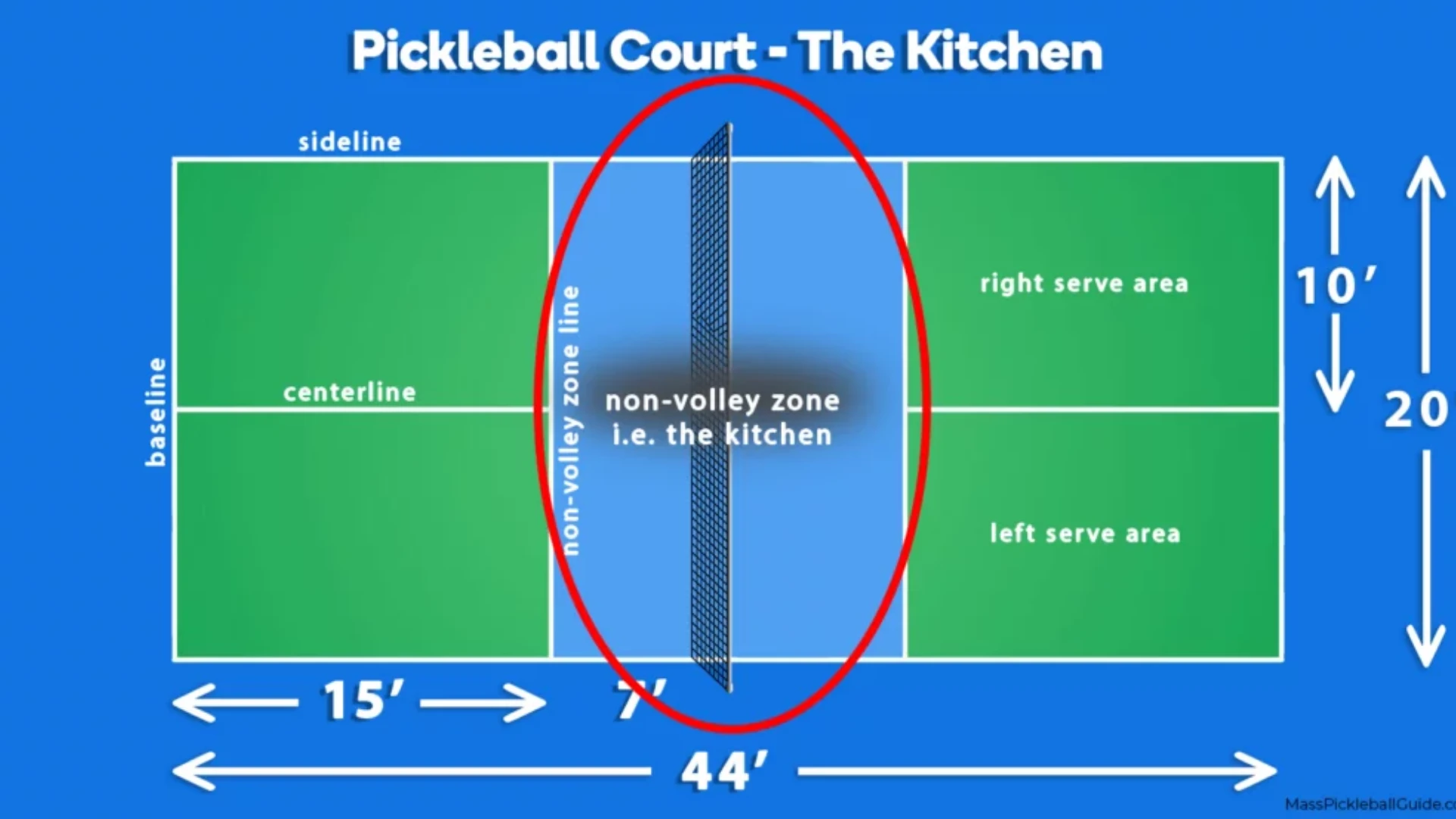
Image Source: Twitter
That distinction is the foundation of the entire kitchen rule.
A ball that has bounced inside the kitchen can be hit while the player is standing there. The restriction applies specifically to volleying, meaning striking the ball before it bounces.
Can You Step Into the Kitchen?
Yes. Stepping into the kitchen is not automatically a fault.
For example, if your opponent hits a soft shot that bounces in the kitchen, you can move forward, step inside the zone and return it after the bounce.
The problem begins when you volley.
If you are standing in the kitchen, touching the kitchen line or otherwise contacting the Non-Volley Zone while volleying, it is a fault. You may legally be in the kitchen at other times.
Example
You hit a ball after it bounces and your foot is inside the kitchen.
Legal.
You hit the ball out of the air while your foot is touching the kitchen line.
Fault.
That small difference is one of the most common sources of confusion for newer players.
What Is a Kitchen Foot Fault?
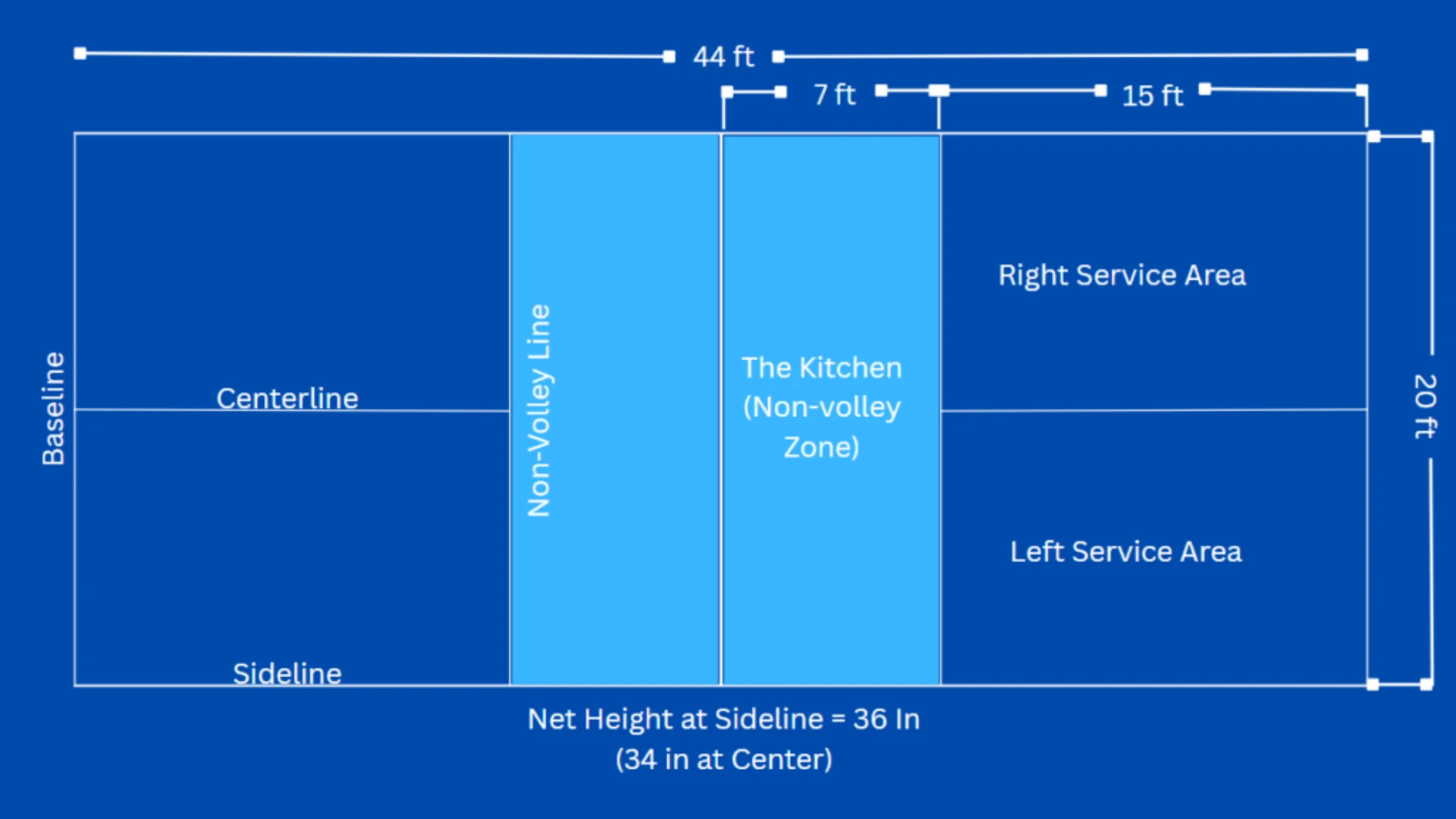
Image Source: Twitter
A kitchen foot fault happens when a player touches the Non-Volley Zone, including the kitchen line, while volleying.
It does not have to be an obvious step across the line. A player can be called for a fault if their shoe, paddle, clothing or another item connected to them contacts the zone during the act of volleying.
This is why players need to pay attention to more than just where their feet land.
Imagine reaching forward for a fast volley. Your feet remain outside the line, but your paddle touches the kitchen while you are making the shot.
That can still be a kitchen fault.
Momentum Can Cause a Kitchen Fault
This is the rule that catches many experienced recreational players.
Suppose you are positioned just behind the kitchen line and hit a volley. The shot is legal when you make contact, but your body continues moving forward. You lose your balance, and your foot touches the kitchen.
It is still a fault.
Under the current rules, the act of volleying includes the movement caused by the follow-through. A player's momentum can therefore turn an apparently legal volley into a kitchen violation. The rule also covers situations where momentum causes the player to contact something that is touching the Non-Volley Zone, including a partner.
There is another important detail: the fault does not disappear simply because the ball becomes dead before the player reaches the kitchen.
So if you hit a volley, start falling forward, and only touch the kitchen after the opponent's shot has already become dead, the momentum rule can still matter.
What Happens If You Touch the Kitchen Before Your Next Volley?
Touching the kitchen does not permanently prevent you from volleying.
But you must first completely re-establish yourself outside the zone according to the rule.
The 2025 rulebook explicitly described this as requiring both feet to make contact with the playing surface completely outside the Non-Volley Zone before volleying again. It also gave the example of a player standing in the kitchen, jumping to hit a volley and landing outside it as a fault.
The practical takeaway is simple:
Do not step into the kitchen, jump out and immediately volley. Get fully established outside first.
What Is a Service Foot Fault?
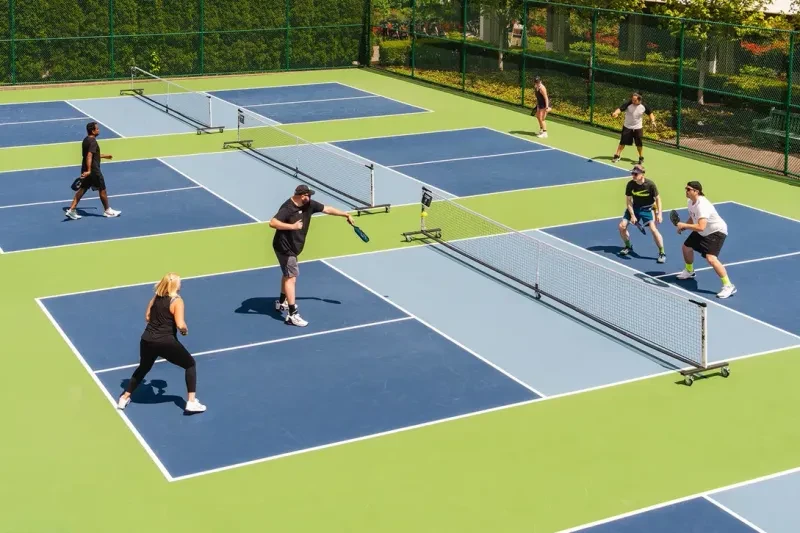
Image Source: Twitter
A service foot fault is different from a kitchen violation.
During a serve, the server must serve from the correct area behind the baseline. Touching the baseline or stepping into the court at the moment of service contact can result in a service foot fault.
This is particularly easy to miss because the server may appear to be behind the line, but a toe can creep onto the baseline during the serving motion.
Service foot faults are specifically recognised in the USA Pickleball rules and are treated separately from Non-Volley Zone faults.
Kitchen Fault vs Service Foot Fault
| Rule | Where it happens | Common mistake |
|---|---|---|
| Kitchen/NVZ fault | At the kitchen | Volleying while touching the zone or line |
| Momentum fault | Near the kitchen | Volleys legally but falls into the zone |
| Service foot fault | Behind the baseline | Touching the baseline/court during service |
Understanding this distinction makes fault calls much easier.
Who Can Call a Kitchen or Foot Fault?
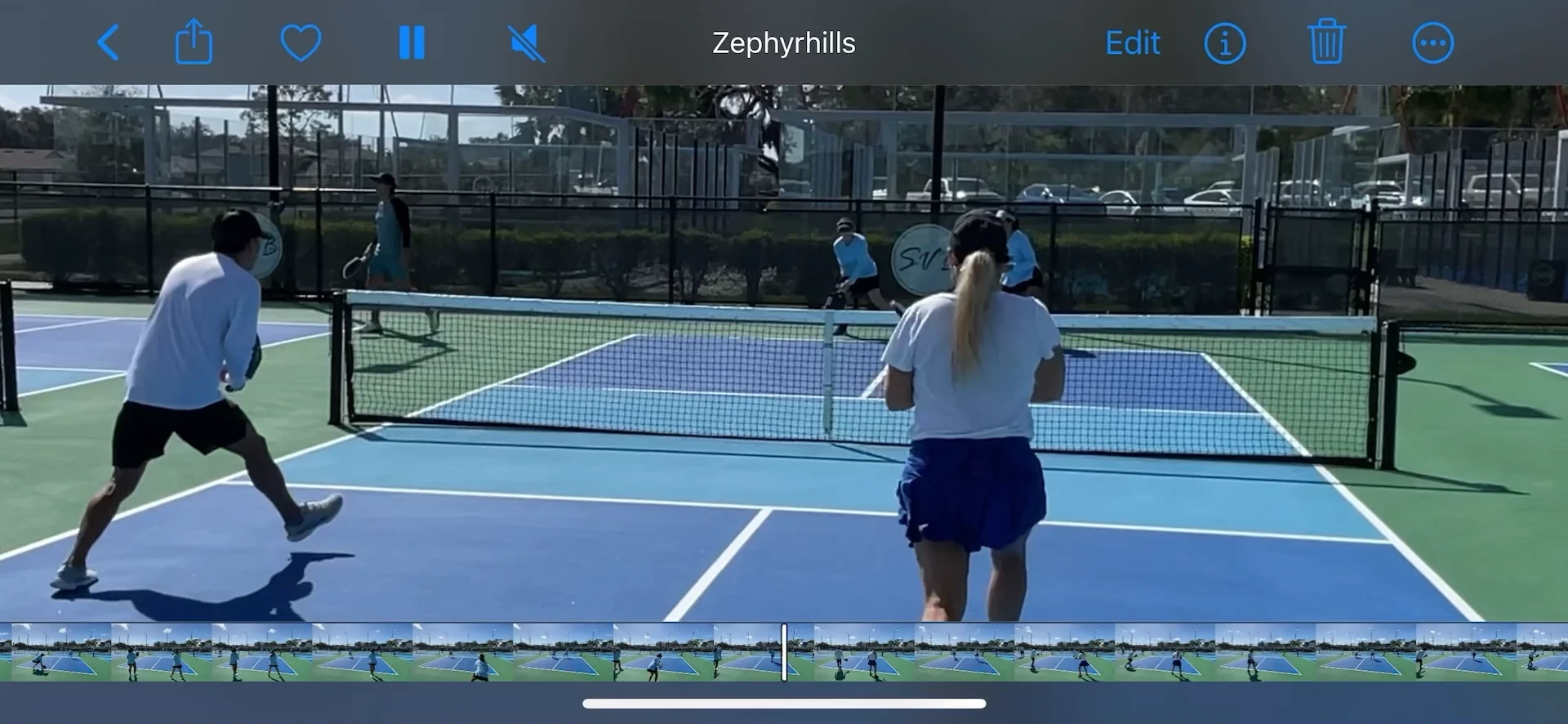
Image Source: Twitter
In non-officiated play, USA Pickleball gives players specific responsibilities for these calls. Players make Non-Volley Zone and service foot-fault calls on their end, while players can also call these particular faults on an opponent's end. A disputed call can result in a replay under the applicable rule.
That is important because not every suspected pickleball violation is treated the same way in recreational play.
The safest approach is to make a clear call as soon as the relevant kitchen or service foot fault is detected and keep the decision consistent with the official rules.
5 Easy Ways to Avoid Kitchen Foot Faults
1. Keep a small safety gap.
Do not position your toes directly against the kitchen line when preparing to volley.
2. Control your forward momentum.
After a volley, recover backwards or stabilise rather than allowing your body to carry you forward.
3. Watch the kitchen line.
Remember that the line itself is part of the Non-Volley Zone.
4. Remember that your equipment matters.
The rule is not limited to your shoes. Items connected to you can also create a violation when they contact the zone during the volley.
5. Separate the serve and kitchen rules.
A service foot fault happens at the baseline; a kitchen fault concerns volleying near the net.
Details
- The kitchen is the Non-Volley Zone.
- It extends 7 feet from the net on each side.
- You can legally stand in the kitchen.
- You cannot volley while touching the kitchen or its line.
- Momentum can carry a legal-looking volley into a fault.
- The kitchen rule is about volleying, not simply entering the zone.
- Service foot faults are separate from kitchen faults.
Why the Kitchen Rule Matters?
The kitchen is more than a line players are forbidden to cross.
It shapes how pickleball is played. Because players cannot simply stand at the net and smash every ball out of the air, rallies rely heavily on controlled dinks, positioning, resets and patience.
That is also why understanding the foot-fault rules matters. A player can make the perfect volley and still lose the rally by taking one uncontrolled step forward.
As pickleball continues to evolve, USA Pickleball is also reviewing proposals for the 2027 rulebook, with the new rules scheduled to take effect on January 1, 2027. That means players should check the latest official rulebook when competing under future rules rather than relying on older explanations.
FAQ
Can you stand in the pickleball kitchen?
Yes. Standing in the Non-Volley Zone is legal as long as you are not volleying the ball.
Can you hit a ball after it bounces in the kitchen?
Yes. You can enter the kitchen and hit a ball after it bounces.
Is touching the kitchen line a fault?
It is a fault if you touch the kitchen line while volleying because the line is part of the Non-Volley Zone.
Can momentum cause a kitchen fault?
Yes. If your momentum after a volley carries you into the Non-Volley Zone, it can be a fault even though your original contact with the ball was made outside the kitchen.
Can your paddle cause a kitchen fault?
Yes. The rules can apply when something in contact with the volleying player touches the Non-Volley Zone during the act of volleying.
What is the easiest way to remember the kitchen rule?
You can enter the kitchen, but you cannot volley while touching it.
Also Read: New to Pickleball? Learn the Rules in Just 10 Minutes