Last Updated - 12 Nov 2026, 12:13 IST
| Country | India |
|---|---|
| State | Maharashtra |
| City | Mumbai |
| Capacity | 50000 |
| Established | 1937 |
| Time Zone | Asia/Kolkat |
| Floodlights | No |
| Owner | Cricket Club of India |
| Location |
Brabourne's pitch drew criticism during the 2006 Champions Trophy for being too slow for one-day cricket. The ground later hosted a high-scoring Test in 2009, when India made 726 for 9 against Sri Lanka. Those matches show that conditions have varied by format and occasion; the available pitch description supports a slow classification, but does not establish a general advantage for batting first or chasing.
Weather during the match time in Mumbai, IN will be cloudy. The temperature is expected to around 30°C on the match day with 65% humidity and 9.1 km/h wind speed. And the visibility is 10 KM. There are no chances of precipitation during the game.
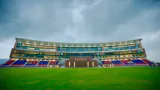
Brabourne Stadium is in Churchgate, Mumbai, near the Churchgate railway station. The Cricket Club of India owns the ground, which is home to the Mumbai men's and women's cricket teams. Mumbai Indians have also played home matches here, and Rajasthan Royals used it as a secondary home venue in the 2015 Indian Premier League season. Brabourne is known for its art deco pavilion, its long association with domestic cricket and its return to international cricket in the 21st century. Its listed capacity is 50,000.
The Cricket Club of India was incorporated on 8 November 1933, and Bombay was selected as the site for its new ground. The club received 90,000 square yards of reclaimed land near Churchgate, along Marine Drive. The foundation stone was laid by Lord Brabourne on 22 May 1936. Designed by Gregson, Batley and King and built by Shapoorji Pallonji & Co., the venue was intended to provide covered seating for 35,000 spectators. The first match, played on the incomplete ground in October 1937, was between the CCI and the Spencer Cup XI.
The ground was formally opened on 7 December 1937 by Roger Lumley, then Governor of Bombay. On the same day, the CCI XI played Lord Tennyson's XI in the inaugural first-class match. The Maharaja of Patiala suggested the name Brabourne. The stadium hosted the Bombay Pentangular from 1937 to 1946 and became an important venue for domestic cricket. It staged 16 Ranji Trophy finals and a Plate final between 1938 and 2008. Bombay appeared in 14 of those finals and won each one.
Brabourne's first Test was India versus West Indies, played from 9 to 13 December 1948. The ground hosted Test cricket from 1948 to 1973, including India's 1952 victory over Pakistan, which helped India secure its first Test series win. After disputes over ticketing arrangements, the Bombay Cricket Association built Wankhede Stadium to the north. Brabourne stopped hosting Tests for a period, although it continued to stage other cricket. International cricket returned with an ODI in 1989, and the venue later hosted the 2006 Champions Trophy, including its final.
The stadium hosted India's first home Twenty20 International, against Australia on 20 October 2007. A Test match against Sri Lanka in December 2009 marked the return of Test cricket after a gap of 36 years, 9 months and 21 days. India scored 726 for 9 and won by an innings, while Virender Sehwag made 293. Brabourne also hosted seven Mumbai Indians home matches in the 2010 IPL season and the 2014 IPL Eliminator between Mumbai Indians and Chennai Super Kings. The opening, Super Six and final matches of the 2013 Women's Cricket World Cup were played here.
The stadium has a central clubhouse pavilion, with the Governor's Pavilion and Maharaja of Patiala Pavilion on either side. The three public stands are the West Stand, North Stand and East Stand; they face the clubhouse from different sides and have large overhanging roofs. The pavilion is a three-storey art deco building with rounded pediments, flagpoles and porthole windows. Its interior includes dark wood wall panelling, decorative marble floors, portraits of cricketers and photographs of notable matches.
The two named ends are the Pavilion End and Church Gate End. The Cricket Club of India owns and operates the ground. Floodlights were installed for the 2006 Champions Trophy. The North Stand formerly housed the BCCI headquarters and the 1983 Cricket World Cup trophy; both moved to the nearby Cricket Centre at Wankhede Stadium in 2006. The venue has also hosted tennis, association football, music shows and concerts.
The strongest specific description of the surface comes from the 2006 Champions Trophy, when the pitch used for the matches was criticised as too slow for one-day cricket. That account supports a slow pitch classification, but does not give boundary dimensions or a pace-versus-spin wicket breakdown. It also does not establish a consistent pattern for batting first compared with chasing.
A different match illustrates how much the ground's scoring conditions can depend on the occasion: in the December 2009 Test against Sri Lanka, India made 726 for 9 and won by an innings. That single match does not supply an average or a general scoring trend. No figures for dew, toss outcomes, innings averages or ground-specific format records are included here.
1937: The CCI XI played Lord Tennyson's XI in the first first-class match at the newly opened ground.
1948: India and West Indies played Brabourne's first Test, from 9 to 13 December.
1952: India beat Pakistan in the first Test at Brabourne to produce a result; the victory helped India win its first Test series.
1989: Brabourne hosted its first ODI, between Pakistan and Australia.
2006: Jerome Taylor took a hat-trick against Australia in a Champions Trophy match, the first by a West Indian in ODIs and the first in the tournament.
2007: India and Australia played the first Twenty20 International on Indian soil at Brabourne.
2009: The Test between India and Sri Lanka followed a gap of 36 years, 9 months and 21 days since the previous Test at the ground.
2009: India scored 726 for 9 against Sri Lanka, its highest Test total at Brabourne.
Where is Brabourne Stadium?
It is in Churchgate, Mumbai, India, near Churchgate railway station.
What is the stadium's capacity?
The listed capacity is 50,000.
Who owns Brabourne Stadium?
The Cricket Club of India owns the ground.
Which teams call Brabourne Stadium home?
It is home to the Mumbai men's and women's cricket teams. Mumbai Indians have also played home matches there, and Rajasthan Royals used it as a secondary home in the 2015 IPL season.
What are the ends at Brabourne Stadium?
The ends are the Pavilion End and the Church Gate End.
When did the stadium open?
It was formally opened on 7 December 1937.
When was the first Test played at Brabourne?
India and West Indies played the first Test there from 9 December 1948.
How does the pitch play?
The pitch used for the 2006 Champions Trophy was criticised as too slow for one-day cricket. A 2009 Test saw India score 726 for 9, but that result does not establish a consistent scoring trend.
Does Brabourne Stadium have floodlights?
Yes. Floodlights were installed for the 2006 Champions Trophy.
What other name is Brabourne Stadium known by?
The provided ground information identifies it as Brabourne Stadium and does not give another or former name.
 45%
| T20 Statistics | |
|---|---|
| Total matches | 9 |
| Batting first won | 5 |
| Bowling first won | 6 |
| 1st inn avg score | 165 |
| 2nd inn avg score | 150 |
| Highest Total | 209/4 |
| Lowest Total | 96/10 |
| Highest Chased | 199/3 |
| Lowest Defended | 172/8 |
| ODI Statistics | |
|---|---|
| Total matches | 32 |
| Batting first won | 17 |
| Bowling first won | 15 |
| 1st inn avg score | 247 |
| 2nd inn avg score | 196 |
| Highest Total | 438/4 |
| Lowest Total | 55/10 |
| Highest Chased | 284/4 |
| Lowest Defended | 192/9 |
| Test Statistics | |
|---|---|
| Total matches | 27 |
| Batting first won | 11 |
| Bowling first won | 8 |
| 1st inn avg score | 339 |
| 2nd inn avg score | 335 |
| 3rd inn avg score | 205 |
| 4th inn avg score | 131 |
| Highest Total | 631/10 |
| Lowest Total | 62/10 |
| Highest Chased | |
| Lowest Defended | |