The Iran war day 90 developments have once again pushed the Middle East into the global spotlight. Just when many hoped diplomacy might cool tensions, fresh US strikes near Iran’s strategic Bandar Abbas port have reignited fears of a wider regional escalation. The Strait of Hormuz, one of the world’s most crucial oil transit chokepoints, has become the latest flashpoint, sending ripples across global markets and raising concerns from Washington to New Delhi.
What unfolded over the last 24 hours is more than another military headline. It is a sharp reminder of how quickly fragile diplomacy can unravel when military posturing enters one of the world’s most sensitive waterways.
What Happened on Iran War Day 90?
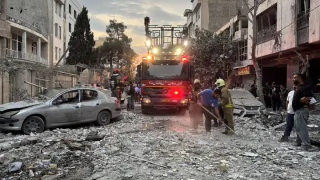
Reports emerging from Iranian state media confirmed explosions near Bandar Abbas, located close to the Strait of Hormuz. The United States described the strikes as targeted actions against what it called threats to maritime traffic and American forces operating in the region.
Iran, however, downplayed the incident. Officials claimed there were no casualties, no structural damage, and no significant disruption. The Iranian outlet Tasnim cited military sources alleging that the confrontation began after the Islamic Revolutionary Guard Corps Navy opened fire on a US-linked tanker accused of crossing the Strait with its radar systems turned off.
The US response reportedly involved precision firing near Bandar Abbas, a move that instantly heightened tensions around one of the world’s busiest energy corridors.
For global observers, this marks another critical chapter in the escalating Iran-US conflict that has now stretched into 90 days.
The Strait of Hormuz is not just another waterway. Nearly one-fifth of the world’s oil supply passes through this narrow corridor connecting the Persian Gulf to international markets.
Any instability here carries immediate consequences for:
- Global crude oil prices
- Shipping insurance costs
- Energy-importing nations like India
- International trade confidence
With tensions flaring near Bandar Abbas, markets are closely watching whether shipping operations will remain uninterrupted. For India, which depends heavily on Gulf energy imports, prolonged disruption could directly impact fuel costs and inflation.
That is why Iran war day 90 updates are drawing attention far beyond the Middle East.
Iran US Diplomatic Deadlock
While military exchanges dominated headlines, diplomacy remains stuck in a tense stalemate.
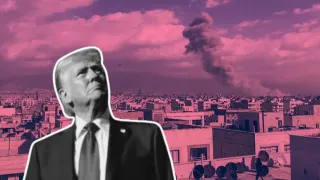
US President Donald Trump doubled down on Washington’s hardline position, stating that Iran would receive no sanctions relief unless it fully surrendered its enriched uranium stockpile.
Iran has repeatedly rejected those demands, calling them non-negotiable.
Adding further pressure, the US Treasury imposed sanctions on Iran’s Persian Gulf Strait Authority, the body responsible for managing transit requests through the Strait of Hormuz.
The move sends a clear message: economic pressure remains central to Washington’s strategy even as military tensions intensify.
This combination of sanctions and strikes makes any immediate breakthrough in Iran's nuclear negotiations increasingly uncertain.
Regional Impact Beyond Iran
The conflict’s ripple effects are now visible across the wider Gulf region.
In Kuwait, military air defence systems reportedly intercepted hostile drones and missiles, triggering warning sirens and brief panic among residents.
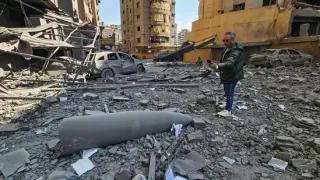
Meanwhile, tensions also escalated in Lebanon and Gaza. Israel issued evacuation orders in parts of southern Lebanon, citing Hezbollah-linked military activity. Hezbollah responded with multiple reported operations targeting Israeli military positions.
In Gaza, crowds gathered for the funeral procession of Hamas commander Mohammad Odeh, killed in an Israeli strike. His death adds another layer of instability to an already volatile regional landscape.
These parallel developments show that Iran's war day 90 is no longer an isolated US-Iran confrontation. It is part of a broader web of escalating Middle East conflict.
The biggest question now is whether this latest exchange signals a temporary show of force or the start of a more dangerous phase.
Analysts believe much depends on whether backchannel diplomacy can survive the mounting military pressure. The Strait of Hormuz remains the world’s pressure valve, and any attempt to disrupt control over it could trigger severe geopolitical and economic consequences.
For now, the world watches as Iran's war day 90 unfolds with rising uncertainty. The latest US strikes may not have caused physical damage, but politically, they have sent a powerful message that the standoff is far from over.
As tensions rise, the stakes extend far beyond Iran and the United States. From oil markets to regional security, the outcome of this crisis could shape global stability for months to come.