Women's football in England has been shaped by generations of Black British women who challenged barriers, made history and created opportunities for those who followed. From Kerry Davis, the first Black woman to represent England, to Lauren James, a key figure in the modern Lionesses setup, their achievements extend far beyond the pitch.
Some helped establish the foundations of the international game when opportunities for women were limited. Others went on to redefine professional football, coaching and sports broadcasting. Their stories reveal how individual achievements can help change the wider sporting landscape.
Here are five Black British women whose contributions have left a lasting mark on women's football.
1. Kerry Davis: First Black Woman to Play for England
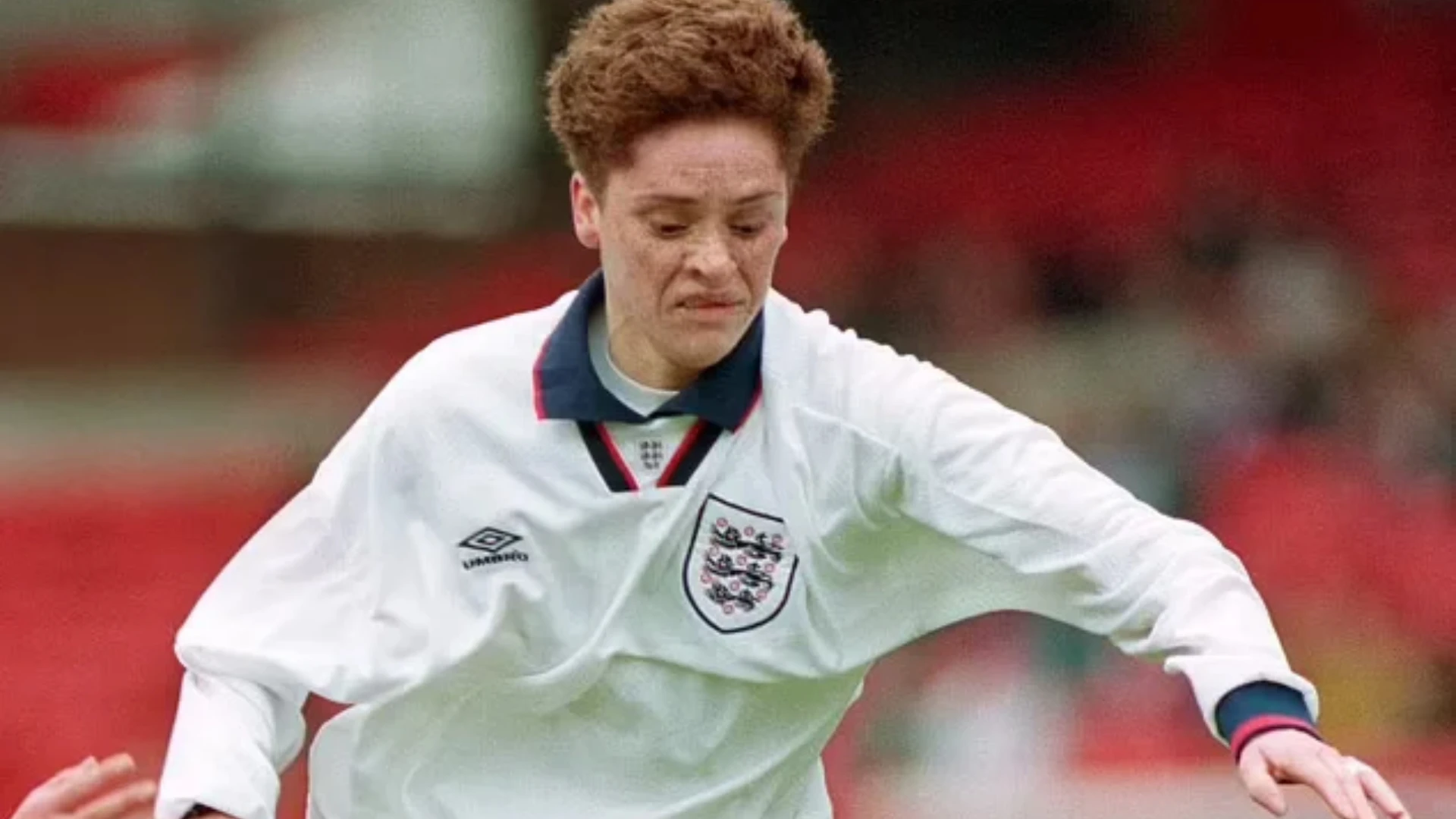
Image Source: Twitter
Kerry Davis made history in September 1982 when she became the first Black woman to represent England in women's international football. The striker scored twice on her debut against Northern Ireland, announcing herself as a player capable of changing matches at a time when the women's game received far less recognition than it does today. England Football later recognised her pioneering contribution when she received an MBE for services to football and diversity in sport in May 2026.
Davis's early international performances quickly established her reputation. A fortnight after her debut, she scored all four goals in England's 4-0 victory over Scotland. These performances were the beginning of a career that would make her one of the most influential forwards in the country's women's football history.
Her international journey unfolded before England's nationwide women's league was established in 1991. After starting at Crewe Alexandra, Davis spent four years in Italy with Lazio, Trani and Napoli, experiencing a football environment that differed from what many women in England had.
She helped England reach the final of the 1984 European Championship, featured in the country's 1985 Mundialito triumph and represented the national side at the 1995 FIFA Women's World Cup. Her final England appearance came in 1998.
Davis finished her international career with 90 appearances and 43 goals, according to England Football. She held England's women's goalscoring record until Kelly Smith surpassed her tally in 2012. At club level, Davis also helped Croydon win the league and FA Cup double in the 1995-96 season.
Her legacy is about more than statistics. Davis paved the way for Black women who wanted to represent England, doing so when visibility and opportunities were limited. Her recognition with an MBE in 2026 brought renewed attention to a career that had helped shape the Lionesses long before their modern success.
2. Hope Powell: England Women's Football Coach
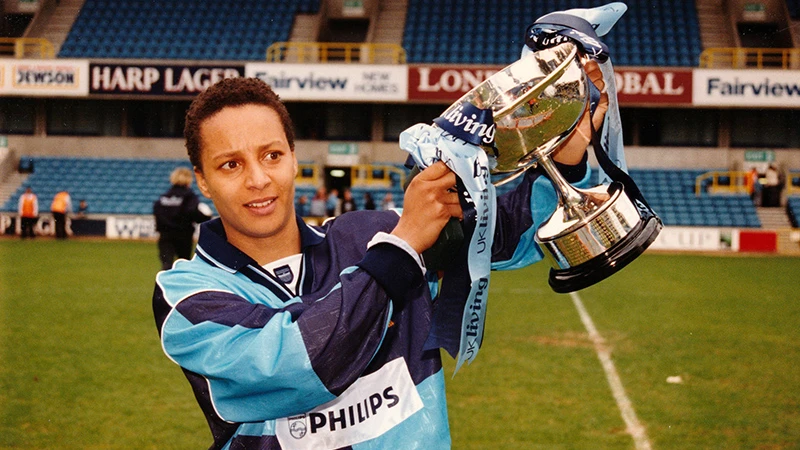
Image Source: Twitter
Hope Powell's influence on English women's football extends from her playing career to her groundbreaking work as a national-team coach. In 1998, she became England's first full-time women's national-team coach and the first woman to hold the position. She was still an active player when she took on the role, making the transition from international footballer to national-team manager unusually demanding.
Powell inherited a team that needed greater structure, resources and a clearer route to competing consistently at major tournaments. Rather than stepping into an established system, she helped develop one over the course of a 15-year tenure.
Her England side reached the European Championship final in 2009, marking a major milestone for the national team. Powell also guided England to the quarter-finals of the FIFA Women's World Cup in 2007 and 2011. In 2012, she coached Great Britain's women's team at the London Olympic Games, giving the sport an important platform during a home Olympics.
Powell left the England role in 2013 after overseeing 162 matches, a record for the national team. Although England's group-stage exit at Euro 2013 brought her tenure to an end, her wider contribution cannot be judged by that tournament alone.
She helped establish a more developed pathway for younger England players and pushed for greater investment in the women's game. Her work also demonstrated that women could lead national teams at the highest level while helping change the expectations surrounding coaching.
Powell's story matters because the progress of a national team depends on more than talented players. Coaching structures, development programmes and sustained investment all influence whether a country can compete with the best. Her tenure helped lay important foundations for the Lionesses who followed.
3. Rachel Yankey: England Football Pioneer
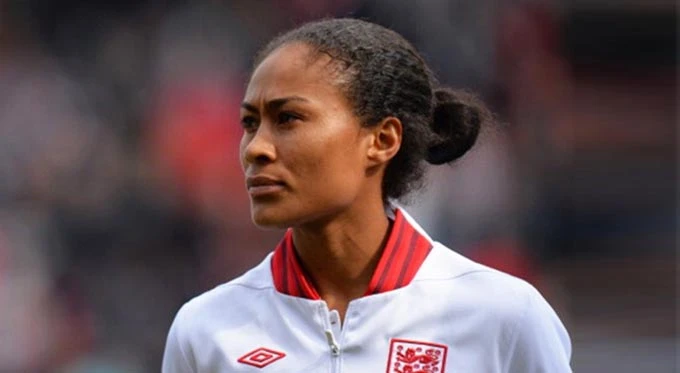
Image Source: Twitter
Rachel Yankey became one of the defining players of English women's football by combining individual talent with a career that helped make professional opportunities more attainable for women.
Growing up in London, Yankey faced an obstacle that many young girls would recognise: finding a place to play. As a child, she disguised herself as a boy to continue playing football. That experience illustrates how participation was restricted by attitudes towards girls in the sport, even before players reached the professional level.
Her career eventually took her to the top of the domestic game. Yankey became the first female footballer in England to sign a professional contract, doing so with Fulham after beginning her senior career at Arsenal. Her move represented an important step towards a future in which women could pursue football as a profession rather than treating it as a secondary activity.
At Arsenal, Yankey became part of a dominant team that won domestic trophies and European honours. She featured in the club's 2006-07 campaign, when Arsenal completed an unprecedented quadruple, including the UEFA Women's Cup, the competition now known as the UEFA Women's Champions League.
Her England career was equally impressive. Yankey won 129 senior international caps and scored 19 goals, representing her country over a period of 16 years. She also represented Great Britain at the London 2012 Olympics. The FA's profile of Yankey records her achievements as a professional pioneer and one of the country's most decorated players.
What makes Yankey's story particularly powerful is the distance between the barriers she faced as a child and the achievements she later collected. She helped create a more visible future for girls who wanted to play football seriously, while her success showed that English women's football could produce players capable of dominating domestically and competing in Europe.
4. Alex Scott: Football Career and Broadcasting
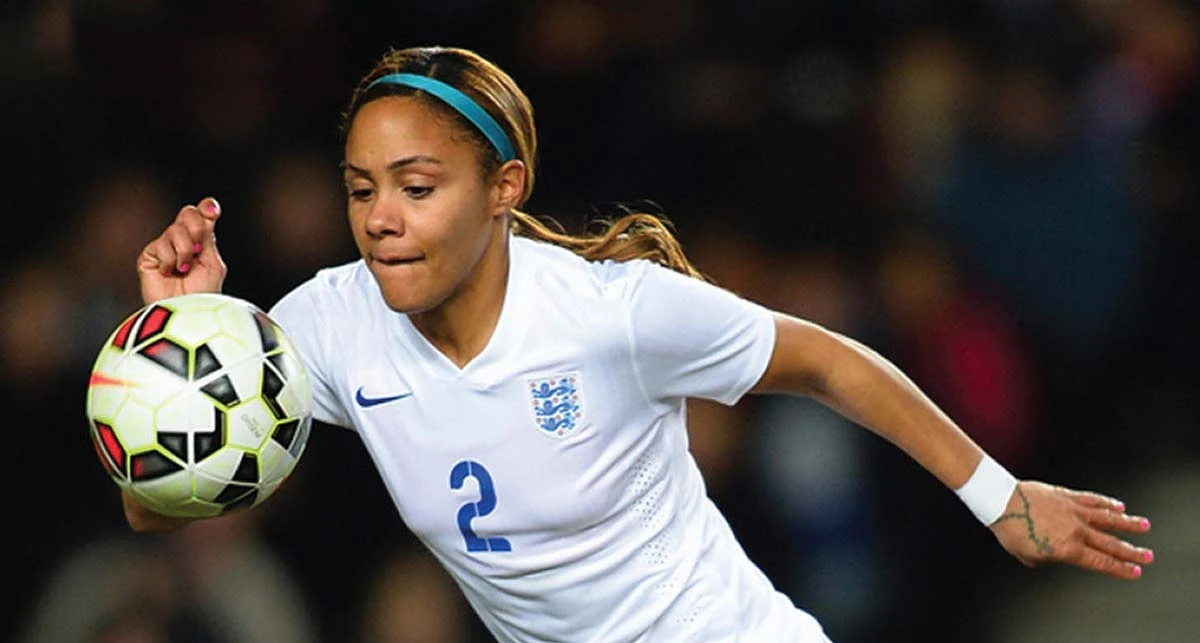
Image Source: Twitter
Alex Scott built a successful playing career before becoming one of the most recognisable women in British football broadcasting. Her journey demonstrates how footballers can continue to influence the sport long after retiring from international competition.
Scott came through Arsenal's youth system and became a key figure for the club and England. Her defining club moment arrived during the 2006-07 UEFA Women's Cup final against Umeå IK. Scott scored the only goal of the first leg in the 91st minute, helping Arsenal secure the European title after a goalless second leg.
That victory formed part of Arsenal's remarkable quadruple-winning season. Scott went on to win multiple domestic honours with the club, establishing herself as one of the most successful defenders of her generation.
Internationally, she earned 140 caps for England and represented Great Britain at the 2012 London Olympics. She also helped England finish as runners-up at the 2009 European Championship and win bronze at the 2015 Women's World Cup. The FA confirmed her international retirement in 2017.
Scott's next challenge was building a career in broadcasting, an industry in which women had historically been underrepresented in prominent football roles. She developed her journalism and presenting skills while still playing, then moved into television work after retiring from international football.
In 2018, she became a prominent female pundit on Sky Sports' Super Sunday coverage. She subsequently became the first permanent female presenter of BBC's Football Focus in 2021, extending her influence beyond the pitch.
Her broadcasting career has also brought attention to the abuse faced by women in football media, including racist and sexist harassment. Scott's visibility has helped challenge assumptions about who can analyse, present and lead conversations about the sport.
Her legacy therefore spans two fields: she helped Arsenal achieve European success and has helped make football broadcasting more accessible to women and more representative of the audience watching the game.
5. Lauren James: A Modern Star Carrying the Legacy Forward
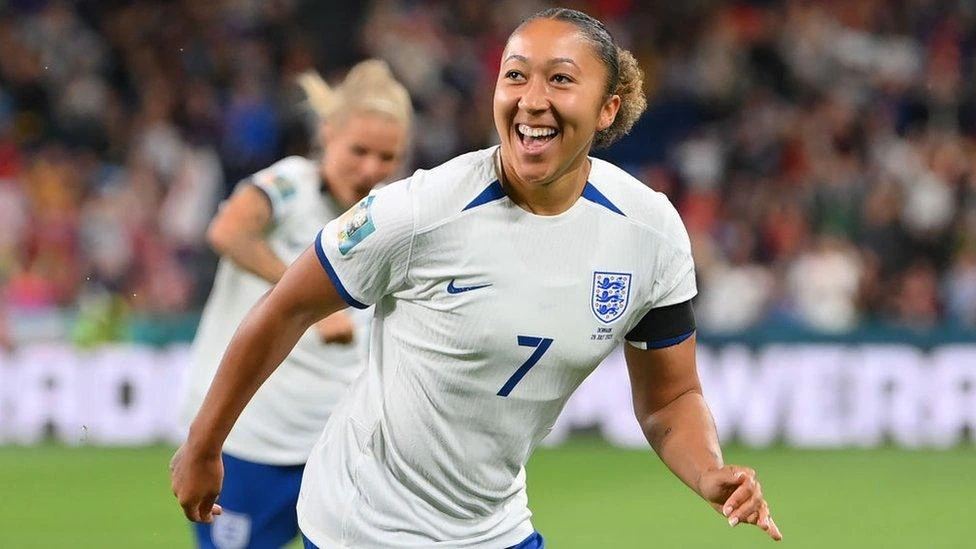
Image Source: Twitter
Lauren James represents a new generation of Black British football talent. Known for her close control, ability to glide past defenders and capacity to create chances under pressure, the England forward has become a key player for Chelsea and the Lionesses.
James began her senior career at Arsenal, where she made her first-team debut in 2017. She later joined Manchester United, helping the club win promotion to the Women's Super League, before returning to Chelsea in 2021. Since then, she has won major domestic honours and established herself as one of England's most technically gifted attacking players.
Her international career has delivered an equally important milestone. James was part of England's squad that won the UEFA Women's EURO 2025 in Switzerland, successfully defending the European title. The victory was particularly historic because England became the first senior national team from the country to win a major tournament on foreign soil.
James's importance extends beyond her performances. In 2024, she launched the LJ10 scholarship initiative to help improve diversity in women's football and support talented girls who need greater opportunities to progress. The initiative reflects a broader challenge facing the sport: ensuring that talent is not lost because aspiring players lack access to the right development pathways.
Her career has not been without setbacks. Injuries have interrupted her progress, while racist abuse directed at her has highlighted the discrimination that remains in football. Chelsea and England have condemned racist abuse against the player.
Nevertheless, James continues to represent the possibilities available to the next generation. Her technical quality attracts attention on the pitch, while her work to widen access to the game adds another dimension to her influence.
The contrast between James's professional environment and the limited opportunities experienced by earlier pioneers shows how much women's football has changed. It also demonstrates why representation and investment remain important: progress is most meaningful when talented young players can see a future for themselves in the sport.
FAQ
Who was the first Black woman to play for England in women's football?
Kerry Davis became the first Black woman to represent England in women's international football when she made her debut against Northern Ireland in September 1982.
Who was England's first full-time women's national-team coach?
Hope Powell became England's first full-time women's national-team coach in 1998. She remained in charge until 2013 and oversaw 162 matches.
Why is Rachel Yankey important to women's football?
Rachel Yankey became the first female footballer in England to sign a professional contract. She won 129 England caps and helped Arsenal achieve major domestic and European success.
What did Alex Scott achieve as a footballer?
Alex Scott earned 140 England caps and scored the winning goal in the first leg of Arsenal's 2007 UEFA Women's Cup final. She later built a career as a leading football broadcaster.
What is Lauren James known for?
Lauren James is an England international and Chelsea forward known for her technical ability and attacking creativity. She was part of England's UEFA Women's EURO 2025-winning squad and launched the LJ10 scholarship initiative to support diversity in women's football.