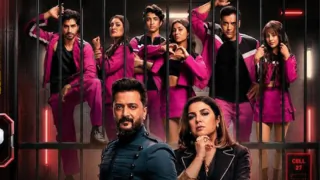
Prime Video's Alliance arrives with a bold promise: 16 contestants, constantly changing alliances, fresh wildcard entries, and six weeks of unpredictable gameplay. After watching the premiere, however, one thing becomes clear almost immediately: the format feels newer than the people playing it.
The first episode doesn't fail because of its concept. In fact, the concept may be the show's strongest weapon. What holds it back is the familiar reality show playbook that most contestants seem determined to follow.
If Episode 1 proves anything, it's that Alliance has potential, but not yet momentum.
Review
Rating: 3/5
- Kunal Kemmu is surprisingly natural as a host.
- The replacement contestant format keeps the game unpredictable.
- Ravi Kishan brings warmth and authenticity.
- One late-game decision finally injects genuine suspense.
What doesn't work?
- Contestants feel overly prepared for the cameras.
- Early alliances resemble every other Indian reality show.
- Drama often feels manufactured instead of organic.
- The premiere lacks the addictive hook expected from a daily reality series.
Kunal Kemmu Is the Biggest Surprise
Reality shows often rely on loud hosts who constantly remind viewers that every moment is historic.
Kunal Kemmu does the opposite.
He doesn't try to dominate the screen. Instead, he allows contestants to take the focus while quietly steering conversations when necessary. His relaxed humour, understated sarcasm and effortless timing make him feel less like a presenter and more like an audience representative inside the bunker.
It's an unconventional casting choice, and arguably the smartest decision the makers have made.
Alliance Format Is the Biggest Strength
What separates Alliance from most Indian reality shows is its evolving cast.
Instead of shrinking week after week until a handful of finalists remain, the show introduces new contestants whenever someone exits. That means relationships, loyalties and strategies never remain stable for long.
This single twist could dramatically change how reality television unfolds.
Instead of protecting long-term friendships, contestants may constantly need to rebuild trust with strangers entering midway through the competition.
If executed well, this format has the potential to prevent the predictable mid-season slowdown that affects many reality shows.
Alliance Contestants
The contestant lineup mixes actors, influencers, television personalities and digital creators.
Some of the most talked about entries include:
- Kushal Tandon
- Zaid Darbar
- Daisy Shah
- Ravi Kishan
- Riva Kishan
- Niti Taylor
- Ruhee Dosani
- Nikhil Chinapa
- Mini Mathur
- Payal Dhare (Payal Gaming)
- Dolly Javed
- Vansh Singh
- Arslan Goni
On paper, it's a diverse cast capable of producing compelling television.
In reality, many contestants begin playing exactly as seasoned reality show viewers would expect, forming groups, discussing loyalty, making quick judgments and trying to establish screen presence within minutes.
Very little feels spontaneous.
Kushal Tandon and Zaid Darbar
Among all contestant entries, the most intriguing dynamic arrives with Kushal Tandon.
His past relationship with Gauahar Khan naturally creates curiosity because Gauahar is now married to Zaid Darbar.
The show doesn't aggressively exploit this history, but viewers immediately notice moments of visible awkwardness after Kushal enters.
Whether this becomes a major storyline or quietly fades into the background remains to be seen, but Episode 1 wisely allows audiences to speculate rather than overdramatise the situation.
Sometimes silence creates better television than forced confrontation.
Ravi Kishan and Riva Kishan
While most contestants arrive ready to compete, Ravi Kishan arrives with emotion.
His participation alongside daughter Riva introduces a genuine father-daughter storyline that immediately feels different from the strategic conversations happening elsewhere inside the bunker.
Riva openly talks about spending more meaningful time with her father, while Ravi balances encouragement with healthy competitiveness.
Their interactions feel refreshingly unscripted.
For a show filled with calculated gameplay, this emotional layer provides a welcome contrast.
Biggest Problem in Alliance Episode 1
Modern reality television faces an unusual challenge.
Contestants no longer enter as ordinary people, discovering the experience.
They arrive after watching years of Bigg Boss, Lock Upp, Roadies and countless international reality formats.
As a result, Episode 1 often feels like contestants performing reality show behaviour rather than living it.
Friendships are announced too quickly.
Loyalties are declared too confidently.
Conflicts escalate before viewers have had time to understand anyone's personality.
Instead of watching relationships develop naturally, audiences are handed alliances almost immediately.
Ironically, for a show called Alliance, those alliances rarely feel earned.
Alliance Episode 1 Ending
The premiere saves its best moment for the final stretch.
Without revealing spoilers, one contestant chooses gameplay over loyalty, creating the episode's first genuinely unpredictable decision.
It's exactly the type of calculated risk that reality television thrives on.
Unlike earlier confrontations that feel somewhat performative, this decision carries visible consequences and finally raises an important question:
Who is actually here to win, and who is simply here to remain visible?
That uncertainty gives viewers a reason to continue watching.
Is Alliance Worth Watching?
Yes, but mainly because of its format rather than its first episode.
The premiere doesn't immediately distinguish itself from existing Indian reality shows, and many contestant interactions feel familiar.
However, Kunal Kemmu's confident hosting, Ravi Kishan's emotional presence and the constantly changing contestant structure suggest the series could improve significantly once strategies begin collapsing and new entrants disrupt existing alliances.
If you're expecting explosive drama from Day One, Alliance may feel underwhelming.
If you're interested in watching relationships evolve over six weeks under a constantly changing format, the show deserves a few more episodes.
Alliance begins with more promise than payoff. Its innovative elimination system offers something Indian reality television genuinely hasn't explored at this scale, but Episode 1 struggles to escape the clichés that dominate the genre.
For now, Kunal Kemmu emerges as the premiere's biggest winner, while the format remains the show's strongest selling point. The contestants still need to convince viewers that they're playing a new game, not simply repeating an old one.
If the makers successfully use fresh entrants to disrupt predictable alliances, Alliance could evolve into one of the more interesting reality experiments of the year.
Episode 1, however, is more of a foundation than a breakthrough.
FAQs
Is Alliance different from Bigg Boss?
Yes. The biggest difference is that eliminated contestants are replaced with new participants throughout the season, allowing alliances and strategies to evolve constantly.
Who is the host of Alliance?
Actor Kunal Kemmu hosts the reality competition and delivers one of the strongest performances in the premiere episode.
Who are the biggest contestants in Episode 1?
Some of the most recognisable names include Ravi Kishan, Riva Kishan, Kushal Tandon, Zaid Darbar, Daisy Shah, Nikhil Chinapa, Mini Mathur, Niti Taylor and Payal Gaming.
Should you watch Alliance after Episode 1?
If you're a fan of reality competition shows, it's worth giving a chance for a few more episodes. The format has genuine potential even if the premiere doesn't fully capitalise on it.
Also Read: Alliance Release Date, Contestants and Format Twist