

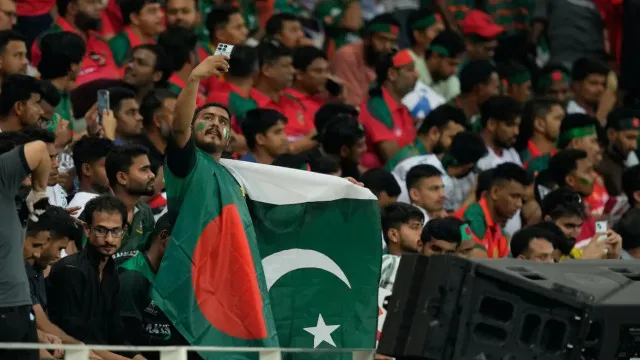
The build-up to the 2026 men’s T20 World Cup has taken a dramatic turn as uncertainty looms over Bangladesh’s participation. What was expected to be a celebration of global cricket is now overshadowed by diplomatic tension, administrative deadlock, and rising concern among players and fans alike.
With only weeks left before the tournament begins, the situation has escalated into one of the most serious governance challenges the International Cricket Council has faced in recent years. Multiple boards are now involved, and the outcome could set a precedent for future global events.
At the heart of the issue lies a standoff between the ICC’s commitment to a fixed tournament schedule and Bangladesh’s refusal to tour India amid political unrest in the region.
ICC board meeting set to decide Bangladesh participation
The ICC Board is expected to meet on Wednesday to take a final decision on whether Bangladesh will participate in the 2026 men’s T20 World Cup. This meeting has become critical as the deadline for clarity is rapidly approaching.
With less than three weeks remaining before the tournament begins, uncertainty over one full member nation threatens scheduling, broadcasting, and logistical planning.
The decision is expected to shape not only this tournament but also how future ICC events handle political and security disputes.
PCB writes to ICC supporting Bangladesh stance
On Tuesday, the Pakistan Cricket Board formally wrote to the ICC stating that it supports the Bangladesh Cricket Board’s position of not wanting to play matches in India during the current political situation.
The communication was also shared with ICC Board members, signaling that the issue has expanded beyond a bilateral disagreement into a broader governance concern.
While the PCB did not issue a public statement, its involvement has added a new layer of complexity to an already fragile situation.
Bangladesh seeks matches to be shifted to Sri Lanka
The Bangladesh Cricket Board has requested that its group-stage matches be moved from India to Sri Lanka, citing security concerns and political instability.
Sri Lanka is a co-host of the tournament, making the request logistically possible, though administratively contentious.
The ICC, however, has so far maintained that the tournament schedule will not be altered.
ICC remains firm on original tournament schedule
Despite repeated discussions, the ICC has communicated clearly that Bangladesh must play its matches as originally scheduled.
Officials believe that changing venues could open the door to similar demands from other teams in future tournaments.
This firm stance reflects the governing body’s desire to preserve neutrality and operational stability.
Multiple meetings fail to resolve deadlock
The ICC and BCB have held several rounds of discussions in recent weeks, including high-level meetings in Dhaka.
Despite these talks, neither side has shifted its position, resulting in a complete stalemate.
January 21 was set as an informal deadline to reach a resolution, making the upcoming ICC Board meeting decisive.
Bangladesh government backs cricket board decision
The Bangladesh government has publicly supported the BCB’s decision not to travel to India.
This official backing has significantly limited the board’s ability to compromise.
With state support in place, the matter has moved beyond cricket administration into diplomatic territory.
Political tensions at the root of crisis
The dispute is rooted in deteriorating political relations between India and Bangladesh.
While cricket boards traditionally operate independently, geopolitical developments have increasingly influenced sporting decisions.
This situation highlights how international cricket remains vulnerable to regional instability.
Trigger point linked to IPL 2026 controversy
The current crisis reportedly began after Mustafizur Rahman was removed from an IPL franchise squad ahead of the 2026 season.
The decision was never clearly explained, but political considerations were widely believed to be a factor.
This incident intensified diplomatic sensitivity and prompted official intervention from Bangladesh authorities.
Impact on Bangladesh players and domestic cricket
The uncertainty has begun affecting players at the domestic level.
A brief player boycott disrupted the Bangladesh Premier League after remarks by a senior official sparked backlash.
The episode reflected growing anxiety among players over their international future.
Speculation around Pakistan role deepens crisis
In recent days, speculation emerged suggesting Pakistan could offer to host Bangladesh matches.
There were also unverified reports that Pakistan might review its own participation depending on the final outcome.
Although unconfirmed, such reports have heightened the sense of instability.
PCB silence adds to uncertainty
The Pakistan Cricket Board has not issued any public clarification.
Its silence has left room for interpretation and media speculation.
Observers believe the PCB is positioning itself carefully amid sensitive regional dynamics.
Scheduling risks grow for ICC
The absence of Bangladesh would disrupt group compositions, broadcast planning, and commercial agreements.
World Cup tournaments rely on long-term coordination, and late withdrawals can cause cascading complications.
The ICC now faces one of its most delicate operational challenges.
Precedents from past ICC tournaments
International cricket has previously witnessed teams refusing to play at certain venues.
Such situations have often resulted in compromises, neutral venues, or last-minute schedule revisions.
However, each precedent has also weakened institutional authority.
Concerns over fairness and competitive balance
Allowing venue changes for one team raises questions of fairness.
Other nations may demand similar flexibility under different circumstances.
The ICC must weigh competitive integrity against genuine security concerns.
Players caught in administrative conflict
Cricketers remain largely in the dark as negotiations continue.
Uncertainty affects preparation, mental readiness, and performance planning.
Players ultimately bear the consequences of administrative impasses.
Broadcasters and sponsors watch closely
Commercial stakeholders are monitoring developments with concern.
Any change in participation could affect viewership projections and sponsorship obligations.
The financial stakes surrounding the tournament are enormous.
Time running out before tournament begins
With less than three weeks remaining, urgency has intensified.
Every day of indecision increases logistical risk.
The ICC Board meeting may be the final opportunity for clarity.
Potential outcomes under consideration
Several scenarios remain possible, including Bangladesh agreeing to travel, partial relocation of matches, or a withdrawal.
Each option carries serious political and sporting consequences.
No solution appears painless at this stage.
What this crisis means for global cricket
The standoff underscores how cricket governance is increasingly influenced by geopolitics.
Neutrality, once considered foundational, is becoming harder to maintain.
The outcome may redefine how future tournaments are structured.
Pressure mounts on ICC leadership
The ICC now faces scrutiny from multiple member boards.
Its handling of the situation will be closely evaluated.
Credibility, authority, and consistency are all at stake.
A defining moment for the T20 World Cup
The tournament was meant to showcase unity through sport.
Instead, it has become a symbol of fractured international relations.
How the crisis is resolved may define the narrative of the entire event.
Awaiting a decision with global implications
As the cricketing world waits, uncertainty dominates discussion.
The ICC Board’s decision will resonate far beyond this single tournament.
It may well shape the future relationship between sport, politics, and international competition.
Also Read: Jannik Sinner Reaches Australian Open Round Two After Exit








Disclaimer
Possible11 is a sports news and analysis platform designed purely for entertainment and educational purposes. All match previews, player insights, and team analyses are based on publicly available information and expert opinions. We do not promote or support betting, gambling, or real-money gaming in any form. Users are encouraged to enjoy our content responsibly and use it for informational purposes only.






Give Your Feedback