

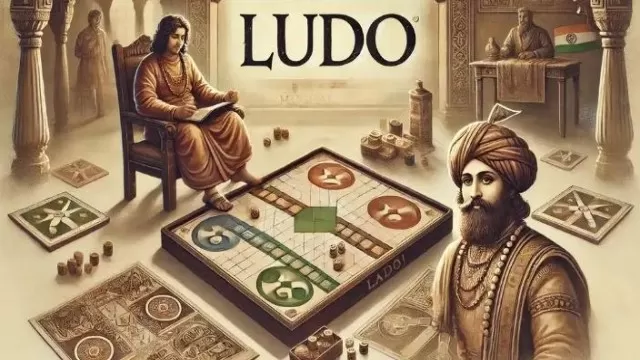
The Origins of Ludo: A Timeless Board Game
Ludo, also known as Parcheesi, is a beloved board game enjoyed by people of all ages male, female and childeer. Ludo, a game cherished by millions worldwide, has an interesting history that dates back centuries. From its ancient origins in India to becoming a household favorite, Ludo’s journey is as fascinating as the game itself. Whether played for leisure or as a means of social bonding, Ludo continues to captivate people of all ages. While it's widely recognized as a classic family game, few know about its rich and fascinating history.
Ancient Indian Roots: The Birth of Ludo
Ludo traces its origins to Pachisi, an ancient Indian board game that was popular during the 6th century. Pachisi was played on a cross-shaped board with cowrie shells used as dice. The earliest known precursor to Ludo is the ancient Indian game of Pachisi. Dating back to the 16th century, Pachisi was a game of strategy and skill played on a rectangular board with pieces made of wood, bone, or ivory. The game was enjoyed by Indian royalty, including the Mughal emperors. The Ajanta Caves, which date back to around 500 CE, contain illustrations of people playing a game similar to Pachisi, further supporting its long-standing existence.
During the Mughal period, Pachisi became a game of strategy and skill. Emperor Akbar is said to have played a life-sized version of the game in his palace courtyard, where human pieces moved across a giant board. This royal endorsement elevated the status of Pachisi, making it a popular pastime among the aristocracy.
The British Influence: Transformation into Ludo
In the late 19th century, the British adapted Pachisi into a more simplified version, which they named Ludo. In 1896, Alfred Collier patented this version in England, replacing cowrie shells with a cubic die and introducing a square board. The game quickly gained popularity in Britain and was eventually exported worldwide.
Ludo became a household name due to its simple yet strategic gameplay. The dice-rolling element introduced an aspect of chance, while the movement of pieces required tactical decision-making. These features made the game engaging and suitable for players of all ages.
Global Expansion and Variations of Ludo Games
As Ludo spread across different countries, it evolved into various regional versions. Some of these include:
-
Parcheesi – The American version of Ludo, introduced in the early 20th century.
-
Mensch ärgere dich nicht – A German variation meaning "Don’t Get Angry, Man!"
-
Parchís – A Spanish adaptation, popular in Spain and Latin America.
-
Uckers – A naval variation played by the British Royal Navy.
Despite these variations, the core essence of the game remains unchanged—players must move their pieces from the starting area to the center of the board while avoiding being captured by opponents.
Ludo in the Digital Era

With the rise of mobile gaming, Ludo has experienced a digital transformation. Online Ludo apps and multiplayer versions have gained immense popularity, especially during the COVID-19 pandemic when people turned to virtual board games to stay connected with friends and family. Platforms like Ludo King and Ludo Club have millions of active users, bringing the game to a new generation of players.
Why Ludo Remains Popular Today
The enduring appeal of Ludo lies in its blend of luck and strategy. It is easy to learn yet competitive enough to keep players engaged. The nostalgia associated with Ludo also plays a significant role in its popularity, as many people recall playing it during their childhood with family and friends.
Moreover, the social aspect of Ludo makes it a favorite at gatherings, family nights, and now, even in online gaming communities. It bridges generations, making it a game that can be enjoyed by both young and old alike. As we continue to enjoy Ludo in its various forms, it's fascinating to reflect on the game's rich history and the civilizations that helped shape it into the beloved classic we know today.
Conclusion
From the royal courts of India to modern smartphones, Ludo has stood the test of time. Its rich history, adaptability, and universal appeal make it a game that continues to bring people together across cultures and generations. Whether played on a physical board or a digital screen, Ludo remains a timeless classic, proving that some games never go out of style.












Disclaimer
Possible11 is a sports news and analysis platform designed purely for entertainment and educational purposes. All match previews, player insights, and team analyses are based on publicly available information and expert opinions. We do not promote or support betting, gambling, or real-money gaming in any form. Users are encouraged to enjoy our content responsibly and use it for informational purposes only.











Give Your Feedback