

The selection of Bangladeshi pacer Mustafizur Rahman by Kolkata Knight Riders has triggered a nationwide political and ideological debate that has gone far beyond the boundaries of cricket. What began as a routine squad decision in the Indian Premier League has now evolved into a flashpoint involving political parties, spiritual leaders, and questions of nationalism, identity, and sport.
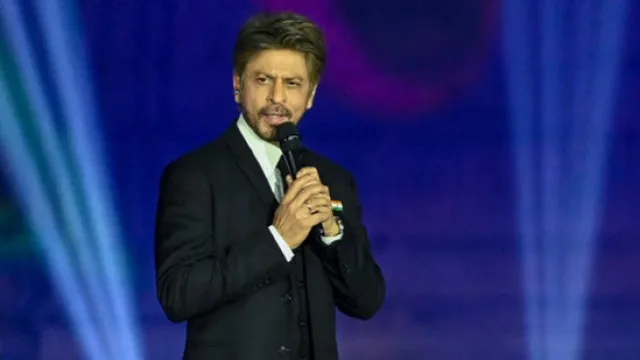
Shah Rukh Khan, co-owner of KKR and one of India’s most recognisable public figures, has found himself at the centre of this controversy. With India-Bangladesh relations under strain due to recent violence and unrest across the border, the inclusion of a Bangladeshi player has drawn sharp reactions, transforming a sporting decision into a deeply polarised national discussion.
The episode highlights how cricket, politics, and public sentiment often intersect in India, particularly when regional tensions and communal sensitivities are involved. The reactions that followed underscore how sport can become a mirror reflecting broader social and political anxieties.
Mustafizur Rahman Selection Sparks Political Storm
KKR’s decision to include Mustafizur Rahman, a left-arm fast-medium bowler with extensive international and franchise experience, was initially viewed as a strategic cricketing move. Known for his variations and effectiveness in the death overs, Rahman has previously featured in the IPL and remains a sought-after T20 specialist.
However, the timing of his selection proved controversial. With reports of attacks on Hindu minorities in Bangladesh dominating headlines, critics argued that the move showed insensitivity to the prevailing situation. What might have remained a cricketing debate quickly escalated into political rhetoric, with sharp accusations and emotional reactions following soon after.
BJP Leaders Lash Out, Use Strong Language
BJP leader Sangeet Som emerged as one of the most vocal critics, using unusually harsh language against Shah Rukh Khan. He accused the actor of investing in players from a country allegedly working against India and labelled him a traitor, statements that instantly drew national attention.
Som’s remarks framed the issue as one of nationalism rather than sport, asserting that given the reported violence against Hindus in Bangladesh, the selection of a Bangladeshi cricketer was unacceptable. He went on to claim that Rahman would not be able to play in India, escalating the rhetoric further and intensifying the controversy.
Congress Defends Shah Rukh Khan, Condemns Remarks
The Congress party responded strongly to the BJP leader’s comments, condemning the language used against Shah Rukh Khan. Congress MP Manickam Tagore described the remarks as an attack on India’s pluralistic values and warned against conflating patriotism with hatred.
Congress leaders argued that the IPL operates within a regulated framework and that player selections are subject to approval from cricketing authorities. They maintained that targeting an individual over a professional sporting decision undermines democratic values and fuels unnecessary division within society.
Dhirendra Shastri Offers Conditional Support
Spiritual leader Dhirendra Krishna Shastri, popularly known as Bageshwar Dham Sarkar, took a more nuanced stance. While acknowledging that the selection decision lies with the cricket authorities, he emphasised that Bangladeshi players should raise their voices for the safety of Hindus in their country.
Shastri drew a clear distinction between sport and social responsibility, stating that cricket has its own rules and structure, but moral responsibility does not disappear outside the field. His comments attempted to balance support for Shah Rukh Khan with concern over the situation in Bangladesh.
Other Spiritual Leaders Add to Criticism
The controversy deepened as other Hindu spiritual figures weighed in. Devkinandan Thakur described Shah Rukh Khan as heartless and cruel for including a Bangladeshi player amid reports of violence against Hindus. His remarks echoed similar sentiments expressed by Jagadguru Swami Rambhadracharya, who questioned the actor’s actions and described them as traitorous.
These statements amplified the debate and ensured it remained in the public spotlight. Calls were even made to remove the player from the team and redirect his remuneration toward families affected by violence, further blurring the line between moral outrage and sporting governance.
Cricket Governance and IPL Rules
Amid the heated rhetoric, several voices pointed out that IPL team compositions are governed by strict regulations. Congress MP Tariq Anwar stressed that foreign players can only participate if granted permission by the relevant cricket boards and authorities, making it impossible for an individual owner to act unilaterally.
This perspective highlighted the institutional nature of the IPL, reminding the public that franchises operate within an established framework. Player selections are scrutinised, approved, and regulated, limiting the scope for personal or political motivations.
Background of Violence in Bangladesh
The controversy unfolded against the backdrop of disturbing reports from Bangladesh, where a series of violent incidents involving Hindu citizens have sparked concern. The assassination of a student leader in December triggered widespread unrest, followed by lynchings and arson attacks that further escalated tensions.
Several incidents involving Hindu men being attacked or killed in different regions added to the sense of urgency and anger felt by critics. These events have significantly influenced public perception and fueled emotional responses to KKR’s selection decision.
Impact on Shah Rukh Khan and KKR
For Shah Rukh Khan, the episode represents yet another instance where his public persona intersects with political debate. As one of India’s most visible cultural figures, his actions are often scrutinised beyond their immediate context.
KKR, meanwhile, finds itself navigating a sensitive situation where a sporting decision has become entangled with geopolitics and domestic politics. How the franchise responds may set precedents for handling similar controversies in the future.
Sport, Nationalism, and Public Sentiment
This episode underscores the complex relationship between sport and nationalism in India. Cricket, often seen as a unifying force, can also become a battleground for ideological conflicts when regional tensions spill into public discourse.
The debate raises broader questions about whether athletes should be judged based on nationality during times of political strain and how far sporting platforms should be held accountable for geopolitical developments beyond their control.
Conclusion
The controversy surrounding Mustafizur Rahman’s selection by KKR illustrates how cricket in India is never just about the game. It reflects deeper societal divisions, political narratives, and emotional responses shaped by regional events.
As reactions continue to pour in from across the political and ideological spectrum, the episode serves as a reminder of the delicate balance between sport, national sentiment, and democratic values in a deeply passionate cricketing nation.
Also Read: England Name Playing XII for Decisive Fifth Ashes Test






Disclaimer
Possible11 is a sports news and analysis platform designed purely for entertainment and educational purposes. All match previews, player insights, and team analyses are based on publicly available information and expert opinions. We do not promote or support betting, gambling, or real-money gaming in any form. Users are encouraged to enjoy our content responsibly and use it for informational purposes only.


Give Your Feedback