

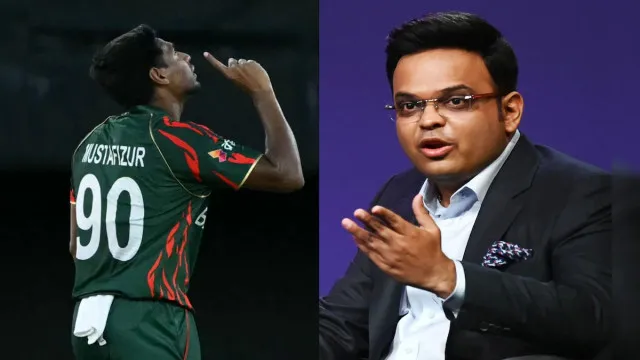
The countdown to the T20 World Cup 2026 has been overshadowed by an escalating standoff between the International Cricket Council and the Bangladesh Cricket Board. What was expected to be routine tournament preparation has now turned into one of the most complex administrative challenges in recent cricket history.
At the centre of the controversy lies Bangladesh’s reluctance to play its scheduled matches in India, triggering intense discussions, emergency meetings, and growing uncertainty among participating nations. With deadlines approaching, the situation has placed the ICC under pressure to find a workable solution.
As speculation continues to grow, cricket fans around the world are closely watching how the deadlock unfolds and what consequences it may have on the structure of the T20 World Cup.
ICC seeks final confirmation from Bangladesh
The ICC has reportedly asked the Bangladesh Cricket Board to submit its final decision on participation by January 21. This request follows weeks of back-and-forth discussions regarding venues and group allocations.
The governing body is eager to finalise logistical planning, broadcasting schedules, and security arrangements. Any further delay could disrupt preparations for one of the most commercially significant cricket tournaments.
Officials believe that clarity is essential at this stage, as uncertainty from even one team can affect the entire tournament framework.
Root of the venue dispute
The core issue revolves around Bangladesh’s refusal to play its matches in India. The BCB has maintained that concerns arising from recent developments have made travel uncomfortable for the squad.
As an alternative, Bangladesh has pushed for playing its matches in Sri Lanka, where several games of the tournament are already scheduled.
This demand has complicated matters, as group allocations were designed months in advance and altering them carries widespread implications.
Impact of the Mustafizur IPL controversy
The tension intensified following the dispute involving Mustafizur Rahman and his IPL participation. That episode triggered internal unrest within Bangladesh cricket and strained communication with global administrators.
Following the controversy, security concerns were cited as a key reason behind Bangladesh’s hesitation to travel to India.
The issue also sparked strong reactions from current and former players, further amplifying media scrutiny.
Internal turbulence within Bangladesh cricket
The prolonged dispute created unrest within the BCB itself. Statements made by certain officials drew criticism from players and fans alike.
One senior official was served a show-cause notice and later stepped down, highlighting the internal pressure mounting on the board.
These developments have added another layer of complexity to the ongoing negotiations.
ICC position on tournament integrity
The ICC has reportedly made it clear that large-scale changes cannot be taken lightly. The governing body must ensure fairness for all participating nations.
Officials are wary that accommodating one board could set a precedent for future tournaments.
Maintaining competitive balance and logistical stability remains a key priority.
Speculation around Scotland replacement
Media reports have suggested that Scotland could be considered as a replacement if Bangladesh opts out of participation.
However, Cricket Scotland has clarified that no direct communication has taken place with the ICC regarding such a scenario.
The board has stated that it respects Bangladesh’s position and does not wish to interfere prematurely.
Historical precedent fuels debate
Cricket history offers precedent for such situations. During the 2009 T20 World Cup, Scotland was included after Zimbabwe withdrew.
That example has resurfaced in discussions, although officials stress that each situation must be evaluated independently.
The ICC remains cautious about activating a replacement mechanism unless absolutely necessary.
Scenario one Bangladesh agrees to play
The most straightforward outcome would see Bangladesh agreeing to participate under existing arrangements.
Minor adjustments, such as venue flexibility within India, could help ease concerns while preserving tournament structure.
This option would allow the World Cup to proceed without major disruption.
Potential venues under compromise
If Bangladesh agrees to play in India, certain neutral-feeling venues could be prioritised.
Stadiums with strong international hosting experience may help reduce apprehension.
Such a compromise would demonstrate cooperation from both sides.
Scenario two ICC stands firm
Another possible outcome involves the ICC refusing to alter existing plans.
In such a case, Bangladesh may be deemed unavailable for scheduled fixtures.
This could lead to points being awarded to opposing teams, a rare but not unprecedented situation.
Reference to past World Cup decisions
A similar approach was seen during the 1996 World Cup when teams refused to tour Sri Lanka.
Matches were awarded by default to maintain the competition timeline.
While controversial, the method allowed the tournament to continue smoothly.
Scenario three group reshuffle
The most complex option would involve changing tournament groups.
Bangladesh is currently placed in Group C, where all matches are scheduled in India.
The board has requested a move to Group B, where games are hosted in Sri Lanka.
Challenges of altering group composition
Swapping teams between groups is not a simple administrative step.
Any change would affect scheduling, competitive balance, and qualification pathways.
Deciding which team moves out of Group B could become a contentious issue.
Current T20 World Cup group structure
The tournament groups are already finalised and publicly announced.
Group A features India, Pakistan, USA, Namibia, and Netherlands.
Group B includes Australia, Sri Lanka, Zimbabwe, Ireland, and Oman.
Group C consists of Bangladesh, England, West Indies, Italy, and Nepal.
Group D features Afghanistan, New Zealand, South Africa, Canada, and UAE.
Why group changes are risky
Any reshuffle would impact preparation strategies of multiple teams.
Coaches and players plan months in advance based on opposition and conditions.
Sudden changes could raise concerns of fairness and competitive distortion.
Broadcast and commercial implications
The T20 World Cup is a major global broadcast event with tight scheduling commitments.
Uncertainty affects sponsors, broadcasters, and host nations alike.
The ICC must balance diplomacy with commercial obligations.
Fan reactions and global attention
Cricket fans worldwide have expressed mixed reactions to the unfolding situation.
Some advocate flexibility for player safety, while others stress adherence to rules.
The debate has dominated sports discussions across digital platforms.
Pressure mounting ahead of deadline
With January 21 approaching, urgency has intensified within cricket administration circles.
The ICC is expected to push for a definitive response to avoid prolonged instability.
Delays beyond this point could affect visa processes, security planning, and logistics.
What this means for the tournament
The final decision will shape the narrative of the T20 World Cup 2026 even before the first ball is bowled.
Whether through compromise or firm governance, the resolution will send a strong message about international cricket administration.
The outcome could influence how similar disputes are handled in future tournaments.
A defining moment for cricket governance
The ICC vs Bangladesh deadlock highlights the growing challenges of managing global sport amid political, logistical, and emotional complexities.
How the situation is resolved may redefine expectations between boards and governing bodies.
For now, the cricketing world waits as one decision holds the fate of an entire World Cup structure.
Also Read: Gujarat Retain Siyaram Cup At National Blind Cricket









Disclaimer
Possible11 is a sports news and analysis platform designed purely for entertainment and educational purposes. All match previews, player insights, and team analyses are based on publicly available information and expert opinions. We do not promote or support betting, gambling, or real-money gaming in any form. Users are encouraged to enjoy our content responsibly and use it for informational purposes only.






Give Your Feedback