

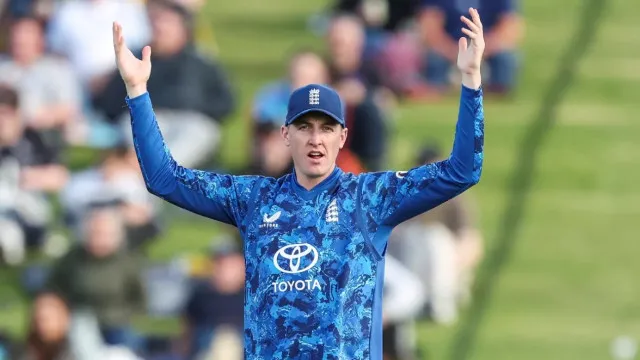
Leadership in international cricket often extends far beyond performances on the field. For modern captains, responsibility includes conduct, accountability, and the ability to set an example under constant public scrutiny.
England’s white-ball setup has recently been forced to confront these realities after an off-field incident involving captain Harry Brook. The episode has sparked conversation about professionalism, trust, and the pressures placed on young leaders.
As England prepare for another demanding international assignment, Brook finds himself navigating one of the most challenging moments of his early captaincy.
Harry Brook admits mistake after New Zealand incident
Harry Brook has openly acknowledged that he made a serious error in judgment following a late-night incident in Wellington during England’s tour of New Zealand.
The incident occurred on the eve of an international match and resulted in disciplinary action from the England and Wales Cricket Board.
Brook has since admitted that his actions fell short of the standards expected from a player, and especially from a captain.
Captain came close to losing leadership role
Brook revealed that he was aware his position as white-ball captain was under threat following the incident.
At the time, the possibility of being removed from the role was very real, and he accepted that such a decision would have been justified.
Ultimately, the team management opted to retain him while issuing a final warning.
Disciplinary action and consequences
The ECB imposed a significant financial penalty and placed Brook on a strict final warning regarding off-field conduct.
The punishment reflected the seriousness with which the board viewed the situation.
It also served as a clear message about expectations of professionalism within the England setup.
Brook accepts responsibility without excuses
In addressing the incident publicly, Brook avoided deflection or justification.
He admitted that his behavior was unprofessional and acknowledged the responsibility that comes with wearing the captain’s armband.
The tone of his response emphasized accountability rather than damage control.
Apology to teammates and supporters
Brook issued a heartfelt apology to his teammates, recognizing the trust placed in him as leader.
He also addressed England supporters, acknowledging the sacrifices fans make to follow the team around the world.
According to Brook, letting them down was one of the hardest aspects to process.
Incident details explained by captain
Brook explained that the night began with a small group outing before he chose to continue alone.
While attempting to enter a nightclub, an altercation with a bouncer occurred.
He admitted he should never have placed himself in that situation in the first place.
Self-reporting shows accountability
Importantly, Brook reported the incident to team management the following day.
This act of transparency was considered significant during the disciplinary review.
It demonstrated willingness to take responsibility rather than conceal mistakes.
Learning from senior leadership
Following the incident, Brook sought guidance from senior figures within the team.
Test captain Ben Stokes, who has experienced his own highly publicized off-field challenges, offered support and perspective.
The conversations helped Brook process the situation and move forward.
Trust rebuilding becomes immediate priority
Brook has acknowledged that regaining the trust of players is now his most important task.
He personally apologized to the squad, recognizing that leadership credibility must be earned daily.
Such honesty, he believes, is the first step toward rebuilding confidence.
Pressure of leading at a young age
Brook assumed the captaincy relatively early in his international career.
Balancing leadership with performance brings added mental strain.
The incident has highlighted the steep learning curve faced by modern captains.
Debate over team drinking culture
The episode reignited debate around alcohol consumption within touring teams.
Brook firmly rejected suggestions of a problematic drinking culture.
He emphasized personal responsibility and individual choice within the squad.
Team introduces curfew policy
In response, England have implemented a midnight curfew for the Sri Lanka tour.
The decision was described as a collective agreement rather than a punishment.
Management believes it will help players remain focused on performance.
Focus shifts to upcoming Sri Lanka series
England now turn their attention to a crucial ODI series in Sri Lanka.
The matches serve as important preparation ahead of the World Cup.
Results will play a key role in shaping confidence within the group.
Recent form adds further pressure
England’s ODI performances have been inconsistent in recent months.
A string of defeats has intensified scrutiny on leadership and coaching.
Brook enters the series under both sporting and personal pressure.
Support for head coach remains firm
Despite the challenges, Brook has publicly backed head coach Brendon McCullum.
He described the environment under McCullum as positive and progressive.
This support signals unity within the leadership group.
Team changes ahead of new series
England have made several selection changes since their last ODI assignment.
These adjustments aim to restore balance and stability.
The upcoming matches offer opportunities for renewed momentum.
Leadership under constant spotlight
Modern cricketers operate under relentless media attention.
Every action, on or off the field, is magnified.
For captains, this scrutiny is unavoidable.
Balancing humanity with professionalism
Brook has stressed that players are human and capable of mistakes.
However, he accepts that leadership demands higher standards.
Striking that balance remains one of the toughest aspects of captaincy.
A moment that could shape his career
How Brook responds to this setback may define his leadership journey.
Many captains have emerged stronger after adversity.
The coming months will reveal whether he can do the same.
Opportunity for growth and maturity
The incident has forced early self-reflection.
Brook has spoken of learning lessons that will guide future decisions.
Such experiences often accelerate maturity.
Teammates watching leadership response
Players judge leaders not only by talent but by accountability.
Brook’s openness has been noted within the camp.
Trust, however, must be rebuilt over time.
Eyes on performance as redemption
Strong on-field performances remain the most powerful form of response.
Leading from the front with the bat can reinforce authority.
Cricket ultimately remains the strongest measure of credibility.
England seek stability before World Cup
With a major tournament approaching, England require clarity and unity.
Distractions must give way to focus and execution.
The leadership group faces a critical phase.
A test beyond technique
This challenge is not about skills or strategy.
It is about character, responsibility, and resilience.
Brook’s handling of the aftermath will be closely observed.
A defining chapter for England captain
The Wellington incident has become a defining chapter in Brook’s early captaincy.
Whether it becomes a turning point or a lingering shadow depends on his response.
For now, the focus remains on learning, rebuilding trust, and moving forward.
Also Read: Mitchell Overtakes Kohli in Stunning Rankings Surge









Disclaimer
Possible11 is a sports news and analysis platform designed purely for entertainment and educational purposes. All match previews, player insights, and team analyses are based on publicly available information and expert opinions. We do not promote or support betting, gambling, or real-money gaming in any form. Users are encouraged to enjoy our content responsibly and use it for informational purposes only.








Give Your Feedback