

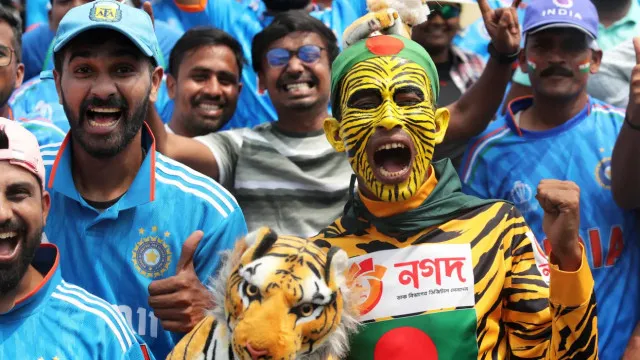
International cricket has been thrown into uncertainty as Bangladesh reaffirmed its position regarding participation in the upcoming T20 World Cup. What began as a logistical and security concern has now developed into a high-stakes standoff involving national authorities, cricket administrators, and the global governing body.
The situation escalated after Bangladesh received a clear warning about the possibility of exclusion from the tournament. Despite the pressure, the country has chosen to stand by its position, placing national policy above competitive participation.
As the tournament approaches rapidly, the decision has sparked intense debate across the cricketing world, raising questions about governance, security, and the balance between sport and diplomacy.
Bangladesh Maintain Firm Stance Despite ICC Warning
A day after being informed by the ICC that they could be replaced at the T20 World Cup, Bangladesh confirmed that their position remains unchanged.
The cricket board reiterated its desire to have its matches shifted out of India, insisting that Sri Lanka should be considered as an alternative host venue.
This stance puts Bangladesh at risk of missing one of the sport’s biggest global events.
Decision Finalised After High-Level Dhaka Meeting
The decision was announced following an important meeting held in Dhaka involving senior officials and national team players.
Present at the discussion were the government’s sports adviser, the BCB president, the chief executive officer, and several members of the national squad.
The collective nature of the meeting highlighted how seriously the issue is being treated at every level.
Government Position Central to the Decision
Officials clarified that the refusal to travel was not solely a cricket board decision.
The government’s involvement means the matter extends beyond sport and into national policy.
This distinction has become central to Bangladesh’s negotiations with the ICC.
Plan to Propose Sri Lanka as Neutral Venue
Bangladesh Cricket Board officials confirmed they would return to the ICC with a formal proposal to play their matches in Sri Lanka.
The idea is to ensure participation without compromising government directives.
Sri Lanka is viewed as a familiar and logistically viable alternative venue.
Officials Reject Ultimatum Approach
BCB leadership expressed dissatisfaction with what they described as an ultimatum from the ICC.
They argued that global sporting bodies should not impose strict deadlines on member nations.
This disagreement has further strained negotiations.
Concerns Over Viewer Impact Raised
Bangladesh officials warned that excluding their team could have major commercial consequences.
They pointed out the massive fan base that follows the national team worldwide.
From their perspective, absence would impact tournament viewership.
Group C Fixtures Face Uncertainty
Bangladesh are currently placed in Group C alongside England, Italy, West Indies, and Nepal.
Their fixtures are scheduled across multiple Indian cities.
Any change would require significant scheduling adjustments.
Opening Match Scheduled for Tournament Day One
The team is slated to play on the opening day of the tournament.
This adds urgency to the situation, as unresolved issues could disrupt the competition’s start.
Organisers now face tight timelines.
ICC Previously Rejected Venue Change Request
Following an ICC board meeting, the governing body formally declined Bangladesh’s request to relocate matches.
The decision was based on security assessments and tournament planning.
The ICC maintained that arrangements were already in place.
Security Concerns Cited by Bangladesh
Bangladesh cited security concerns as the primary reason for their refusal.
The matter gained traction after diplomatic relations between the two countries showed strain.
Officials insisted that player safety remains the top priority.
IPL Development Added to Tensions
The issue intensified after a directive involving a Bangladeshi player in a domestic league.
This development was viewed within Bangladesh as a warning sign.
Although unrelated to the World Cup, it influenced perception.
ICC Dismisses Link Between Issues
The ICC rejected claims that the domestic league matter had any bearing on tournament security.
According to the governing body, the two situations were entirely separate.
This difference in interpretation lies at the heart of the dispute.
Cricket Board Stands With Players
Several senior players attended the Dhaka meeting, indicating collective backing.
Their presence suggested unity between administrators and the squad.
Such alignment is rare during international disputes.
Risk of Replacement Looms Large
The ICC has made it clear that replacement remains an option.
This would allow the tournament to proceed without disruption.
However, it would mark a significant moment in cricket governance.
Potential Precedent for Future Tournaments
The standoff could set a precedent for how political concerns intersect with sport.
Future host nations and participants may closely watch the outcome.
The implications extend beyond this single tournament.
Fans React With Mixed Emotions
Supporters across Bangladesh have expressed disappointment and concern.
Many fear missing the global stage after years of preparation.
Others support the firm stance on national interest.
Global Cricket Community Watches Closely
Cricket boards worldwide are monitoring developments carefully.
The resolution could influence future scheduling policies.
It also highlights challenges of hosting multinational events.
Diplomacy and Sport Intersect Again
This episode underscores how international sport is often affected by diplomatic realities.
Cricket, despite its global appeal, remains sensitive to geopolitical shifts.
Balancing neutrality and national policy remains complex.
Time Running Out Before Tournament Start
With the tournament scheduled to begin on February 7, time is limited.
Both sides face pressure to find a workable solution.
Delays increase uncertainty for teams and broadcasters.
Possible Outcomes Still Unclear
Several outcomes remain possible, from compromise to exclusion.
Negotiations are expected to continue behind closed doors.
Public statements suggest neither side is backing down easily.
Impact on Players Careers
Missing a World Cup can have long-term effects on players’ careers.
Such tournaments offer exposure and experience at the highest level.
The uncertainty weighs heavily on the squad.
Broader Questions About Governance
The dispute raises questions about authority within global sport.
It challenges how much power governing bodies should exercise.
At the same time, it tests the limits of national autonomy.
Conclusion: A Defining Moment for Bangladesh Cricket
Bangladesh’s decision to stand firm reflects a complex mix of sport, policy, and principle.
As the deadline approaches, the cricketing world awaits clarity.
Whether compromise or confrontation prevails, the outcome will leave a lasting mark on international cricket.
Also Read: Jacks Ruled Out With Illness as Sri Lanka Bat vs England










Disclaimer
Possible11 is a sports news and analysis platform designed purely for entertainment and educational purposes. All match previews, player insights, and team analyses are based on publicly available information and expert opinions. We do not promote or support betting, gambling, or real-money gaming in any form. Users are encouraged to enjoy our content responsibly and use it for informational purposes only.







Give Your Feedback