There is a moment on Eid morning that no perfume, no new clothes, and no amount of money can replicate, the instant a steaming bowl of sheer khurma is placed in front of you. The vermicelli coils gently in a golden sea of saffron-kissed milk, dates bob lazily at the surface, and the fragrance of rose water drifts across the room like a quiet blessing. For millions of families across India, Pakistan, Bangladesh, and the wider Muslim world, sheer khurma is not just a dessert. It is the first sip of Eid itself.
With Eid Al-Fitr 2026 arriving on 31 March, the searches for the best sheer khurma recipe are already climbing sharply across Google Trends in India and beyond. Whether you are cooking it for the first time, recreating a grandmother's heirloom version, or experimenting with a modern twist, this guide covers five distinct, tested recipes that honour tradition while giving you real flexibility in the kitchen.
What Actually Makes a Great Sheer Khurma?
Before diving into the recipes, a quick word on fundamentals. The name itself tells you everything: "sheer" means milk in Persian, and "khurma" means dates. Whole-fat milk, simmered low and slow until it thickens, is non-negotiable. The vermicelli (seviyan) should be roasted in clarified butter (ghee) until it turns a warm caramel brown - that toasting step is what separates a memorable sheer khurma from a forgettable one.
Dates must be pitted and sliced, not crushed. Nuts should be added late so they retain bite. And saffron - even a few strands bloomed in warm milk - transforms the colour and aroma entirely. Keep these anchors in mind as you explore the five versions below.
5 Best Sheer Khurma Recipes for Eid 2026
1. Classic Hyderabadi Sheer Khurma
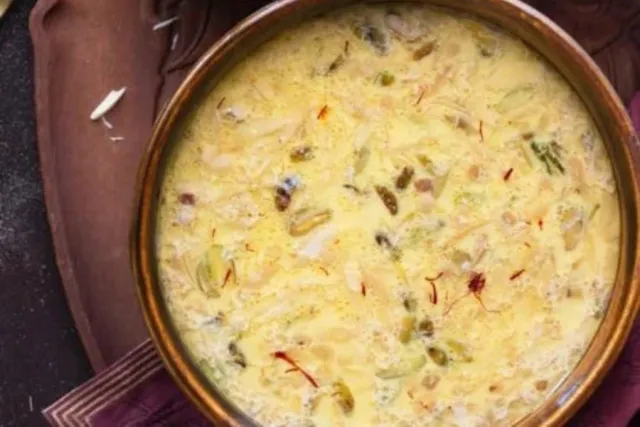
If there is one version that defines the dish for most Indians, it is the Hyderabadi rendition. This recipe uses full-fat buffalo milk simmered for nearly 45 minutes until it develops a faint cream skin. The seviyan is broken into short lengths, roasted in generous ghee with cashews, pistachios, and almonds until every strand glistens. Medjool dates - soft, jammy, and naturally sweet - go in just before serving so they warm through without dissolving.
The signature finish is a pinch of green cardamom powder and a few drops of kewra water stirred through right at the end. It is intensely fragrant and rich enough to serve in small portions. Hyderabadi households often prepare it the night before Eid prayers, allowing the flavours to deepen overnight in the refrigerator - though it is equally magnificent served hot.
Key Ingredients: Buffalo milk, thin seviyan, ghee, Medjool dates, mixed dry fruits, cardamom, kewra water.
2. Lucknowi Sheer Khurma with Rose and Saffron
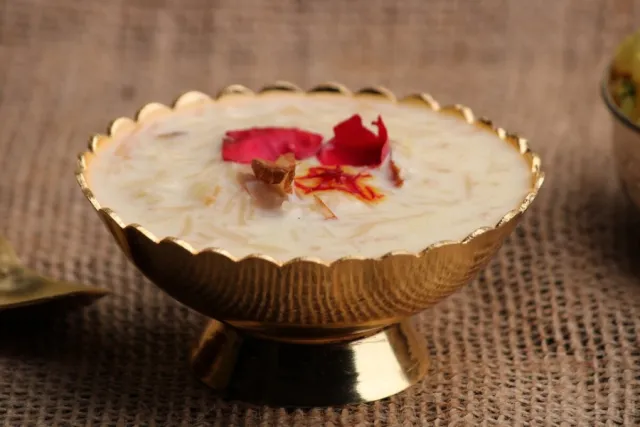
The Awadhi kitchen has always been about restraint and layered perfume, and its version of sheer khurma reflects that philosophy beautifully. Here, the milk is reduced to roughly three-quarters of its original volume, giving it a silkier, less stodgy consistency than the Hyderabadi style. A generous pinch of saffron, bloomed in two tablespoons of warm milk for ten minutes, is stirred in midway through cooking - the result is a delicate golden hue that photographs magnificently.
Rose syrup or a small spoon of homemade gulkand (rose petal preserve) adds a floral sweetness that ordinary sugar simply cannot match. Serve it in shallow ceramic bowls with a rose petal and a few slivers of blanched pistachio on top. This is sheer khurma for guests, for first impressions, for the kind of Eid morning you want to remember.
Key Ingredients: Cow's milk, saffron, rose syrup or gulkand, thin seviyan, ghee, dates, pistachios.
3. Quick 20-Minute Condensed Milk Version
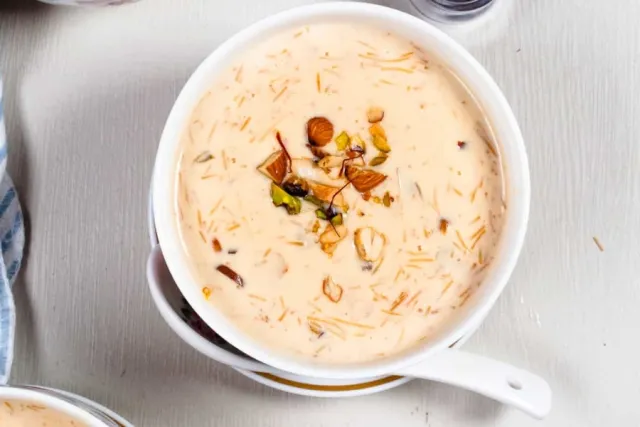
Not every household has two hours to spare on Eid morning. Between prayers, visits, and managing a houseful of guests, the kitchen can feel like a battlefield. This streamlined version uses sweetened condensed milk to cut down cooking time without sacrificing richness. The condensed milk goes in after the seviyan is half-cooked in warm whole milk; within minutes, the mixture thickens to a glossy, creamy consistency.
Purists may raise an eyebrow, but the result is genuinely delicious, especially if you do not skip the ghee-roasted seviyan step and finish with a handful of chopped dates and fried raisins. This is the recipe that working parents and new cooks swear by, and given how many families cook it this way across urban India, it has earned its place in the canon.
Key Ingredients: Whole milk, sweetened condensed milk, thin seviyan, ghee, dates, raisins, cardamom.
4. Vegan Sheer Khurma with Oat Milk and Coconut Ghee
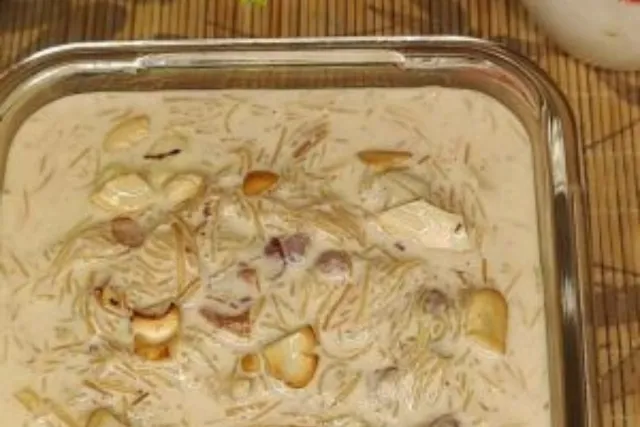
Eid tables are more diverse than ever in 2026, and this plant-based version makes sure no guest feels left out. Oat milk, with its natural sweetness and creaminess, is the most faithful dairy alternative here - it reduces well and does not carry the beany note that soy sometimes does. Coconut ghee handles the roasting of the seviyan and adds a subtle tropical warmth that, surprisingly, does not clash with the cardamom and saffron.
Sweeten with jaggery powder instead of refined sugar for a deeper, more complex flavour profile. Ajwa dates - the beloved variety from Madinah, now widely available online in India - work particularly well here, their dark sweetness grounding the lighter texture of the oat milk base. This recipe consistently surprises dairy-eating guests who do not notice the difference until told.
Key Ingredients: Oat milk, coconut ghee, thin seviyan, jaggery, Ajwa dates, saffron, mixed nuts.
5. Chilled Sheer Khurma Trifle (Fusion Eid Dessert)
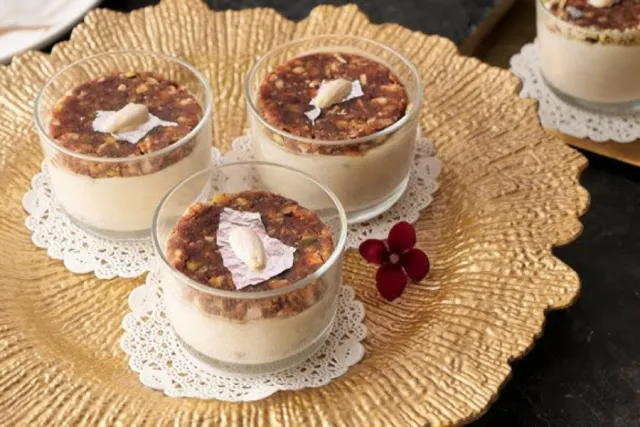
This one is for the home cooks who love tradition but refuse to stop experimenting. The base is a classic reduced-milk sheer khurma, prepared a day in advance and refrigerated until set. To serve, it is layered in individual glass tumblers with crumbled shahi tukda (fried bread soaked in saffron milk), a spoonful of creamy rabri, and a drizzle of date molasses. The top is finished with crushed pistachios and a single dried rose petal.
Served cold, this version travels beautifully to potlucks and Eid gatherings. It is visually dramatic, scoopable at the table, and bridges the gap between subcontinental heritage and contemporary dessert culture. At dinner parties, it reliably prompts someone to ask for the recipe before the meal is over.
Key Ingredients: Classic sheer khurma base, shahi tukda, rabri, date molasses, pistachios, dried rose petals.
Tips That Make the Difference
A few practical notes that apply across all five recipes:
Always roast the seviyan. Unroasted vermicelli gives the dish a raw, floury taste. Medium-low heat, constant stirring, and patience - about five to seven minutes - is all it takes to develop that nutty base.
Do not rush the milk. Simmering at medium heat with occasional stirring prevents scorching and develops a natural sweetness in the milk solids.
Add nuts at the end. If cashews and almonds go in too early, they turn soft and lose their textural contrast.
Taste before adding sugar. Dates contribute considerable natural sweetness. Adjust sugar only at the very end.
The Bowl That Belongs to Every Eid
Sheer khurma is one of those rare dishes that manages to be both deeply personal and universally understood. Every family has its proportions, its secret additions, its preferred consistency. Some like it thick enough to set in a mould. Others prefer it running, almost drinkable. A few aunts insist the colour must be the precise shade of old ivory. None of them is wrong.
What makes these five sheer khurma recipes worth trying this Eid 2026 is that each one respects the soul of the dish while acknowledging the realities of modern kitchens - varying budgets, dietary needs, time constraints, and the ever-present desire to impress without exhausting yourself. Whether you go classic Hyderabadi, fragrant Lucknowi, speedy condensed, plant-based, or fusion trifle, the bowl you serve will carry the same meaning it always has: welcome, celebration, and the quiet joy of a fast broken together.
Eid Mubarak. May your sheer khurma be perfect, and may your table always be full.
Also Read: Easy Fruit Cream Recipe for a Healthy Iftar Dessert