
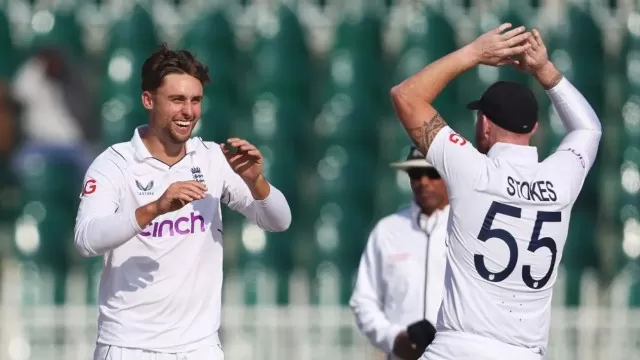
England's selection for the second Ashes Test has produced a bold tactical switch as Will Jacks returns to the Test arena after nearly three years out. Thrust into the XI as the side's sole spinner in the day-night fixture, Jacks' recall follows an injury to a frontline pacer and a clear strategic shift from an all-pace approach to one that values batting depth, spin variety and flexible over allocation under lights.
The move underlines England’s willingness to gamble on multi-role players who can supply match-changing contributions across batting, bowling and the field. Jacks arrives with limited recent red-ball exposure but with white-ball credentials and a reputation for adaptability—qualities the management believes suit a pink-ball Test where conditions and match rhythm transform after sunset.
For selectors and supporters alike, this selection prompts fresh debate: should a relatively inexperienced red-ball spinner be preferred over a specialist like Shoaib Bashir? The answer reveals how modern Test strategy often tilts towards balance and contingency, rather than strict role replication when injuries force last-minute revisions in touring squads.
From Injury Cover to Tactical Option: Why Jacks Was Picked
Will Jacks replaces an injured Mark Wood, but the choice was more nuanced than mere like-for-like substitution. England opted for a player who offers batting bailout and a spin option rather than a straight pace replacement, signalling a shift in priorities for the Brisbane day-night clash. The team has explicitly factored in the changing conditions a pink-ball test creates—diminished visibility, altered seam and spin behaviour, and a premium on middle-overs control—and judged Jacks to be the more versatile solution.
Jacks provides the captain with additional tools: he bolsters the lower middle-order while offering off-spin that can be used in short bursts or extended spells depending on match progression. This kind of selection reflects a broader tactical trend where teams favour multi-skilled players who enable more complex bowling rotations and batting depth without sacrificing top-order firepower.
A Brief But Notable Test Record
Although Jacks’ red-ball resume is compact, it carries moments of potential. On debut in Rawalpindi he claimed multiple wickets, giving a glimpse of his capacity to contribute with the ball. Yet his first-class appearances in recent seasons have been sparse—he played only five matches in the last two campaigns and took five wickets in three County Championship outings in 2025—leaving selectors to weigh upside against limited contemporary form in the longer format.
Statistically, his first-class wicket tally sits modestly, and a wicket in Brisbane would mark a milestone as his 50th in the format since debuting in 2018. The management appears to have placed greater emphasis on his multi-format experience and recent work with the national coaching staff than on a conventional recent red-ball strike rate.
White-Ball Success and Coaching Endorsement
Jacks’ frequent use in white-ball internationals played a key part in his selection case. With 50 caps across ODIs and T20Is, he has been deployed as a part-time spinner and a powerful middle-order batter in limited overs cricket. His role in white-ball setups, coupled with time spent training under head coach Brendon McCullum, suggested to selectors that his skillset and temperament could translate convincingly into a night Test environment.
The awarding of a two-year central contract in October was a clear signal that the authorities view him as an important multi-format asset. Jacks himself has spoken confidently about adapting his white-ball experience to the demands of under-lights Test cricket, highlighting his comfort with night-time conditions and his willingness to contribute across batting, bowling and fielding.
Shoaib Bashir Omitted: A Significant Career Moment
Shoaib Bashir's omission marks the end of a notable run: having been Ben Stokes’ principal spinner since the 2024 summer, Bashir had established himself as a regular Test option. His absence from the XI is significant given his rise, youthful promise and the faith placed in him after early performances. Missing out on the Brisbane Test may represent a temporary setback, but not necessarily a long-term signal about his importance to England’s spin plans.
Bashir's recent injury history and the team’s tactical prioritisation appear to be key factors. Having missed the final two Tests against India with a fractured finger and shown resilience by taking a final wicket at Lord’s despite the injury, Bashir still occupies a central role in the broader picture for England’s spin development. However, selection is fluid and fixture-specific; in this case, the day-night variables shaped a choice in favour of batting depth.
Comparing Profiles: Bashir's High Release Point vs Jacks' Versatility
Part of Bashir’s appeal lies in his high release point and over-spin—attributes England believe match well to Australian conditions and to the role of an attacking spinner in day-night Tests, reminiscent of how Australia deploys Nathan Lyon. Bashir’s bowling style theoretically generates bounce and drift that can produce wickets under certain conditions, which is why his omission surprised many observers.
Conversely, Jacks is valued for his batting superiority and reasonable off-spin control. England appear to have prioritised the ability to lengthen the batting order and to offer an additional bowling option that can be mixed into the attack. This trade-off illustrates a tactical decision to favour multi-faceted resilience over a specialist’s singular attacking profile for this particular match.
Day-Night Test Dynamics and Spinner Usage
Day-night Test cricket brings unique tactical demands. Under lights, the behaviour of the pink ball can reward both seam and spin depending on twilight conditions, humidity and pitch wear. Test teams often use spinners not just as attacking wicket-takers but as stabilising options to control scoring rates and manage bowler workloads through long evening spells.
England's shift from an all-pace attack in the opening Test to a spinner-inclusive XI for Brisbane reflects learning from opponents and match conditions. The selectors have taken into account how rival teams have historically used spinners under lights, opting for an approach that enables smoother bowler rotation and more tactical flexibility as the ball ages.
Leadership, Coaching and Tactical Input
Ben Stokes and the coaching setup played a key role in shaping the selection. The captain’s long-term relationship with Bashir and his public advocacy for the young spinner add an emotional layer to any omission, yet Stokes has also emphasised the importance of tactical adaptability. The support staff’s analysis of pitch behaviour, opposition strengths and bowling balance ultimately contributed to the call to include Jacks.
Coaching input on Jacks’ readiness—both technically and mentally—was likely decisive. Work with McCullum and the spin and batting coaches during the lead-up to the Ashes has helped refine Jacks’ role definition, giving the team confidence he can fit into the specific demands of a day-night Test.
Potential Match Impact and Roles for Jacks
On the field, Jacks is expected to provide lower-order runs, steady the innings if early wickets fall, and bowl spin spells that offer variation to the seamers. The captain may use him to stem scoring during the middle overs, to exploit any uneven bounce under lights, or to create matchups against particular opposition batters.
Fielding contributions are another dimension—Jacks’ athleticism can save crucial runs and create pressure in tight sessions. If he can make even modest contributions with bat and ball, his selection will be vindicated as a shrewd tactical move in a match where small margins can determine the result.
What This Means for England's Long-Term Spin Plans
While the immediate focus is the Brisbane Test, the decision carries implications for England’s spin succession planning. Bashir remains a promising option who will likely feature heavily in future selections once fit and match-ready. Jacks’ recall, meanwhile, highlights the value the selectors place on versatility within a squad that must cope with injuries, varying conditions and the rigours of modern Test schedules.
Selectors may now be more inclined to consider role-flexible players when building touring squads, ensuring teams can pivot quickly between formats and match situations. The balance between nurturing specialist spinners and valuing multi-role contributors will continue to be a core strategic debate for England.
Squad Composition and the Rest of the Playing XI
England’s announced XI for Brisbane blends experience and adaptability: Zak Crawley and Ben Duckett open, followed by Ollie Pope, Joe Root, Harry Brook and Ben Stokes providing batting heft. Jamie Smith keeps wicket, while Jacks joins the bowling line-up alongside pace options such as Gus Atkinson, Brydon Carse and Jofra Archer—an attack built to mix pace with spin and to adapt across sessions.
This composition underlines a deliberate attempt to cover all match phases: strong top-order batting to counter the new ball, middle-order firepower and resilience, and an attack flexible enough to exploit changing pitch and ball conditions. The selection reflects a modern Test philosophy that prizes adaptability and match-specific balance.
Conclusion: Selection Signal or Short-Term Adjustment?
Will Jacks’ recall is both a tactical adjustment for a specific day-night Test and a signal that England are willing to employ multi-skilled cricketers in key positions when conditions demand it. While Bashir’s omission is a reminder of the cutthroat nature of international selection, it also leaves room for rotation and future opportunity.
Ultimately, the Brisbane Test will reveal whether the gamble pays off. If Jacks contributes meaningfully with bat, ball or in the field, England will have justified a selection choice rooted in flexibility and game-state thinking. If not, the discussion will pivot back toward specialist spin and the long-term nurturing of talents like Bashir—illustrating the constant tension between immediate tactical demands and developmental priorities in Test cricket.
Also Read: India’s Likely XI for 2nd ODI After Gaikwad Ruled Out










Disclaimer
Possible11 is a sports news and analysis platform designed purely for entertainment and educational purposes. All match previews, player insights, and team analyses are based on publicly available information and expert opinions. We do not promote or support betting, gambling, or real-money gaming in any form. Users are encouraged to enjoy our content responsibly and use it for informational purposes only.







Give Your Feedback