


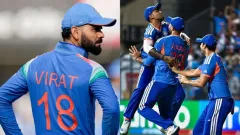
Virat Kohli and Rohit Sharma’s return to domestic cricket has reignited conversations around the value, structure and importance of India’s grassroots tournaments. As two of the most celebrated cricketers of their generation step back into the Vijay Hazare Trophy, fans are once again reminded that Indian cricket’s foundation rests firmly on its domestic framework. Their participation has not only boosted interest in the competition but also sparked curiosity about how salaries are structured outside the glamour of franchise leagues.
While the Indian Premier League continues to dominate headlines with eye-watering contracts, the Vijay Hazare Trophy follows a far more regulated and egalitarian pay model. Here, experience and contribution to domestic cricket determine earnings, not market hype. For Kohli and Rohit, the tournament represents both a professional commitment and a symbolic return to their roots.
The salary details of these senior players underline a key reality: domestic cricket rewards consistency and longevity rather than stardom. Despite their global fame, both players fall under the same pay brackets as other experienced domestic veterans, reinforcing the BCCI’s emphasis on parity and structure.
Vijay Hazare Trophy and Its Role in Indian Cricket
The Vijay Hazare Trophy is widely regarded as the backbone of India’s one-day domestic format. It serves as a crucial platform for identifying talent, testing bench strength and preparing players for international white-ball cricket. Over the years, the tournament has produced several stars who have gone on to represent India at the highest level.
For senior players like Kohli and Rohit, the competition offers an opportunity to regain rhythm, mentor younger teammates and maintain match fitness. Their presence elevates the overall quality of the tournament, drawing attention from selectors, fans and analysts alike.
Why Kohli and Rohit Returned to Domestic Cricket
The return of Virat Kohli and Rohit Sharma to the Vijay Hazare Trophy comes at a time when workload management and form have become key discussion points. Playing domestic matches allows seasoned players to stay connected with competitive cricket outside international fixtures.
It also sends a strong message about the importance of domestic tournaments. When senior internationals participate, it reinforces the idea that domestic cricket is not merely a stepping stone but an integral part of a professional career.
How Vijay Hazare Trophy Salaries Are Structured
Unlike franchise-based leagues, the Vijay Hazare Trophy operates under a fixed salary system governed by the BCCI. Player compensation is determined by the number of List A matches played, ensuring a transparent and experience-based hierarchy.
This system categorises players into senior, mid-level and junior tiers. Each tier has a predefined match fee, applicable uniformly across teams and states. The approach ensures fairness while encouraging players to build long-term domestic careers.
Senior Player Category and Match Fees
Virat Kohli and Rohit Sharma fall under the senior player category, having played more than 40 List A matches. Players in this bracket receive the highest match fee in the tournament when included in the playing eleven.
For the 2025–26 season, senior players earn Rs 60,000 per match if they are part of the playing XI. If named as reserves, the fee stands at Rs 30,000 per match. This applies equally to all players who meet the experience criteria.
Mid-Level and Junior Player Earnings
Players with 21 to 40 List A matches are classified as mid-level cricketers. They receive Rs 50,000 per match when playing and Rs 25,000 when listed as reserves. This tier often includes players on the cusp of national selection.
Junior players, with up to 20 List A appearances, earn Rs 40,000 per match in the playing XI and Rs 20,000 as reserves. The structure ensures young talent is rewarded while motivating them to gain experience and progress through the ranks.
How Kohli and Rohit Compare With International Pay
Although Rs 60,000 per match may seem modest compared to their IPL contracts, it reflects the philosophy behind domestic cricket compensation. International players like Kohli and Rohit earn significantly higher match fees when representing India in ODIs and other formats.
However, their Vijay Hazare earnings remain aligned with domestic norms, highlighting the separation between international remuneration and domestic structures. This balance helps maintain financial discipline within Indian cricket.
Additional Earnings Beyond Match Fees
Match fees are only one component of a player’s earnings in the Vijay Hazare Trophy. Cricketers also receive daily allowances that cover travel, food and accommodation expenses during the tournament.
Performance-based incentives further add to earnings. Man of the Match awards typically include cash prizes, while teams progressing to knockout stages share prize money distributed among players and support staff.
Impact of Star Players on Domestic Cricket
The presence of marquee players has a ripple effect across the tournament. Younger players benefit from sharing the dressing room with experienced internationals, gaining insights into preparation, mindset and professionalism.
Fans, too, reconnect with domestic cricket when star names feature on the team sheet. Stadium attendance, television viewership and overall engagement often see a noticeable boost.
Why the Salary System Promotes Fairness
The tiered salary system ensures that no player receives preferential treatment based on reputation alone. Experience, measured through List A appearances, remains the primary determinant of pay.
This approach encourages consistency and long-term commitment to domestic cricket, reinforcing the importance of performance and experience over popularity.
What This Means for the Future of Domestic Cricket
Kohli and Rohit’s participation, coupled with transparent salary structures, strengthens the credibility of domestic tournaments. It reassures aspiring cricketers that domestic performances are valued and fairly compensated.
As Indian cricket continues to evolve, the Vijay Hazare Trophy remains a vital platform where discipline, structure and opportunity converge, ensuring the game’s grassroots remain strong.
Conclusion
The revelation of Vijay Hazare Trophy salaries offers a rare glimpse into the disciplined financial ecosystem of Indian domestic cricket. For stars like Virat Kohli and Rohit Sharma, the tournament is less about earnings and more about commitment, form and leadership.
Their presence underscores the enduring relevance of domestic competitions and highlights how Indian cricket balances stardom with structure. In doing so, it preserves the integrity of the system that has produced generations of world-class players.
Also Read: Rickelton 113 in vain as DSG edge MICT in thriller








Disclaimer
Possible11 is a sports news and analysis platform designed purely for entertainment and educational purposes. All match previews, player insights, and team analyses are based on publicly available information and expert opinions. We do not promote or support betting, gambling, or real-money gaming in any form. Users are encouraged to enjoy our content responsibly and use it for informational purposes only.








Give Your Feedback