
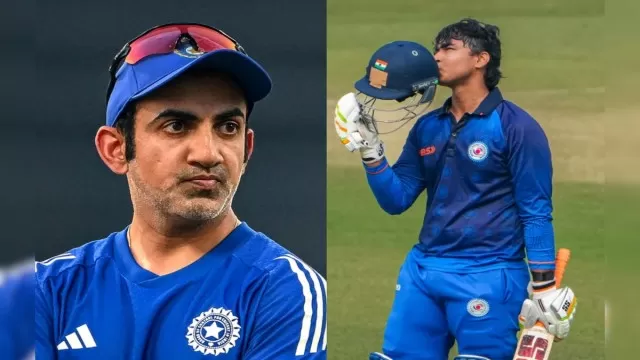
Indian cricket witnessed an extraordinary moment when a 14-year-old batter from Bihar forced the entire ecosystem to sit up and take notice. Vaibhav Suryavanshi’s breathtaking exploits in domestic cricket have not only rewritten record books but also ignited a national debate on how early exceptional talent should be fast-tracked.
The conversation took a political and emotional turn when Congress MP Shashi Tharoor publicly urged the Board of Control for Cricket in India to consider the teenager for national duty. By invoking the name of Sachin Tendulkar and directly addressing Gautam Gambhir and Ajit Agarkar, Tharoor ensured the spotlight moved far beyond statistics and into the realm of cricketing philosophy.
This moment sits at the intersection of raw talent, institutional caution, and public expectation, raising questions that Indian cricket has grappled with before but never quite answered definitively.
A Record-Breaking Knock That Changed the Narrative
Vaibhav Suryavanshi’s astonishing 84-ball 190 in the Vijay Hazare Trophy was not just another big score in domestic cricket. It was a statement of intent delivered with fearless stroke play, impeccable timing, and an authority rarely associated with someone barely into his teens. By smashing the fastest 150 in List A history, he eclipsed a record previously held by AB de Villiers, a name synonymous with innovation and dominance.
The innings unfolded like a highlight reel on fast forward. Suryavanshi peppered the boundary with an array of strokes, combining clean hitting with an unshakeable calm. His ability to dismantle the bowling attack from the outset set the tone for what would become a world-record team total, but it was his composure that impressed seasoned observers the most.
For Indian cricket followers, the knock felt like a rare glimpse of generational talent announcing itself without hesitation or apology.
Shashi Tharoor’s Message and the Tendulkar Comparison
Shashi Tharoor’s reaction added a new layer to the unfolding story. By drawing a parallel with Sachin Tendulkar, he tapped into one of Indian cricket’s most cherished memories. Tendulkar’s international debut at 16 remains a cultural touchstone, symbolising what can happen when prodigious talent meets opportunity.
Tharoor’s message was direct and emotionally charged, urging the Indian cricket establishment to act decisively rather than cautiously. By tagging Gautam Gambhir and Ajit Agarkar, he framed the debate around responsibility, suggesting that rare talent demands bold decision-making.
While comparisons to Tendulkar are often made lightly in Indian cricket, Tharoor’s intervention ensured this one would be discussed seriously, if controversially.
The Role of Gambhir and Agarkar in Shaping the Future
As head coach and chief selector, Gautam Gambhir and Ajit Agarkar stand at the centre of this debate. Their roles require balancing long-term development with immediate performance needs, a task made infinitely harder when a teenager produces numbers that defy convention.
Indian cricket has historically leaned towards structured progression, preferring players to prove themselves across formats and seasons before elevation. Suryavanshi’s case challenges that model, asking whether exceptional talent deserves exceptional pathways.
The decision, whatever it may be, will set a precedent that could influence how future prodigies are handled within the system.
Bihar’s Batting Carnival and a World Record Total
Suryavanshi’s heroics were part of a larger batting spectacle as Bihar posted an unprecedented 574 for 6. The innings was a collective demolition, with skipper Sakibul Gani and wicketkeeper Ayush Loharuka also registering rapid centuries that underlined the dominance on display.
Gani’s 128 off just 40 balls, featuring a lightning-fast hundred, showcased leadership by example, while Loharuka’s fluent 116 added further weight to the onslaught. Yet, even amid this avalanche of runs, Suryavanshi’s innings stood apart for its audacity and scale.
The record-breaking total did more than secure a victory; it announced Bihar as a force capable of producing headline-making talent.
The Debate Around Early International Exposure
Fast-tracking teenagers into international cricket is a subject that divides opinion. Supporters argue that exposure at the highest level accelerates growth, while critics warn of burnout, pressure, and unrealistic expectations.
India’s cricketing history offers examples on both sides. While Tendulkar thrived under early responsibility, others have struggled when thrust into the spotlight too soon. Suryavanshi’s case reignites this debate with renewed urgency.
What makes this moment different is the visibility and volume of discussion, amplified by social media, political voices, and a cricketing public hungry for the next superstar.
Talent Identification Versus Talent Protection
Modern cricket places significant emphasis on sports science, mental conditioning, and workload management. Introducing a 14-year-old to international cricket would require unprecedented safeguards to ensure long-term well-being.
Selectors must weigh the benefits of early exposure against the responsibility of protecting a young athlete’s physical and mental health. The challenge lies in crafting a pathway that nurtures brilliance without extinguishing it.
This balancing act will likely influence not only Suryavanshi’s career but also policy decisions affecting youth cricket nationwide.
Public Expectation and the Weight of Hype
With viral clips, trending hashtags, and glowing endorsements, the hype around Suryavanshi has grown rapidly. Public expectation can be both a motivator and a burden, particularly for someone so young.
Managing this attention will be crucial. Coaches, administrators, and family support systems must work together to create an environment where performance, not pressure, defines progress.
Indian cricket has learned hard lessons about the cost of unmanaged hype, making this a critical juncture.
What This Moment Means for Indian Cricket
Beyond individual brilliance, the Suryavanshi episode reflects a broader shift in Indian cricket. Domestic tournaments are producing fearless, aggressive batters unafraid of reputation or context.
This evolution aligns with the modern game’s demands but also challenges traditional development timelines. How India responds will shape its talent pipeline for years to come.
The spotlight on Suryavanshi may ultimately benefit countless young cricketers by prompting a re-evaluation of opportunity and trust.
A Defining Crossroads
Vaibhav Suryavanshi’s rise, amplified by Shashi Tharoor’s public appeal, has placed Indian cricket at a defining crossroads. The decision ahead is not merely about one teenager but about philosophy, courage, and vision.
Whether or not an immediate India call-up materialises, the conversation itself marks a turning point. It underscores that extraordinary talent demands thoughtful, sometimes unconventional responses.
As the cricketing world watches closely, one thing is certain: Vaibhav Suryavanshi has already changed the narrative, and his journey is only just beginning.
Also Read: Jofra Archer Out of Ashes, Ollie Pope Dropped for Melbourne









Disclaimer
Possible11 is a sports news and analysis platform designed purely for entertainment and educational purposes. All match previews, player insights, and team analyses are based on publicly available information and expert opinions. We do not promote or support betting, gambling, or real-money gaming in any form. Users are encouraged to enjoy our content responsibly and use it for informational purposes only.



Give Your Feedback