

Indian cricket once again finds itself at the centre of a heated debate, this time sparked by former India batter and commentator Sanjay Manjrekar and his outspoken views on Virat Kohli’s career choices. Manjrekar’s assertion that One Day Internationals are the easiest format for top-order batters has reignited discussions around modern batting, format specialization, and what truly defines greatness in cricket.
The comments come at a sensitive time, with Virat Kohli having stepped away from Test cricket, a format traditionally regarded as the ultimate examination of a batter’s technique, temperament, and resilience. As fans, experts, and former players weigh in, the debate has evolved beyond Kohli alone, touching on broader questions about how the game has changed and how success should be measured across formats.
Manjrekar’s remarks, delivered with characteristic bluntness, have drawn sharp reactions across social media platforms. While some see his analysis as brutally honest, others view it as dismissive of the achievements of modern greats. The controversy underscores how passionately cricket followers engage with legacy, statistics, and the ever-shifting demands of international cricket.
Sanjay Manjrekar Reiterates His Stand on ODI Cricket
Former Indian cricket team batter Sanjay Manjrekar doubled down on his stance after previously claiming that Virat Kohli chose to play the easiest format, One Day Internationals, among the three formats of the game. Addressing the backlash to his earlier comments, Manjrekar clarified that his views were rooted in long-standing observations about how ODI cricket has evolved over the decades.
According to Manjrekar, modern ODI cricket heavily favours top-order batters, offering conditions that are far more forgiving than those encountered in Test matches. He argued that limited slips, flatter pitches, white-ball dynamics, and defensive bowling strategies collectively reduce the margin for error faced by batters at the top of the order.
Manjrekar insisted that his critique was not aimed solely at Kohli but at the structure of the format itself. By emphasizing how ODIs allow batters to build innings with minimal early risk, he positioned his argument as a technical assessment rather than a personal attack.
Why Manjrekar Calls ODIs the Easiest Format
Explaining his reasoning in detail, Manjrekar stated that One Day Internationals present fewer challenges for top-order batters compared to Tests and even T20Is in certain scenarios. He highlighted how the absence of aggressive attacking fields in the opening overs significantly reduces the threat of early dismissals.
In his view, bowlers in ODIs are often focused on containment rather than outright wicket-taking, especially during the initial phases of an innings. This strategic shift allows batters to settle in, rotate strike, and accumulate runs steadily without facing relentless pressure.
Manjrekar also pointed out that many players who preferred batting in the middle order in Tests were eager to open or bat in the top three in ODIs. For him, this positional preference served as evidence that the format inherently offers more comfort and opportunity for run-scoring at the top.
Virat Kohli and the Debate Over Test Retirement
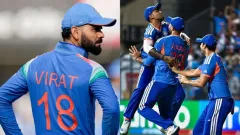
Virat Kohli’s decision to step away from Test cricket added fuel to the controversy. Manjrekar expressed disappointment over what he perceived as Kohli giving up on the toughest format without fully addressing certain technical challenges that had emerged in recent years.
Test cricket, long considered the ultimate benchmark for batting excellence, demands adaptability across conditions, patience over extended periods, and the ability to counter diverse bowling attacks. Manjrekar suggested that leaving this arena inevitably shapes how a player’s legacy is evaluated.
Supporters of Kohli, however, argue that career decisions are deeply personal and influenced by workload management, mental health, and long-term goals. They contend that Kohli’s contributions to Indian cricket across formats remain unparalleled, regardless of format preference.
Top-Order Advantage Versus Middle-Order Challenges
Manjrekar drew a clear distinction between batting positions in ODIs, emphasizing that the true difficulty lies not at the top but in the middle order. He praised players like MS Dhoni, Yuvraj Singh, and Suresh Raina for thriving in positions where the margin for error is slimmer.
Middle-order batters often enter under pressure, facing attacking fields and the need to accelerate scoring immediately. Unlike openers, they do not have the luxury of easing into their innings or exploiting fielding restrictions.
By highlighting these contrasts, Manjrekar argued that greatness in ODIs should be judged not merely by volume of runs but by the context in which those runs are scored. This perspective challenges conventional metrics that prioritize aggregate numbers over situational impact.
Social Media Reaction and Divided Opinions
Unsurprisingly, Manjrekar’s comments triggered intense reactions online. Fans of Virat Kohli accused him of undermining one of India’s greatest batters, while others applauded his willingness to question widely accepted narratives.
Former cricketers and analysts also weighed in, offering nuanced takes on the debate. Some agreed that modern ODIs are batter-friendly, while others cautioned against oversimplifying the complexities of international cricket.
The discussion reflects a broader tension between traditionalists, who uphold Test cricket as the ultimate standard, and modern audiences, who celebrate excellence across all formats.
Changing Nature of Cricket Formats
The controversy surrounding Manjrekar’s remarks highlights how cricket has transformed over time. Advances in bat technology, flatter pitches, shorter boundaries, and data-driven strategies have reshaped how the game is played, particularly in limited-overs formats.
ODI cricket, once a balance between patience and aggression, has increasingly leaned towards high-scoring encounters. This evolution has naturally influenced perceptions of difficulty and skill across formats.
As the sport continues to adapt to audience preferences and commercial demands, debates like this are likely to persist, challenging long-held assumptions about greatness and achievement.
What This Means for Virat Kohli’s Legacy
Despite the criticism, Virat Kohli’s stature in world cricket remains formidable. His records across formats, leadership contributions, and impact on Indian cricket’s global standing are undeniable.
While Manjrekar may view ODIs as the last place to look for a batting great, many fans and experts believe that excellence should be recognized wherever it manifests. Kohli’s consistency, adaptability, and longevity continue to inspire a new generation of cricketers.
Ultimately, the debate underscores that legacy is shaped not just by statistics or format choices but by the emotional connection players forge with fans and the influence they leave on the game.
A Debate That Reflects Cricket’s Passion
Sanjay Manjrekar doubling down on his remarks has once again shown how deeply cricket discourse resonates in India. Every opinion, especially when it involves icons like Virat Kohli, becomes a flashpoint for larger conversations about tradition, change, and excellence.
Whether one agrees with Manjrekar or not, his comments have sparked meaningful discussion about the evolution of cricket and how greatness should be assessed in a multi-format era.
As cricket moves forward, such debates will continue to shape how fans, players, and analysts interpret performances, ensuring that the sport remains as intellectually engaging as it is emotionally charged.
Also Read: Neeraj Chopra Splits With Coach Jan Zelezny After WC Shock










Disclaimer
Possible11 is a sports news and analysis platform designed purely for entertainment and educational purposes. All match previews, player insights, and team analyses are based on publicly available information and expert opinions. We do not promote or support betting, gambling, or real-money gaming in any form. Users are encouraged to enjoy our content responsibly and use it for informational purposes only.


Give Your Feedback