
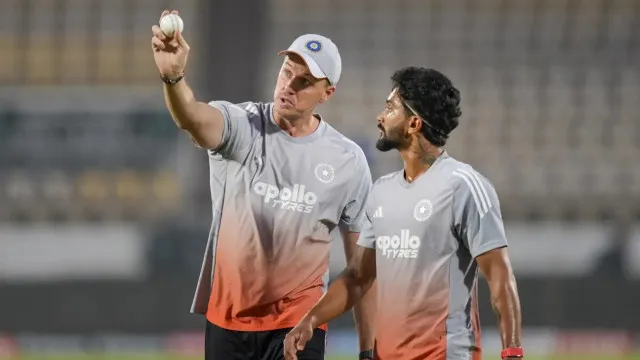
The Rajkot Test began with intrigue right from the toss, as New Zealand opted to field against India despite the venue’s strong history of successful first-innings defences. The decision added an extra layer of tactical curiosity, especially with both teams closely monitoring pitch behaviour, potential dew, and player combinations ahead of the match.
India captain Shubman Gill revealed that he would have chosen to bat first regardless of the toss outcome. He pointed out that conditions during the previous night’s training session suggested minimal dew and hinted that the surface could slow down as the match progressed. These insights shaped India’s approach, even as New Zealand backed their assessment of evening conditions.
With one change on each side, the match-up promised a blend of fresh faces and established stars. Injuries, debut calls, and captaincy calls combined to set the tone for a contest that hinged not just on skill, but on reading conditions correctly over five days.
Toss decision and conditions in Rajkot
New Zealand captain Michael Bracewell made a bold call at the toss, choosing to field and ending India’s chance of recording a rare hat-trick of toss wins. The decision went against the venue record, where teams batting first had successfully defended totals in all previous Test matches played at Rajkot.
The visitors were banking on the possibility of dew playing a role later in the day and into the evening sessions. Beyond the challenge of gripping the ball, the expectation was that the pitch might begin to skid on under lights, making stroke play easier for the chasing side.
India, however, were not overly concerned. Gill stated that there was little evidence of heavy dew during training and shared feedback suggesting that the surface could slow down as the match wore on. This contrast in reading conditions underlined the tactical battle that unfolded even before the first ball was bowled.
Shubman Gill’s assessment and leadership
Leading the side, Shubman Gill appeared confident in India’s preparation and understanding of the pitch. His comments indicated a preference for putting runs on the board early and allowing India’s bowling attack to exploit any deterioration later in the game.
Gill’s calm assessment reflected a broader leadership approach, focusing on adaptability rather than reacting solely to the toss result. He emphasised that India were prepared to execute their plans regardless of whether they batted first or chased.
With senior batters around him, Gill’s role extended beyond tactics to managing expectations and ensuring clarity in the dressing room, especially with a slight reshuffle in the playing XI.
India’s team changes and selection calls
India were forced into a change after Washington Sundar was ruled out with an injury. The team management turned to Nitish Kumar Reddy, who was already part of the squad, preferring him over Ayush Badoni.
This selection hinted that the pitch was not expected to offer significant assistance to slower bowlers. The decision also meant that Arshdeep Singh continued to remain on the sidelines, as India opted for a pace-heavy attack complemented by spin options expected to come into play later.
The balance of the Indian side suggested confidence in both batting depth and bowling variety, allowing flexibility depending on how conditions evolved across sessions.
New Zealand’s debut call and bowling strategy
New Zealand also made a single change, replacing leg-spinner Adithya Ashok with debutant left-arm spinner Jayden Lennox. The move signalled a willingness to experiment and invest in a bowler who could exploit any assistance on offer from the surface.
Lennox arrived with a promising List A record, conceding just over four runs per over and averaging more than a wicket per match. His inclusion added a new dimension to New Zealand’s bowling attack, particularly against India’s right-hand-heavy top order.
The visitors appeared keen to rotate their bowling resources smartly, keeping an eye on workload management while also testing India with unfamiliar angles and variations.
India playing XI overview
India fielded a line-up packed with experience and depth across departments. The top order combined solidity and flair, while the bowling attack blended pace, movement, and spin.
- Shubman Gill (captain)
- Rohit Sharma
- Virat Kohli
- Shreyas Iyer
- KL Rahul (wicketkeeper)
- Ravindra Jadeja
- Nitish Kumar Reddy
- Harshit Rana
- Kuldeep Yadav
- Mohammed Siraj
- Prasidh Krishna
This combination allowed India to cover multiple scenarios, whether the pitch remained true for batting or started to offer turn and variable bounce.
New Zealand playing XI overview
New Zealand’s XI reflected a blend of dependable batters and a versatile bowling unit capable of adapting to Indian conditions.
- Devon Conway
- Henry Nicholls
- Will Young
- Daryl Mitchell
- Glenn Phillips
- Mitchell Hay (wicketkeeper)
- Michael Bracewell (captain)
- Zak Foulks
- Kristian Clarke
- Kyle Jamieson
- Jayden Lennox
The side combined proven performers with emerging talent, aiming to challenge India both with the new ball and through sustained pressure across long spells.
What to watch as the match unfolds
The early sessions were expected to reveal the true nature of the Rajkot surface. If batting proved easier early on, India’s top order would look to capitalise and build a platform for a commanding total.
For New Zealand, the focus would be on disciplined bowling, using movement and bounce to create chances before conditions potentially eased. The impact of dew, if any, would become clearer as the match progressed into evening play.
With contrasting strategies, debutant interest, and leadership calls under scrutiny, the Test promised a compelling contest shaped as much by decisions off the field as performances on it.
Also Read: Who Is Alvaro Arbeloa New Real Madrid Boss Explained








Disclaimer
Possible11 is a sports news and analysis platform designed purely for entertainment and educational purposes. All match previews, player insights, and team analyses are based on publicly available information and expert opinions. We do not promote or support betting, gambling, or real-money gaming in any form. Users are encouraged to enjoy our content responsibly and use it for informational purposes only.

Give Your Feedback