

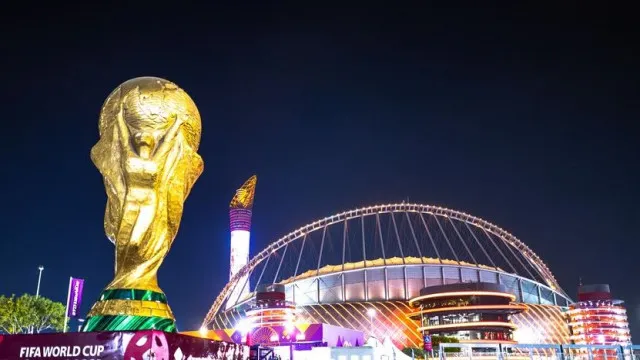
Qatar’s 2022 FIFA World Cup represented something special in football history. It marked several firsts and structural shifts for the sport, including being the first World Cup held in the Middle East. Not only that, but it was unprecedented in scale. The country spent $220 billion on transport, infrastructure, and urban development for just 28 days of football, which makes it the most expensive sporting event ever, costing more than every previous World Cup combined. This ambition went beyond simply hosting a successful tournament, aiming instead to transform Qatar and secure its permanent place in sports tourism.
Now removed from the tournament, questions of legacy have come to light. What is happening to the glimmering stadiums that were built for the World Cup? Did the 1.4 million visitors translate into sustained tourism? Did the economic return justify the initial investment? We’re about to dig into the World Cup’s real impact and see where Qatar stands in the global sports economy.
World-Class Stadiums Searching for a Purpose
Qatar intentionally built seven brand-new stadiums and fully renovated one existing venue for the 2022 World Cup. After all, this was a once-in-a-lifetime opportunity. The country wanted scale and spectacle, but the challenge was clear. How would they make these 40,000–80,000-seat stadiums sustainable within a domestic football ecosystem?
Attendance Gaps in a Post-World Cup Era
When the tournament was at its peak, Qatar was by no means worried about justifying its massive infrastructure investment. Lusail Stadium (80,000 capacity) hosted the final, while Al Bayt (60,000) and six other venues with an average capacity of 40,000 handled other busy World Cup nights. By contrast, domestic attendance painted a much smaller-scale reality. After the dust settled, Qatar had to deal with the fact that the Qatar Stars League averaged roughly 3,000–5,000 fans per match, even for top fixtures.
Now, league games are played in stadiums made for global spectacles. Although international friendlies and concerts sporadically fill these venues, it’s not uncommon to regularly see rows of empty seats. The exception? Stadium 974, which was a modular, shipping-container-based venue that was dismantled and shipped abroad for reuse.
Scaling Down for Sustainability
Qatar wasn’t overly zealous, however, as it anticipated these challenges and incorporated some flexibility into stadium designs. Many stadiums have had upper tiers removed, reducing capacity to 20,000–25,000 seats, with over 170,000 stadium seats donated to countries that need sporting infrastructure.
The issue is that operational costs remain high. These elite facilities feature cooling systems and pitch technology that can’t scale down as easily. Qatar’s situation mirrors Brazil’s “white-elephant stadiums” (costly, underused venues) after the 2014 World Cup and South Africa after the 2010 FIFA World Cup.
Event clustering has helped offset these challenges, with Qatar hosting the AFC Asian Cup 2023, one-off sporting events, and other exhibitions and celebrations.
Infrastructure That Reaches Beyond Football
Other World Cup infrastructure projects have proven useful, such as Doha’s metro system, which has seen steady daily ridership. Hamad International Airport’s expansion is also a long-term asset, reinforcing its reputation as a global transit hub. Yet there are still elements facing the same problems, including hotels with low occupancy rates and Lusail City, which is still under development.
World Cup Visitors vs Year-Round Tourism
Qatar has made investments hoping that the World Cup would serve as a springboard for long-term tourism growth. Still, post-event visitor numbers highlight a gap between temporary spikes and sustainable development.
Measuring Tourism Impact After the Final
Prior to the World Cup, Qatar aimed to attract 6+ million annual tourists by 2025—an ambitious yet seemingly achievable goal given the investments made. The tournament itself gave a glimpse of hope, with 1.4 million visitors over just 28 days. Post-World Cup tourism has now stabilised at roughly 4–4.5 million visitors per year, which is a huge surge but still below initial projections. In comparison, the UAE, known for its flourishing tourism sector, attracted nearly 19 million visitors in 2024. Revenue figures also lag behind expectations, suggesting that translating a short-term event spike into year-round tourism isn’t easy.
Qatar’s Focused Tourism Model
Qatar’s tourism portfolio focuses on world-class museums like the Museum of Islamic Art, desert excursions, sports events, and traditional souqs, offering a family-friendly environment. The issue is that there’s a limited nightlife culture, strict alcohol restrictions, and a noticeable absence of casinos, making it less appealing to other tourist segments. Even residents look to online casinos recommended by QatarCasinos.com, all of which operate outside Qatar. Other competitors in the region boast more diverse offerings, attracting visitors seeking more leisure options.
Weather also plays a factor. Although many Gulf countries also experience extremely hot temperatures from May to September, entertainment-seeking travellers are likely to continue favouring other countries that combine leisure and gambling in one place.
Where Qatar Clearly Succeeded
Qatar has still achieved many intangible benefits that contribute to a long-term strategy. Hosting the tournament has, in itself, improved the country’s global profile and strengthened diplomatic relationships. The sports world also sees it as a strong player in international sports, paving the way for greater influence in the future.
A Global Reputation Reset
The country successfully hosted one of the most complicated sports events in history, proving that it is more than capable of managing logistics, climate, and scale. International media coverage generated billions of dollars in advertising value, and Qatar’s global recognition greatly increased. Meanwhile, beIN Sports, Qatar’s media arm, expanded its influence in global football by securing broadcast rights on multiple continents.
Building Influence Through Sport
The World Cup turned Qatar into a Gulf sports hub, even though Saudi Arabia poses some competition. Hosting the AFC Asian Cup and negotiating additional FIFA events have certainly helped Qatar’s case, as have larger past investments like Qatar Sports Investments’ ownership of PSG. Qatar’s ownership helped turn the French football club into a global brand, though discussions about a sale have been underway. These instances lend credibility to the country’s sports diplomacy strategy, with major events used to project influence.
Everyday Gains
Across the nation, the tournament increased the use of metro systems, modernised infrastructure, and improved public spaces, thereby improving the lives of residents. It also became a source of national pride and unity, with Qataris feeling connected and represented on the global stage. And lastly, it contributed to the country’s desire to diversify, demonstrating that it could generate international acclaim beyond oil and gas.
The Challenge of Standing Apart
The World Cup was certainly a success for Qatar, but its Gulf neighbours have also made major investments in sports and entertainment, creating a competitive environment that Qatar’s limited offerings still can’t match.
Saudi Arabia’s Star-Driven Sports Strategy
Saudi Arabia owes much of its sports prowess to the Saudi Pro League, which made global headlines after signing big stars like Cristiano Ronaldo, Benzema, and Neymar. But investments don’t end at football. Golf, Formula E, esports, boxing, and MMA have also seen major spending, along with a high-profile 2034 FIFA World Cup bid. Social restrictions are gradually loosening, too, creating a stronger draw for regional and international visitors.
The UAE’s Mature Leisure Ecosystem
Dubai and Abu Dhabi have long led the region in tourism and entertainment. With nightlife, upscale dining, and unique experiences alongside Formula 1 and UFC events, the UAE offers a broader, year-round entertainment portfolio that Qatar currently doesn’t. And with the Wynn Al Marjan Island casino resort opening in 2027, the UAE is set to further expand its leisure offerings and welcome regulated gambling.
Qatar’s Search for a Distinct Identity
Qatar has a conservative, sports-focused strategy. And while this isn’t bad in itself, it puts the country at a disadvantage and limits its diversity. High costs and the lack of nightlife make it hard to compete. As a result, Qatar’s best bet may be to lean into event hosting, but could we eventually see a unique tourism identity emerge, built around experiences only Qatar can offer?
Soft Power, Hard Financial Questions
Qatar’s World Cup brought valuable soft power and incredible infrastructure, but the financial payoff is still up in the air. Underused stadiums, tourism below projections, and undeniable regional competition are all testing long-term payoff. As neighbouring countries expand entertainment offerings, Qatar’s family-focused model might limit its ambitions in sports tourism.










Disclaimer
Possible11 is a sports news and analysis platform designed purely for entertainment and educational purposes. All match previews, player insights, and team analyses are based on publicly available information and expert opinions. We do not promote or support betting, gambling, or real-money gaming in any form. Users are encouraged to enjoy our content responsibly and use it for informational purposes only.









Give Your Feedback