

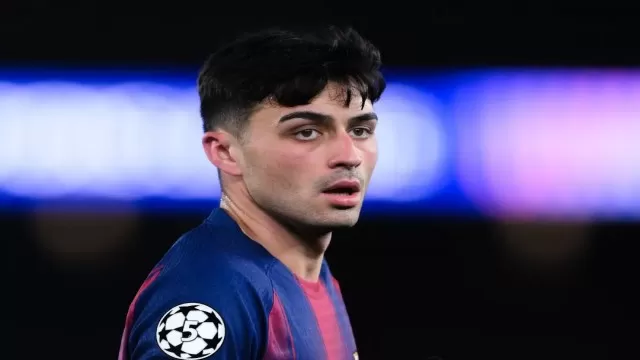
FC Bayern fans may not care what a Barcelona midfielder has to say, but comments made by elite players often spark debate well beyond club loyalties. When opinions come from footballers regarded as among the most technically gifted of their generation, those remarks naturally draw attention, even when they appear dismissive or controversial.
That is exactly what happened after FC Barcelona star Pedri spoke about the strongest teams in the UEFA Champions League. His list featured familiar heavyweights but conspicuously left out Bayern Munich, a club widely regarded as one of Europe’s most consistent forces. The omission has since triggered discussions about form, reputation, recent encounters, and how much weight player opinions should really carry.
While some see Pedri’s words as a harmless personal view, others interpret them as a subtle slight against a team enjoying an impressive season. Regardless of intent, the statement adds another layer to the long-standing rivalry between two of Europe’s most storied clubs.
Pedri’s Champions League Assessment Raises Eyebrows
In a wide-ranging interview, Pedri was asked to identify the teams he currently considers the strongest contenders in the Champions League. His answer included Paris Saint-Germain, Arsenal, Manchester City, and Real Madrid, a lineup that reflects recent domestic dominance, financial power, and deep European pedigrees.
However, Bayern Munich’s absence from that list stood out immediately. The German champions have been among the most consistent performers in European football over the last decade, regularly reaching the latter stages of the competition. For many observers, excluding Bayern from any shortlist of contenders feels counterintuitive, especially given their current momentum.
Pedri did not elaborate on why Bayern were left out, leaving fans and analysts to interpret his reasoning. Some believe it was simply an oversight in a casual conversation, while others see it as a reflection of Barcelona’s renewed confidence after recent results.
Bayern Munich’s Season Suggests a Different Reality
Bayern Munich have enjoyed a strong campaign marked by attacking fluidity, tactical discipline, and squad depth. Their performances domestically and in Europe have reinforced their reputation as a team capable of overpowering opponents both physically and technically.
The Bavarian club’s ability to transition seamlessly between experienced leaders and emerging talents has been a hallmark of their success. This balance has allowed Bayern to remain competitive even as other European giants navigate periods of transition or inconsistency.
Given this context, many fans find it puzzling that Bayern were omitted while teams struggling for consistency were included. The contrast has fueled debates about whether reputation, recent trophies, or head-to-head results should define perceptions of strength.
Barcelona’s Recent Victory and Shifting Confidence
One possible explanation for Pedri’s view lies in Barcelona’s most recent encounter with Bayern Munich. The Catalan side secured a decisive victory, ending a long run of painful defeats against the German giants. That result carried significant symbolic weight for a club seeking to reassert itself on the European stage.
For Barcelona players, that win represented more than just three points or progression; it marked a psychological turning point. After years of frustration, the balance of confidence appeared to shift, and Pedri’s comments may reflect that renewed belief.
Footballers often speak from recent experience, and a convincing win can influence perceptions disproportionately. While history favors Bayern in this rivalry, momentum and memory can shape how players evaluate opponents in the present.
Are Reputation and Form Being Judged Equally?
Pedri’s inclusion of Manchester City and Real Madrid has also sparked discussion. City, despite their pedigree, have shown signs of vulnerability this season, while Real Madrid have faced internal challenges and tactical adjustments under new leadership.
Critics argue that if these teams are still considered contenders based on historical stature, Bayern Munich deserve the same treatment. The German club’s consistency arguably surpasses that of several teams mentioned by Pedri.
This raises a broader question about how footballers assess rivals. Is it purely about current form, emotional memory, or the aura surrounding certain clubs? Pedri’s list suggests that personal experience and narrative may play a larger role than objective analysis.
Bayern Fans Unfazed by External Opinions
For Bayern Munich supporters, Pedri’s remarks are unlikely to cause concern. The club’s culture has long emphasized results over rhetoric, with a strong belief that performance on the pitch speaks louder than interviews.
Bayern’s history is filled with moments where they responded to doubt with dominant displays. From domestic dominance to European triumphs, the club has repeatedly shown an ability to thrive under skepticism.
Rather than viewing Pedri’s comments as an insult, many fans see them as irrelevant noise. Confidence within the squad and belief in their system remain far more important than recognition from rival players.
The Possibility of a Champions League Rematch
The most intriguing aspect of this debate is the realistic possibility of Bayern Munich and Barcelona meeting again in the Champions League knockout stages. Such a matchup would provide the ultimate answer to questions raised by Pedri’s assessment.
Both clubs possess the quality and ambition to progress deep into the competition. A head-to-head clash would allow reputations, opinions, and narratives to be settled through direct competition rather than speculation.
For neutral fans, the prospect of another Bayern versus Barcelona encounter promises high drama, tactical intrigue, and individual brilliance, reinforcing why these clubs remain central to European football’s story.
Words Fade, Football Endures
Ultimately, opinions expressed in interviews are fleeting, while results endure. Pedri’s comments may generate headlines and debate, but they will not alter Bayern Munich’s objectives or approach to the Champions League.
Football history is shaped by decisive nights, not soundbites. If Bayern continue their strong form and advance deep into the competition, omissions from preseason or midseason opinions will quickly be forgotten.
As the Champions League unfolds, the focus will return to the pitch, where reputations are tested, narratives rewritten, and rivalries renewed. Until then, Pedri’s view remains just that — one perspective in a sport defined by constant change.
Also Read: IND-W vs SL-W Highlights: Shafali 50 Seals 2-0 Lead










Disclaimer
Possible11 is a sports news and analysis platform designed purely for entertainment and educational purposes. All match previews, player insights, and team analyses are based on publicly available information and expert opinions. We do not promote or support betting, gambling, or real-money gaming in any form. Users are encouraged to enjoy our content responsibly and use it for informational purposes only.




Give Your Feedback