

Pakistan’s cricket rivalry with India was once one of the fiercest and most unpredictable contests in world sport, often described as the ultimate battle of passion, pride, and pressure.
However, in recent years, the balance has shifted dramatically. India’s repeated dominance has sparked frustration among Pakistani fans and former players, raising serious questions about what went wrong in a team that once thrived under pressure.
Now, former Pakistan captain Mohammad Yousuf has offered a brutally honest explanation, suggesting that Pakistan’s decline against India began not with defeat, but with overconfidence after a historic win in 2021.
Pakistan’s Losing Streak Against India Raises Alarm
Pakistan’s recent record against India has been difficult to digest for supporters. India’s latest 61-run victory marked yet another chapter in a growing streak of defeats that has dulled the intensity of what was once cricket’s most thrilling rivalry.
Since September 2022, India have secured four consecutive wins over Pakistan. Even more striking is the long-term trend: since 2017, Pakistan have managed only a handful of victories, while India have largely controlled the contests.
The rivalry that once carried unpredictability and edge has started to feel one-sided, leaving many wondering how Pakistan, a team known for flair and fire, has fallen behind.
Mohammad Yousuf Blames Overconfidence After 2021 Win
According to Mohammad Yousuf, Pakistan’s struggles stem from a surprising source: their famous 10-wicket win over India in the 2021 T20 World Cup.
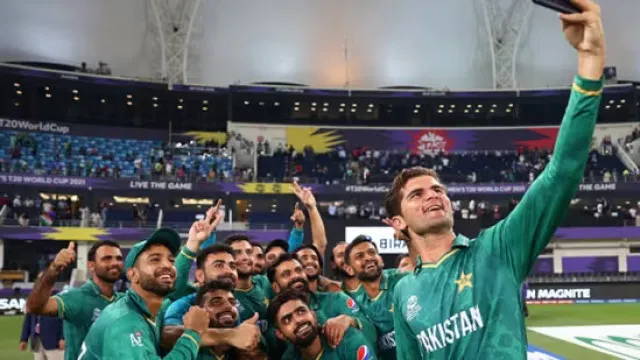
That match in Dubai was historic. Pakistan registered their first-ever World Cup victory over India across formats, and the celebrations were enormous. But Yousuf believes that win planted the seeds of arrogance within the squad.
Instead of remaining grounded, the team began to believe they were untouchable, and that mindset, he argues, has been deeply damaging.
Players Ignored Coaches and Lost Respect, Says Yousuf
Yousuf made a startling claim about the dressing-room culture that developed after that landmark victory. He suggested that players stopped listening to guidance and became dismissive of coaching staff.
He described situations where the head coach would be speaking, but players would look away, scroll through their phones, or simply show no interest in instructions.
Such behavior, Yousuf insisted, reflects a lack of discipline and humility, qualities essential for sustained success at the international level.
The Danger of Thinking No One Is Better Than Us
One of the most damaging attitudes, according to Yousuf, was the belief that Pakistan had reached the top and no longer needed to improve.
He stated that after beating India so convincingly, the team began thinking, No one is better than us, which created complacency instead of hunger.
In elite sport, that mindset can be fatal. Cricket evolves rapidly, opponents adapt, and teams that stop learning quickly fall behind.
Past Greats Stayed Humble Despite Their Stardom
Yousuf contrasted the current environment with the era of legends like Inzamam-ul-Haq and Saeed Anwar, who remained respectful and coachable even at the peak of their careers.
He highlighted how senior players in previous generations always listened carefully to coaching advice, regardless of reputation or achievements.
This humility, he suggested, was a key reason Pakistan produced consistent match-winners in the past.
Shadab Khan’s Remarks Spark More Controversy
Yousuf’s comments gained further attention when Shadab Khan made statements that seemed to echo the same overconfident tone being criticized.
In response to former cricketers questioning Pakistan’s approach and inability to beat India consistently, Shadab defended the current squad by pointing out that they achieved something previous generations could not in World Cups.
While his words may have been intended as confidence, many viewed them as further evidence of the arrogance Yousuf warned about.
Pakistan Cricket Faces Issues Beyond the Field
Pakistan’s decline cannot be blamed on attitude alone. The team has also faced instability in management, frequent coaching changes, and ongoing political influence within the cricket board.
Such disruptions make it difficult for players to settle into long-term strategies or develop consistent leadership.
When combined with dressing-room complacency, these factors create an environment where performance suffers.
Yousuf Opens Up About Babar Azam’s Prolonged Slump
Another major concern raised by Yousuf was the form of Babar Azam, once regarded as one of the finest batters in world cricket.
Yousuf claimed that Babar’s technique has deteriorated and that no player should remain out of form for such an extended period without accountability.
He revealed that he wanted Babar dropped based on performance, but decision-makers resisted the idea, creating tension within the system.
Coaching Pressure and Resignation Reveal Systemic Problems
Yousuf’s experience as a batting coach also exposed deeper issues within Pakistan cricket’s structure.
He stated that questioning star players often brings backlash, making it difficult for coaches to make tough decisions based purely on merit.
Ultimately, he chose to resign, suggesting that the system itself prevents meaningful reform.
India’s Dominance Highlights Pakistan’s Need for Change
India’s consistent victories have shown the difference between a stable, disciplined unit and a side struggling with confidence swings and internal uncertainty.
Pakistan still possess talent, but without humility, structure, and respect for coaching, results are unlikely to change.
The rivalry can only regain its edge if Pakistan rebuild with grounded leadership and a hunger to improve.
Key Takeaways From Yousuf’s Strong Warning
- Overconfidence after 2021 win may have triggered Pakistan’s decline
- Disrespect toward coaches weakened discipline
- Arrogance replaced hunger for improvement
- Former legends remained humble despite success
- Babar Azam’s form slump reflects deeper system failures
Pakistan vs India Rivalry Needs Balance Again
The India-Pakistan rivalry thrives when both teams compete fiercely on equal footing. Right now, the gap is visible, and Pakistan’s former stars are demanding introspection rather than excuses.
Mohammad Yousuf’s words serve as a wake-up call: victories mean nothing if they breed arrogance instead of growth.
If Pakistan can rediscover humility, respect, and discipline, the rivalry may once again live up to its legendary reputation.
Match Record Snapshot
| Since 2017 | Pakistan have beaten India only three times |
| India’s Recent Streak | Four straight wins since September 2022 |
| Turning Point Mentioned | Pakistan’s 10-wicket win in 2021 T20 World Cup |
| Main Issue Raised | Arrogance and loss of discipline |
Pakistan cricket now stands at a crossroads. Whether the team continues down this path or rebuilds with humility will define the future of one of sport’s greatest rivalries.
Also Read: Voll Stars as Australia Bowlers Level Thrilling T20I Series












Disclaimer
Possible11 is a sports news and analysis platform designed purely for entertainment and educational purposes. All match previews, player insights, and team analyses are based on publicly available information and expert opinions. We do not promote or support betting, gambling, or real-money gaming in any form. Users are encouraged to enjoy our content responsibly and use it for informational purposes only.










Give Your Feedback