

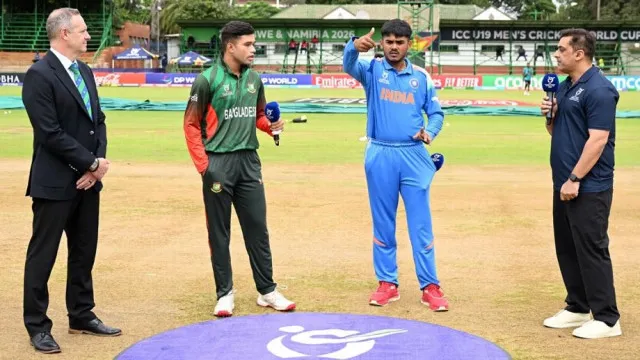
A moment meant to symbolize sportsmanship turned into a talking point at the 2026 Under-19 World Cup when representatives of India and Bangladesh did not exchange handshakes during the toss. The incident, which took place in Bulawayo, immediately drew attention from fans and observers, adding an unexpected layer of tension to an already sensitive cricketing encounter.
While such gestures are routine in international cricket, their absence often invites speculation, particularly when relations between nations are strained. In this case, the lack of a handshake quickly became linked to the broader diplomatic unease between India and Bangladesh, even before official clarifications were issued.
As discussions intensified across social media and cricket circles, the episode once again highlighted how actions on the field can be interpreted far beyond sport, especially in youth tournaments watched closely by the global cricket community.
Handshake Incident at the U-19 World Cup Toss
The incident occurred during the group-stage match of the 2026 Under-19 World Cup in Bulawayo. At the toss, the captains representing India and Bangladesh completed formalities without the customary handshake that traditionally precedes the start of play.
India were represented by captain Ayush Mhatre, while Bangladesh’s vice-captain Zawad Abrar stood in for regular captain Azizul Hakim, who was unwell at the time. Though the toss proceeded normally, the absence of a greeting did not go unnoticed.
Within minutes, images and clips began circulating online, prompting debate over whether the act was symbolic or accidental.
Bangladesh Cricket Board Issues Clarification
Following the reaction, the Bangladesh Cricket Board released an official statement addressing the matter. The board emphasized that the absence of a handshake was entirely unintentional and the result of a momentary lapse in concentration.
According to the statement, there was no intention to show disrespect or disregard toward the Indian team. The BCB clarified that circumstances surrounding the toss, including the last-minute change in leadership, contributed to the oversight.
The board stressed that the incident should not be viewed as a deliberate act or reflection of Bangladesh’s stance toward the opposition.
Explanation Behind the Leadership Change
The Bangladesh team was represented at the toss by vice-captain Zawad Abrar because regular captain Azizul Hakim was unavailable due to illness. Although Hakim later participated in the match, he could not attend the pre-match proceedings.
This sudden adjustment, according to the BCB, played a role in the brief lapse that led to the missed handshake. Such changes can disrupt routine processes, particularly in high-pressure international tournaments.
The clarification aimed to provide context and reduce speculation surrounding the incident.
Emphasis on Spirit of Cricket
In its statement, the Bangladesh Cricket Board reiterated its commitment to the spirit of cricket. The board noted that respect for opponents and adherence to sportsmanship are fundamental requirements for representing the country at any level.
The team management was advised immediately after the incident, and players were reminded of their responsibility to maintain professionalism in all interactions.
The BCB underlined that values such as camaraderie, mutual respect, and fair conduct remain central to Bangladesh’s cricketing philosophy.
BCCI Yet to Issue a Statement
As of now, the Board of Control for Cricket in India has not released an official response regarding the handshake incident.
Indian officials have chosen to remain silent, allowing the matter to settle without escalation. This approach has often been adopted in sensitive situations involving international relations.
The absence of immediate commentary has helped prevent the issue from overshadowing the match itself.
Political Tensions Add Context
The handshake episode occurred against the backdrop of worsening relations between India and Bangladesh. In recent months, off-field developments have influenced cricketing ties between the two nations.
These tensions have led to heightened scrutiny of even minor on-field gestures, with fans and analysts interpreting actions through a political lens.
As a result, routine incidents can quickly gain symbolic meaning beyond their actual intent.
Similar Incidents in Other Tournaments
The absence of handshakes is not unprecedented in recent international cricket. Matches involving India and Pakistan across multiple tournaments this year have also seen teams avoid physical greetings at tosses and post-match ceremonies.
Such instances were observed during men’s and women’s continental events as well as youth-level competitions, largely due to strained diplomatic relations.
This pattern has influenced how current incidents are perceived, even when involving different nations.
Cricket and Diplomacy Often Intersect
Cricket has long reflected the broader political climate between nations. While the sport promotes unity and respect, external factors sometimes influence on-field customs.
Youth tournaments, in particular, place young players in challenging environments where expectations extend beyond performance alone.
Balancing professionalism with geopolitical sensitivity remains a complex reality for modern international cricket.
Impact on Young Players
For Under-19 cricketers, global tournaments represent an important stage in their development. Incidents like these bring unexpected attention and pressure.
Administrators often emphasize the need to shield young players from controversies that could distract from learning and growth.
The focus remains on ensuring that such moments do not affect confidence or performance.
Focus Returns to the Game
Despite the initial controversy, attention eventually shifted back to the match itself. Both teams competed professionally once play began.
Officials and team staff worked to ensure that the focus remained on cricket rather than off-field narratives.
This approach helped reinforce the idea that youth tournaments should prioritize development and fair competition.
Lessons in Sportsmanship
The incident has served as a reminder of the importance of awareness and composure in international sport.
Even unintentional actions can be magnified in high-profile tournaments, particularly when political tensions exist.
For young cricketers, such experiences offer valuable lessons in responsibility and professionalism.
Looking Ahead in the Tournament
As the Under-19 World Cup continues, teams will aim to keep attention focused on performances rather than controversies.
Both India and Bangladesh are expected to emphasize discipline and respect in upcoming fixtures.
The hope among fans and administrators alike is that cricket remains the central narrative of the tournament.
A Moment That Sparked Wider Discussion
Though brief, the absence of a handshake sparked conversations about diplomacy, sportsmanship, and perception in modern cricket.
The explanations provided by the Bangladesh Cricket Board sought to close the matter with clarity and accountability.
As the tournament progresses, the episode stands as a reminder of how closely sport and global context can intertwine.
Also Read: KSCA Gets Govt Nod to Host IPL and Internationals Again







Disclaimer
Possible11 is a sports news and analysis platform designed purely for entertainment and educational purposes. All match previews, player insights, and team analyses are based on publicly available information and expert opinions. We do not promote or support betting, gambling, or real-money gaming in any form. Users are encouraged to enjoy our content responsibly and use it for informational purposes only.


Give Your Feedback