

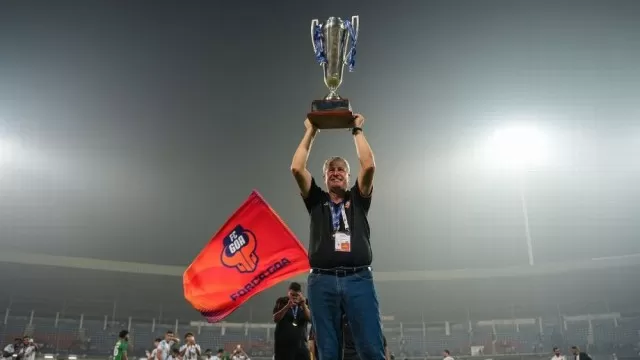
Manolo Marquez sounds weary — and not without reason. What should have been a routine post-tournament trip home has instead become another episode in a year that has tested the veteran coach’s patience and resilience. Flights cancelled, schedules upended and constant uncertainty have become unwelcome companions as Marquez navigates life in Indian football: a world he says he loves, but one that, this year especially, has strained even the most adaptable minds.
It is telling that a coach who could have been on a plane to Qatar and then home to Barcelona is instead talking from Goa, reflecting on the rollercoaster that has been 2025. The exhaustion in his voice is more than jet lag — it is the cumulative fatigue of managing teams through competition gaps, disrupted calendars and a domestic calendar that seems to be slipping from one tentative start date to another. For a man who has spent 36 years in the game, the situation in India right now feels like an avoidable crisis rather than a passing complication.
This feature explores Marquez’s observations, the realities facing FC Goa, and the broader implications for Indian football. It tracks how planning failures, administrative indecision and an opaque federation-club relationship have combined to create long holes in player schedules, threaten livelihoods across support staff and risk eroding fan interest — all while teams struggle to maintain fitness, morale and competitive momentum.
Travel Chaos and the Everyday Strain
Marquez’s immediate frustration reflects a wider logistical breakdown that affects everyone from players to physios. Indigo’s flight cancellations are only the visible symptom; behind the scenes lies a pattern of delays and disruptions that interfere with preparation windows, recovery cycles and family time. For professionals who live out of suitcases during the season, reliable travel is not a luxury — it is part of the infrastructure that allows a club to function.
The coach’s quip — “Now I am half Indian” — hides a deeper truth: adaptability is now a core skill for anyone involved in Indian football. But adaptability alone cannot replace steady planning. When fixtures are uncertain and travel remains unreliable, the human cost multiplies. Players lose rhythm, support staff face economic uncertainty, and coaches wrestle with impossible demands on squad rotation and mental readiness.
From National Team to Club: A Career of Contrasts
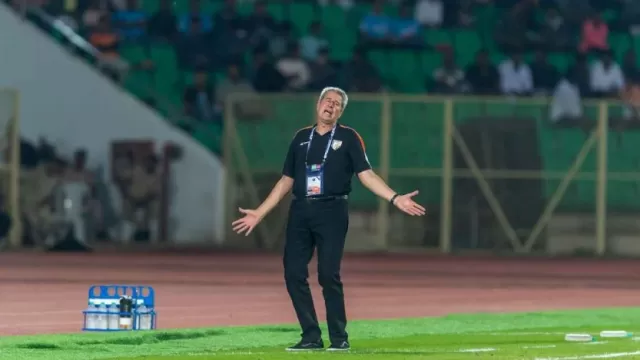
Marquez’s stint with the national team earlier in the year was a difficult chapter that he quietly prefers to gloss over. Reappointed at FC Goa, he has since confronted a different challenge: keeping a club competitive despite a domestic league that may not even start on time. The contrast between international disappointment and club-level resilience frames his current mood — a mixture of pride in recent achievements and worry about systemic failures that threaten long-term progress.
His time leading the national side, brief and fraught, has informed his approach at club level: patience, process and an insistence on gradual development. Yet these principles require consistent play to translate into growth. With the ISL schedule in flux, the very structures that allow coaches to instill tactics and culture are being eroded.
Improvise, Adapt, Survive: Skills Earned in India
“The best quality that I improve in my [five] years here is to improvise everything,” Marquez says, and that admission is revealing. He credits India’s unpredictability for refining his managerial toolkit — improvisation, crisis management and flexible planning have become everyday necessities. But such skills are stopgaps, not solutions. Continual improvisation drains creativity and leads to tactical compromises that ultimately hurt player development.
For teams like FC Goa, mastering adaptation has allowed them to compete on multiple fronts — AFC Champions League Two qualification and Super Cup success — even while the domestic landscape remains fractured. That success, however, comes at a cost: an uneven competitive ecosystem where some clubs enjoy international minutes while others linger on the sidelines.
The Toll on Players, Staff and the Football Ecosystem
Marquez’s concern is not abstract. He describes players learning to cook out of boredom, masons and physios unsure of pay, and fans losing a rhythm of engagement. A footballer’s peak years are finite; prolonged inactivity risks stagnation and attrition. When a season is delayed by months, match sharpness dissipates and clubs face the economic strain of retaining staff with limited revenue-generating fixtures.
Lower-tier workers — kit managers, physiotherapists, stadium staff — feel the consequences acutely. The sport’s supply chain depends on regular play to sustain wages, sponsorships and vendor incomes. When fixtures vanish from calendars, the ripple effects hit the most vulnerable first and hardest, eroding the support networks that keep clubs functioning.
FC Goa’s Mixed Emotions: Achievement Amid Uneven Conditions
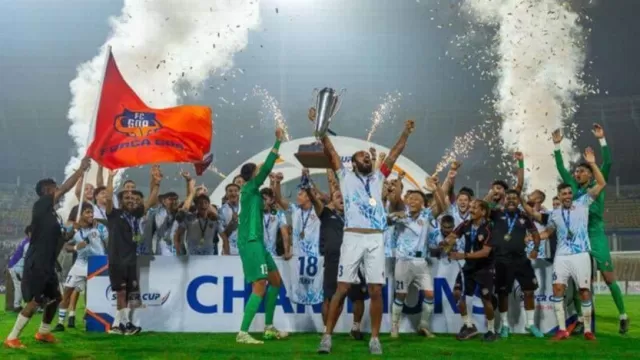
FC Goa’s recent Super Cup triumph and ACL2 qualification are testaments to the club’s professionalism and the coach’s skill in preparing a side under difficult circumstances. Yet Marquez is ambivalent: while proud of the silverware and the team’s competitive edge, he acknowledges that the triumph feels incomplete because many rivals competed under wildly different conditions.
He stresses that winning matters, but only if the competition is fair. When some clubs lack foreign players, others skip training camps, and still others play significantly fewer matches, it skews the competitive integrity. Thus, while Goa’s victories are deserved, they also highlight the disparities across clubs that undermine the value of domestic trophies.
Rotation, Rhythm and the Calendar Conundrum
South Asian football calendars demand regular competition to maintain rhythm. Marquez points out the ironies: FC Goa played 11 matches over five months — a number that would be cramped into just two weeks in some international schedules. Such compression strains players physically and mentally, and leaves long barren stretches where match fitness deteriorates.
Rotation policies and managerial tactics are built around predictable fixtures. Without them, coaches cannot plan training cycles or manage player workloads effectively. The result is a stop-start season that reduces the quality of football and risks increasing injuries when matches do come thick and fast.
Communication Breakdown Between AIFF, FSDL and Clubs
At the heart of the crisis lies a governance issue: the AIFF-FSDL contract expiry has exposed weaknesses in long-term planning and stakeholder communication. Marquez is blunt: “Everyone speaks... but there are no solutions.” The recurring announcements of tentative dates followed by delays have eroded trust and created a reactive culture instead of a proactive strategy to sustain the sport.
Clubs need clear, binding timelines and transparent processes for resolving disputes. In the absence of such frameworks, decision-making becomes ad-hoc, and the ability to secure sponsorships, arrange logistics and plan player development collapses into uncertainty.
Long-Term Damage: Youth Development and Fan Engagement
Marquez warns of the long-term consequences: young players who miss a year of competitive football could lose critical stages of development, and fans may drift away when domestic matches vanish from calendars. Football is an ecosystem that relies on consistent exposure to maintain interest, nurture talent and attract investment. Prolonged instability risks reversing years of progress in grassroots and professional development.
He urges stakeholders to consider the cumulative impact: losing a single season is not merely a delay but a structural setback that impacts scouting networks, academy continuity and sponsorship confidence. Rebuilding momentum after such a lapse requires resources and time that may not be readily available.
What Needs to Change: Practical Steps Forward
Marquez’s critique is pointed but constructive. He calls for a unified approach: clearer governance, collaborative contingency plans and realistic timelines that acknowledge logistical realities rather than optimistic wishlists. Practical reforms could include interim calendars agreed upon by all stakeholders, compensation frameworks for support staff during pauses, and a dedicated task force to restore confidence among sponsors and fans.
He also highlights the need for better communication with players and staff — honest explanations and realistic expectations help maintain morale. Investing in player welfare, ensuring payment guarantees and supporting career transition programs for those affected during downtime could mitigate the human cost of administrative paralysis.
Voices for Unity: Clubs, Coaches and Fans Aligned
The moment calls for unity. Marquez emphasises that while clubs have differing priorities, a common front is essential to protect the sport’s future. Fans, too, must be engaged transparently to keep faith with the domestic game. The coach’s message is clear: the survival and resurgence of Indian football depend on a coordinated, credible plan that places the sport’s long-term health above short-term politicking.
He urges leaders to act decisively, to stop the cyclical announcements that breed cynicism, and to put mechanisms in place that prevent similar crises from recurring. Only then can the sport reclaim momentum and deliver on its promise to players and supporters alike.
Conclusion: At a Crossroads — Act Now or Lose Ground
Manolo Marquez’s weary assessment is a wake-up call. His mix of frustration and affection for Indian football captures the paradox: a sport brimming with potential yet hamstrung by avoidable dysfunction. Winning trophies while the domestic structure teeters is unsustainable; long-term planning, transparent governance and urgent remedial action are the only paths forward.
Time is not on Indian football’s side. The next steps taken by AIFF, league operators and clubs will determine whether this period is remembered as a temporary setback overcome by reform — or as a turning point that saw the sport lose crucial ground. For Marquez, FC Goa and a generation of players, the hope remains that common sense and collective action will prevail before the damage becomes permanent.
Also Read: ICC T20 World Cup 2026 Tickets Live Now—Book Fast!





Disclaimer
Possible11 is a sports news and analysis platform designed purely for entertainment and educational purposes. All match previews, player insights, and team analyses are based on publicly available information and expert opinions. We do not promote or support betting, gambling, or real-money gaming in any form. Users are encouraged to enjoy our content responsibly and use it for informational purposes only.


Give Your Feedback