

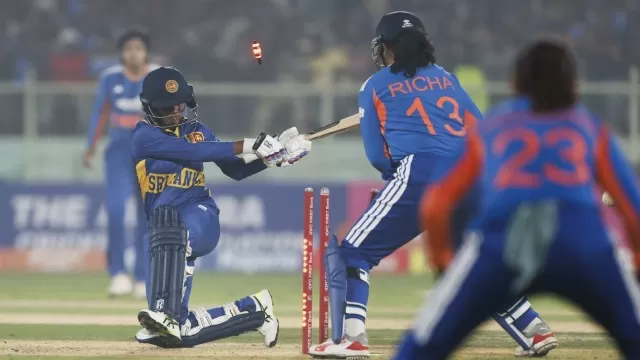
India began the five-match T20I series against Sri Lanka in commanding fashion, showcasing their depth with both bat and ball in the opening encounter. The hosts cruised to a comfortable victory, reinforcing their status as favourites not just for the series but also as one of the most well-rounded sides in women’s T20 cricket at the moment. Yet, beneath the dominant scoreline lay a concern that stood out clearly — fielding lapses that could prove costly against stronger opposition.
Dropping five catches in a single match is not something India would want to normalize, especially as the team builds momentum towards bigger tournaments. While their bowlers repeatedly forced mistakes and their batters chased with authority, missed chances allowed Sri Lanka to survive longer than they otherwise might have. As the series moves forward, tightening standards in the field will be just as important as sustaining batting and bowling excellence.
With the second T20I set to take place in Visakhapatnam under similar conditions, India will aim to extend their lead while addressing the only visible crack in their otherwise imposing performance. Sri Lanka, meanwhile, will search for inspiration and greater intent, hoping to turn fleeting resistance into a sustained challenge.
India’s dominance with bat and ball
India’s all-round superiority was evident from the very start of the series. With the ball, they maintained relentless pressure through disciplined lines, clever variations, and sharp tactical awareness in the middle overs. Sri Lanka struggled to break free, finding it difficult to rotate strike or access boundaries with any consistency.
The batting effort that followed was equally clinical. India’s top and middle order approached the chase with clarity, ensuring there were no nervous moments despite early wickets. The tempo was controlled, the shot selection assured, and the finish emphatic, underlining the growing maturity of the lineup in run chases.
This combination of controlled bowling and confident batting has been a recurring theme in India’s recent T20I success against Sri Lanka, reflected in their impressive head-to-head record over the last few years.
Fielding lapses raise concern

Despite the comfortable win, India’s fielding drew attention for the wrong reasons. Five dropped catches, including three straightforward chances, disrupted what could have been an even more dominant display. These lapses gave Sri Lanka extra deliveries and opportunities to build partnerships that should have ended much earlier.
While none of the missed chances ultimately changed the result, such errors can swing momentum in tighter contests. At the international level, especially in T20 cricket where margins are slim, poor fielding can undo even the best-laid bowling plans.
The team management will be keen to address these issues quickly, emphasizing sharper catching, better anticipation, and cleaner execution as the series progresses.
Sri Lanka search for batting support
Sri Lanka’s batting once again revolved heavily around captain Chamari Athapaththu. While her intent and experience remain invaluable, the lack of substantial support from the rest of the lineup has been a recurring challenge. Brief flashes of aggression were not enough to shift the balance.
Batters such as Vishmi Gunaratne, Harshitha Samarawickrama, and Hasini Perera showed promise but struggled to sustain momentum. Striking below a run a ball placed added pressure on Athapaththu and allowed India to dictate the pace of the innings.
For Sri Lanka to challenge India meaningfully, at least one batter in the top or middle order will need to bat deep, providing stability and freeing others to play with greater freedom.
Vaishnavi Sharma’s encouraging debut
One of the positives for India was the debut of young left-arm spinner Vaishnavi Sharma. Trusted with responsibility soon after the powerplay, she showcased composure beyond her years, delivering tight overs and denying batters any room to score freely.
Although she finished without a wicket, her figures reflected control and discipline. On another day, she might well have been rewarded with breakthroughs if not for missed chances in the field.
At just 20 years of age, Vaishnavi represents India’s investment in building a strong spin arsenal ahead of major global tournaments, and her progress will be closely monitored.
Chamari Athapaththu remains Sri Lanka’s key
Chamari Athapaththu continues to be Sri Lanka’s most influential player, combining experience with an aggressive approach at the top of the order. Her numbers since 2024 underline her consistency and importance to the side’s batting strategy.
Against India, Athapaththu’s role becomes even more crucial. A substantial innings from her not only boosts Sri Lanka’s total but also lifts the confidence of the entire lineup.
If Sri Lanka are to level the series or stage a comeback, it will almost certainly involve a defining performance from their captain.
Form guide and momentum
India enter the second T20I with momentum firmly on their side, having won the majority of recent encounters against Sri Lanka. Their current form reflects a team that knows how to recover quickly from setbacks and capitalize on opposition mistakes.
Sri Lanka’s recent results, by contrast, show inconsistency. While they have the ability to challenge on their day, sustaining pressure over 20 overs remains an area of concern.
Momentum, confidence, and execution will once again play decisive roles as the series continues.
Likely team combinations
India are expected to stick with their winning combination, balancing pace and spin effectively. The blend of experienced campaigners and young talent has served them well, offering flexibility across different phases of the game.
Sri Lanka, meanwhile, may resist the urge to make wholesale changes, instead backing their existing lineup to adapt and respond better with the bat.
Continuity could be key for both sides as they seek rhythm and clarity in their roles.
Conditions and match outlook
Conditions in Visakhapatnam are likely to mirror those of the series opener, with cooler evening temperatures and the possibility of dew influencing the contest. The surface may offer grip early before easing out for batters.
Chasing could once again be the preferred option, especially if dew becomes a factor later in the evening. Teams will need to read conditions quickly and adapt their strategies accordingly.
India will start as clear favourites, but addressing their fielding standards will be vital if they are to maintain complete control of the series.
Big picture for the series
India’s opening win reinforced the visible gap between the two sides, but it also highlighted areas that demand attention despite success. As the team builds towards major international events, consistency across all three departments will be essential.
Sri Lanka, on the other hand, will view this series as an opportunity to test their resilience and develop greater depth beyond their star players.
As the contest moves forward, the spotlight will remain on whether India can marry dominance with discipline — especially in the field — and whether Sri Lanka can rise to the challenge with greater intent and execution.
Also Read: Ashes Fallout: Probe Ordered Into England’s Noosa Drinking











Disclaimer
Possible11 is a sports news and analysis platform designed purely for entertainment and educational purposes. All match previews, player insights, and team analyses are based on publicly available information and expert opinions. We do not promote or support betting, gambling, or real-money gaming in any form. Users are encouraged to enjoy our content responsibly and use it for informational purposes only.









Give Your Feedback