
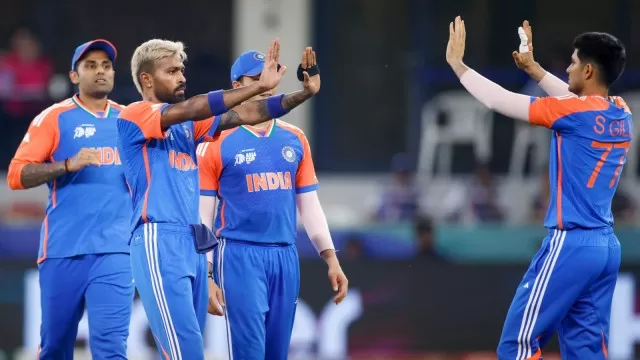
Hardik Pandya’s return to competitive cricket has once again ignited excitement around India’s T20 setup. His rare blend of power-hitting, seam bowling, and on-field intelligence makes him a player whose value goes beyond conventional roles. As India prepares for another crucial stretch of matches, the spotlight is firmly back on the star allrounder who has proven himself time and again in high-pressure situations.
The anticipation surrounding Pandya’s comeback is even stronger this time as he returns from a significant injury layoff. Fans, analysts, and former players believe that his presence can dramatically alter India’s balance in white-ball cricket. With major tournaments approaching, the conversation has shifted not only to his skillset but also to how the team management plans to manage his workload.
A former India coach recently highlighted Pandya’s unmatched importance, calling him a “unique asset” who brings both depth and flexibility to the side. As discussions heat up, concerns about overburdening him before major events are also being raised, making workload management a key aspect of India’s long-term plans.
Hardik Pandya’s Value as a True Allrounder
Hardik Pandya has evolved into an impact player capable of influencing the game with both bat and ball. His former coach strongly emphasized that Pandya could walk into any T20I side purely on the strength of his batting alone. His aggressive intent, ability to clear boundaries at will, and adaptability across batting positions make him a premium asset.
Equally important is his role as a reliable seam-bowling option. On days when conditions favor pace, Pandya becomes a frontline bowler who can operate in the powerplay as well as at the death. This dual capability allows India to field more combinations and strengthens the core team strategy.
The coach also pointed out that very few international teams have a backup for such a complete allrounder. He compared Pandya’s irreplaceability to that of global stars like Ben Stokes and Ravindra Jadeja. According to him, there is no player in India who can offer the same blend of stability, aggression, and control as Hardik Pandya.
Pandya’s Return After Injury Layoff
Pandya sustained a quadriceps injury during the Asia Cup, forcing him to miss over two months of action. His absence was deeply felt across formats as India struggled to maintain the balance he naturally provides. His return for the upcoming series in Cuttack has sparked renewed confidence in India’s white-ball plans.
During his recovery phase, Pandya put in intense effort to regain full match fitness. His recent performance in domestic cricket — an unbeaten 77 off 42 balls accompanied by four overs of committed bowling — has reassured fans and selectors alike. The innings showcased his improved rhythm at the crease while his spell indicated positive physical progress.
As a dynamic middle-order batter and a dependable seam-bowling option, Pandya’s presence brings both stability and unpredictability, two qualities crucial for success in modern T20 cricket.
Why Workload Management Is Essential
The former coach suggested that India must avoid rushing Pandya into excessive match time, especially ahead of major ICC events. International cricket demands higher intensity than domestic tournaments, and protecting key players has become a non-negotiable part of modern team strategy.
He recommended playing Pandya in the first few matches of the South Africa series to closely monitor his recovery curve. Balancing his workload early in the season can help India field a fully fit squad when it matters most.
According to him, a fit and fully functional Pandya offers India the freedom to play their preferred combinations, particularly when selecting between additional spinners or power-hitters. His all-round presence gives India an advantage no other player can replicate.
Shubman Gill’s Return and Rising Confidence
Alongside Pandya, India will also welcome back Shubman Gill, who has recovered from a neck spasm sustained during the Test series. Gill’s captaincy stint in the longer format has sharpened his understanding of match situations, strategy building, and handling pressure — qualities that will enhance his performance across formats.
The coach believes that Gill’s improved mindset, combined with the responsibility of leadership, will serve him well in T20Is. At the top of the order, Gill has the potential to dominate early overs, giving India a strong platform to build on.
With Pandya stabilizing the middle order and Gill anchoring the top, India’s batting unit looks better balanced and more dangerous heading into the upcoming fixtures.
Selection Battles: Sanju Samson vs Jitesh Sharma
The competition for middle-order and finisher roles remains intense, and the coach shared his perspective on the ongoing debate. He stated that Sanju Samson’s best position is at the top of the order — a slot currently crowded with established performers.
In contrast, Jitesh Sharma has demonstrated an ability to handle high-pressure finishing roles. His explosive batting and his comfort with older balls make him a more natural fit for lower middle-order duties.
Based on current team requirements and player roles, the former coach believes Jitesh may edge ahead in the race for the No. 7 spot. With India’s focus on maximizing finishing power, this selection battle could define the team’s structure in upcoming months.
Why Hardik Pandya Remains Central to India’s Plans
The repeated emphasis from experts highlights one central truth: Hardik Pandya is not just another player — he is a game-changer. His ability to deliver in must-win moments, adapt to match situations, and take responsibility makes him one of the most dependable allrounders of the modern game.
India’s success in upcoming tournaments could depend heavily on how the team manages Pandya’s fitness, role, and workload. With his return, the squad regains balance, confidence, and a competitive edge.
As India prepares for challenging fixtures, the spotlight will remain on Hardik Pandya — the irreplaceable allrounder whose impact goes far beyond scores and statistics. His comeback could very well be the turning point India needs in its T20 roadmap.
Also Read: Trump Threatens Tariffs on Indian Rice: Big Impact Ahead?







Disclaimer
Possible11 is a sports news and analysis platform designed purely for entertainment and educational purposes. All match previews, player insights, and team analyses are based on publicly available information and expert opinions. We do not promote or support betting, gambling, or real-money gaming in any form. Users are encouraged to enjoy our content responsibly and use it for informational purposes only.



Give Your Feedback