

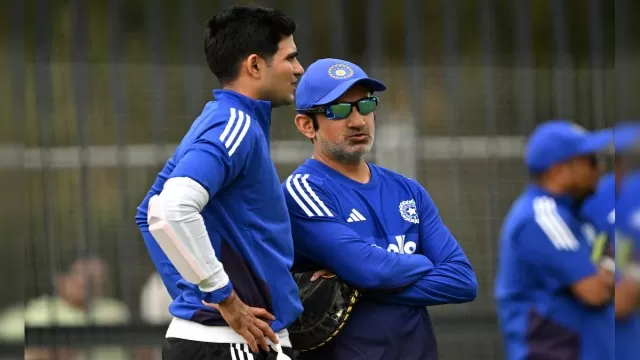
The announcement of India’s squad for the T20 World Cup 2026 has sparked intense debate, with one decision standing out above all others. Shubman Gill, long viewed as the future face of Indian cricket, has been left out, a move that challenges long-held assumptions about hierarchy and privilege in team selection.
While fans and former players have expressed surprise, the omission aligns seamlessly with head coach Gautam Gambhir’s publicly stated philosophy. Known for his blunt views and uncompromising standards, Gambhir has once again reinforced his belief that reputation cannot outweigh relevance in modern T20 cricket.
Gill’s omission sends shockwaves through Indian cricket
Shubman Gill’s exclusion is not merely about one player missing out on a global tournament. It represents a symbolic break from the era where certain names were considered indispensable, regardless of form or tactical suitability.
Gill, who has captained India in Tests and ODIs and served as vice-captain in T20s, was widely expected to be a guaranteed pick. His absence has therefore been interpreted as a defining moment in India’s evolving team culture.
Gautam Gambhir’s anti-star culture philosophy
Gautam Gambhir has long criticised what he calls “star culture” in Indian cricket, arguing that it creates complacency and stifles competition. Even before taking charge as head coach, he consistently emphasised that teams succeed through collective effort, not individual branding.
The Gill decision is the clearest manifestation of that ideology. Gambhir has made it evident that no player, regardless of stature, is immune to scrutiny when performance metrics and team balance are at stake.
Performance over reputation becomes the new standard
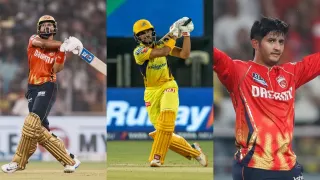
By prioritising players like Abhishek Sharma and Ishan Kishan over an established name, the team management has sent a clear signal. Selection is now driven by recent output, adaptability, and role clarity rather than past achievements.
This shift underscores a broader recalibration where players are evaluated on what they bring to the current tactical setup, not on what they represent commercially or symbolically.
Why Gill’s T20 game came under scrutiny
Shubman Gill’s technical elegance and consistency have served him well in longer formats. However, T20 cricket demands a different skill set, one that prioritises impact over aesthetics.
Questions have persisted about Gill’s strike rate during powerplays and his ability to maintain tempo under pressure. In high-stakes chases, these concerns have become more pronounced, making his role increasingly difficult to justify.
The end of the anchor role in modern T20s
Gambhir has repeatedly argued that the traditional anchor role has limited relevance in contemporary T20 cricket. With deeper batting line-ups and flatter pitches, teams now expect aggression from the first ball.
Gill’s natural inclination to build innings methodically contrasts with this philosophy. As teams push boundaries, players who cannot consistently score at a high strike rate face tougher selection calls.
Abhishek Sharma and Ishan Kishan embody new intent
The inclusion of Abhishek Sharma reflects the management’s appetite for fearless batting. Known for attacking bowlers early, Sharma fits the template of a powerplay aggressor capable of tilting games quickly.
Ishan Kishan’s recall further reinforces this shift. Despite past inconsistencies, his ability to score rapidly and apply pressure aligns more closely with the team’s desired approach.
Clear message to the dressing room
Gill’s omission has sent a powerful message within the Indian dressing room: no one is bigger than the team. Selection will be driven by how well a player fits the plan, not by their standing in the cricketing hierarchy.
This approach fosters accountability, ensuring that every squad member understands the importance of delivering consistent performances.
Judging performance, not potential
For years, Gill has been backed on potential, often seen as a generational talent destined for greatness. Under Gambhir’s regime, potential alone is no longer enough.
Recent dips in Gill’s T20 form, combined with concerns about adaptability on slower surfaces, made him vulnerable in a selection process focused on present impact.
Impact on leadership dynamics
Gill’s exclusion also alters the leadership equation. With Suryakumar Yadav leading the side, the absence of a designated deputy adds a layer of uncertainty.
While the team loses Gill’s experience, the management appears willing to trade familiarity for flexibility and tactical alignment.
A calculated risk by the management
Dropping a player of Gill’s stature is not without risk. Should India falter at the World Cup, this decision will inevitably come under intense scrutiny.
However, Gambhir seems prepared to accept that risk, confident that a team built on intent and fearlessness offers the best chance of success.
Lessons from past T20 successes
India’s 2007 T20 World Cup triumph is often cited as an example of what a fearless, no-frills approach can achieve. That squad thrived on hunger rather than hierarchy.
The current selection philosophy appears to draw inspiration from that blueprint, valuing adaptability and boldness over pedigree.
Changing expectations for Indian batters
The Gill decision reflects evolving expectations for Indian batters in the shortest format. Technical excellence alone no longer guarantees selection.
Players are now expected to dominate bowlers, exploit match-ups, and sustain high scoring rates regardless of conditions.
What this means for Gill’s future
Gill’s omission does not signal the end of his international career. Instead, it presents an opportunity for reassessment and evolution.
If he adapts his T20 game to meet the new demands, a return remains firmly within reach.
Broader cultural shift in Indian cricket
Beyond one selection call, this move signals a broader cultural shift. Indian cricket is increasingly embracing meritocracy over mystique.
By challenging entrenched notions of stardom, the management aims to build a squad driven by hunger, not entitlement.
High stakes heading into the World Cup
The upcoming T20 World Cup will ultimately judge the wisdom of Gambhir’s approach. Success will validate the philosophy, while failure will amplify criticism.
Either way, the Gill decision has already reshaped the conversation around selection and accountability.
A defining moment for Gambhir’s tenure
This bold call may come to define Gautam Gambhir’s early tenure as head coach. It encapsulates his belief that cricketing success is earned daily, not inherited.
By prioritising performance, intent, and team balance, Gambhir has drawn a clear line in the sand for the future of Indian T20 cricket.
Also Read: Pakistan Dominate India to Lift U19 Asia Cup Ahead of WC








Disclaimer
Possible11 is a sports news and analysis platform designed purely for entertainment and educational purposes. All match previews, player insights, and team analyses are based on publicly available information and expert opinions. We do not promote or support betting, gambling, or real-money gaming in any form. Users are encouraged to enjoy our content responsibly and use it for informational purposes only.

Give Your Feedback