

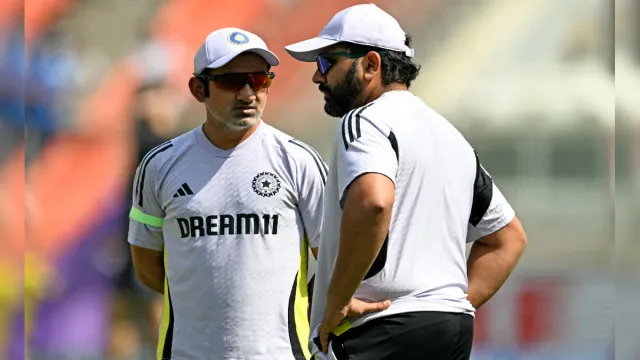
Indian cricket found itself at the centre of a fresh storm after Rohit Sharma was removed as India’s ODI captain despite recently guiding the team to ICC Champions Trophy glory. The decision, announced by the Ajit Agarkar-led selection committee, has sparked intense debate across cricketing circles, with fans and former players questioning both its timing and intent.
While the Board of Control for Cricket in India projected the move as part of a long-term roadmap towards the 2027 ODI World Cup, many observers believe the manner in which Rohit was relieved of leadership responsibilities lacked transparency. The controversy deepened after former India batter Manoj Tiwary suggested that head coach Gautam Gambhir may have influenced the decision, reigniting discussions about power dynamics within the team management.
As reactions continue to pour in, the episode has opened up broader conversations around leadership transitions, respect for senior players, and whether Indian cricket is prioritising future planning at the cost of proven success in the present.
Rohit Sharma’s captaincy exit shocks Indian cricket
Rohit Sharma’s removal as India’s ODI captain came as a surprise to many, particularly because it followed one of the most successful phases of his leadership. Under Rohit, India not only lifted the ICC Champions Trophy but also played a brand of fearless, attacking cricket that won admiration worldwide. His ability to balance aggression with calm leadership was widely seen as a key factor behind India’s recent success.
The selection committee, led by Ajit Agarkar, clarified that Rohit did not step down voluntarily. Instead, the decision was taken as part of a strategic reset aimed at grooming a younger leader for the future. However, critics argue that such a reset could have been managed more smoothly, especially considering Rohit’s form, fitness, and continued hunger to compete at the highest level.
Manoj Tiwary raises questions over influence and fairness
Former India cricketer Manoj Tiwary was among the most vocal critics of the decision. He openly questioned whether the call was purely a selection committee move or whether it involved behind-the-scenes influence. According to Tiwary, while Ajit Agarkar is known as a decisive leader, decisions of such magnitude are rarely made in isolation.
Tiwary suggested that the head coach’s inputs must have played a role, pointing towards Gautam Gambhir’s growing influence within the team setup. His comments struck a chord with fans who believe that clarity is missing around how much authority the coach holds compared to the selectors, especially when it comes to leadership decisions.
Gautam Gambhir’s role under the spotlight
Gautam Gambhir, known for his strong opinions and uncompromising approach, has always believed in bold decisions for the larger good of the team. Since taking over as head coach, Gambhir has emphasised discipline, accountability, and long-term vision. Supporters of Gambhir argue that such tough calls are necessary to ensure India remains competitive in future World Cups.
However, critics feel that Gambhir’s philosophy may clash with the need to respect senior players who continue to deliver at the highest level. The allegation that he influenced Rohit Sharma’s removal has intensified scrutiny of his role, with many calling for greater transparency about how decisions are jointly taken by the coach and selectors.
Ajit Agarkar and the selection committee’s rationale
Ajit Agarkar and the selection committee defended the move by highlighting the importance of planning ahead for the 2027 ODI World Cup. With Rohit nearing the latter stages of his career, the committee believed it was the right moment to hand over leadership responsibilities to a younger player who could grow into the role over the next two years.
Shubman Gill was named as the new ODI captain, a decision that aligns with the vision of building a core leadership group for the future. While Gill’s talent and temperament are widely acknowledged, the abrupt nature of the transition has left many wondering whether the change could have been phased rather than enforced.
Why Rohit Sharma’s removal feels harsh to many
One of the biggest points of contention is that Rohit Sharma’s removal came despite his proven track record as a leader. Winning two major ICC trophies and transforming India’s approach in white-ball cricket are achievements that few captains can match. For many fans and experts, removing such a captain without a clear decline in performance feels unjustified.
Manoj Tiwary echoed this sentiment by questioning the cricketing logic behind the move. He argued that doubting Rohit’s ability to lead India into the 2027 World Cup ignores his consistency, fitness levels, and mental strength. Such doubts, according to Tiwary, undermine the confidence of players who have given their best years to the national team.
Impact on team morale and fan sentiment
Leadership changes inevitably affect team dynamics, and Rohit Sharma’s removal is no exception. Senior players often draw confidence from stable leadership, and sudden changes can create uncertainty within the dressing room. Fans, too, have expressed disappointment, with many feeling emotionally connected to Rohit’s journey as captain.
Social media platforms have been flooded with reactions ranging from shock to anger. While some supporters back the idea of preparing for the future, others believe Indian cricket risks alienating its senior stalwarts by not handling transitions with greater sensitivity.
Balancing future planning with present success
The controversy highlights a recurring dilemma in modern cricket: how to balance long-term planning with respect for current success. While it is essential to prepare for future tournaments, critics argue that this should not come at the expense of sidelining leaders who continue to perform and inspire.
Rohit Sharma’s case has become a reference point in this debate, raising questions about whether Indian cricket places too much emphasis on age and projections rather than form and results. The manner in which future transitions are handled could define the relationship between players and management going forward.
What lies ahead for Rohit Sharma and Team India
Despite losing the ODI captaincy, Rohit Sharma remains a key figure in Indian cricket. His experience, batting prowess, and leadership qualities will continue to be invaluable, especially in high-pressure tournaments. Many believe that Rohit still has unfinished business and the drive to contribute significantly in the years ahead.
For Team India, the focus will now shift to how Shubman Gill settles into his new role and whether the leadership transition delivers the stability and success the management envisions. As the dust settles, one thing is certain: the debate over Rohit Sharma’s removal and Gautam Gambhir’s alleged influence will continue to shape discussions around Indian cricket’s future direction.
Also Read: Best in the World Casado Hails Joan Garcia After Barca Win








Disclaimer
Possible11 is a sports news and analysis platform designed purely for entertainment and educational purposes. All match previews, player insights, and team analyses are based on publicly available information and expert opinions. We do not promote or support betting, gambling, or real-money gaming in any form. Users are encouraged to enjoy our content responsibly and use it for informational purposes only.



Give Your Feedback