

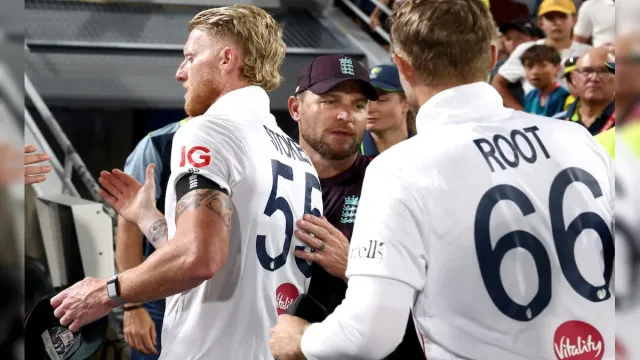
England arrived in Melbourne carrying the weight of history, pressure and doubt, and left with a victory that reignited belief while simultaneously sparking a fierce debate about the future of Bazball. The Boxing Day Test win was historic, ending a winless run in Australia that stretched back more than a decade. Yet even as celebrations unfolded, questions surfaced about whether this triumph truly validated England’s aggressive red-ball philosophy.
The dramatic nature of the match, played on a bowler-friendly surface and concluded inside two days, has divided opinion. While players and supporters hailed the breakthrough moment, critics argued the conditions reduced the contest to a lottery rather than a complete examination of Test cricket skills. As England now head to Sydney, the conversation has shifted from celebration to scrutiny.
At the centre of this discussion stand head coach Brendon McCullum and captain Ben Stokes. Their partnership has transformed England’s approach, but the Melbourne result has intensified calls for proof that Bazball can succeed consistently in all conditions, not just in moments of chaos.
A drought-breaking win with unanswered questions
England’s victory at the Melbourne Cricket Ground marked their first Test win on Australian soil since 2011, ending a drought of more than 5,000 days. For a generation of England players and fans, this alone made the moment unforgettable. The psychological barrier that had loomed over successive tours was finally breached.
However, the context of the win matters. The pitch offered extravagant assistance to fast bowlers from the opening session, producing 36 wickets, all to pace, and ensuring the match was effectively decided by who adapted quickest to extreme conditions. For some observers, that diminished the broader significance of the result.
The challenge now is whether England can translate this emotional breakthrough into sustained performance. A single win, no matter how symbolic, does not automatically erase structural issues that have haunted them throughout the series.
Michael Vaughan’s blunt assessment of the Melbourne Test
Former England captain Michael Vaughan did not mince words when assessing the Melbourne contest. He described the Test as a lottery, arguing that the conditions stripped the game of balance and reduced it to survival rather than strategy. In his view, the win should be celebrated, but not overvalued.
Vaughan stressed that a true measure of England’s progress would come in Sydney, where the expectation is for a more traditional Test match lasting close to five days. Only then, he argued, can England genuinely demonstrate growth under the McCullum-Stokes leadership.
This perspective has resonated with those who believe Bazball must evolve. Aggression, they argue, should be adaptable rather than rigid, capable of responding intelligently to different pitches, opponents and match situations.
The role of Josh Tongue and England’s pace attack
One unquestionable positive from Melbourne was the performance of England’s fast bowlers, particularly Josh Tongue. His five-wicket haul in the first innings set the tone, while his relentless pace and accuracy ensured Australia were constantly under pressure.
Tongue’s achievement carried added significance as he became the first England bowler in the 21st century to take a five-for in a Boxing Day Test at the MCG. His emergence provided a glimpse of England’s future bowling strength, especially in overseas conditions.
Yet the reliance on pace-friendly conditions also underlined a concern. England’s success was heavily tied to circumstances, raising questions about how the attack will fare when conditions are flatter and patience becomes more important than aggression.
Assessing the McCullum-Stokes era so far
Since Brendon McCullum took charge, England have played Test cricket with unprecedented freedom. The results have been mixed but often thrilling, with memorable wins offset by heavy defeats. Under this regime, England have won 25 of their 45 Tests, losing 17 along the way.
Supporters argue that the transformation goes beyond numbers. England now play with confidence, entertain crowds and remove fear of failure. Critics, however, point to tactical stubbornness and an occasional lack of adaptability as signs of immaturity.
The Ashes series in Australia has magnified these debates. Early defeats exposed flaws, while the Melbourne win has provided ammunition for both sides of the argument.
Why the Sydney Test looms so large
The final Test in Sydney has become more than a dead rubber. For England, it represents an audition for the future of their leadership and philosophy. A competitive performance, even without victory, could reinforce faith in the current direction.
Conversely, a heavy defeat would intensify scrutiny. Vaughan and others have warned that being comprehensively outplayed would force honest internal conversations about tactics, preparation and mindset.
For McCullum and Stokes, Sydney is about demonstrating balance. Showing aggression when appropriate, restraint when necessary, and maturity in decision-making could define the next phase of Bazball.
Maturity, reflection and the road ahead
One of the recurring criticisms of England’s current setup is a reluctance to admit mistakes. Vaughan has argued that denial would be more damaging than defeat, stressing the importance of reflection and learning.
There is widespread agreement that constant chopping and changing is not the solution. Stability, combined with honest assessment, offers a more sustainable path forward for English cricket.
If England can emerge from the Ashes with clarity about their strengths and weaknesses, the tour may yet prove valuable regardless of the series scoreline.
Is this the end of Bazball or its evolution?
The Melbourne win has not ended the Bazball era, but it may mark a turning point. Rather than blind aggression, the next iteration may require nuance, discipline and adaptability.
McCullum and Stokes have consistently spoken about long-term vision over short-term results. The challenge now is aligning that vision with reality, ensuring entertainment does not come at the expense of competitiveness.
As England prepare for Sydney, the stakes extend beyond one match. What happens next could shape the identity of England’s Test team for years to come, determining whether Bazball matures into a sustainable philosophy or remains a thrilling but flawed experiment.
Also Read: Arsenal Dare to Dream Again After Big Win Over Aston Villa












Disclaimer
Possible11 is a sports news and analysis platform designed purely for entertainment and educational purposes. All match previews, player insights, and team analyses are based on publicly available information and expert opinions. We do not promote or support betting, gambling, or real-money gaming in any form. Users are encouraged to enjoy our content responsibly and use it for informational purposes only.










Give Your Feedback