
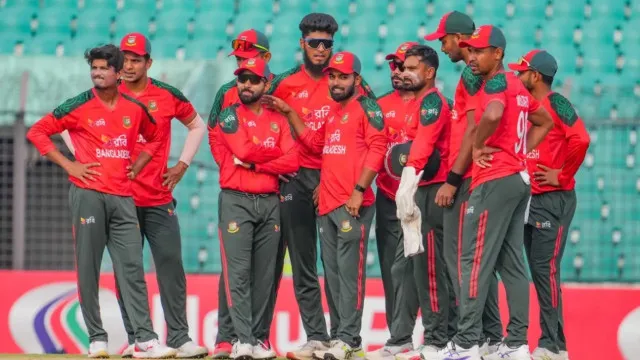
The question of Bangladesh’s participation in the 2026 ICC Men’s T20 World Cup has added an unexpected layer of intrigue to the build-up for the global tournament. With matches scheduled across India and Sri Lanka, discussions around logistics, security, and assurances have now moved into sharp focus.
While fans eagerly await high-intensity cricket, behind-the-scenes conversations between the Bangladesh Cricket Board and the International Cricket Council have taken center stage. The issue is not about cricketing readiness, but about confidence in safety, planning, and guarantees for uninterrupted participation.
The BCB’s latest statement has offered clarity on the tone of discussions, but not on the final decision. As uncertainty lingers, the situation has sparked widespread debate across the cricketing world.
BCB confirms ICC willingness to address concerns
The Bangladesh Cricket Board confirmed that it has received formal communication from the ICC following discussions held earlier in the week. According to the board, the ICC expressed its willingness to work closely with Bangladesh to ensure their full participation in the 2026 T20 World Cup.
The statement emphasized cooperation and dialogue, noting that the ICC has assured the BCB that its concerns will be taken seriously as part of detailed security and operational planning. However, the board stopped short of confirming whether Bangladesh will eventually travel to India for its fixtures.
This carefully worded response suggests that talks are ongoing, with both parties maintaining a professional and measured approach to resolving the issue.
Security concerns remain at the heart of the issue
The central point of contention revolves around safety and security for the Bangladesh national team while playing in India. The BCB has raised concerns and sought assurances that players and staff can operate in a secure environment throughout the tournament.
While the ICC reiterated its commitment to safeguarding all participating teams, the BCB reiterated that the well-being of its players remains its highest priority. This stance reflects a growing trend in international sport, where security considerations increasingly influence scheduling and hosting decisions.
The absence of a definitive answer on travel highlights the complexity of balancing competitive obligations with national board responsibilities.
Uncertainty over Bangladesh’s group-stage matches
Bangladesh are scheduled to play multiple group-stage matches in Indian cities, with one additional fixture listed outside their initial venues. These matches form a crucial part of their World Cup campaign.
Speculation has grown around the possibility of relocating fixtures or implementing alternative arrangements. However, the BCB statement did not clarify whether such options are actively being considered or negotiated.
Without confirmation, fans and analysts are left to wonder how the situation might evolve as the tournament’s start date approaches.
BCB denies reports of ICC ultimatum
In its statement, the BCB strongly rejected claims circulating in sections of the media that the ICC had issued an ultimatum to Bangladesh regarding participation.
The board categorically described such reports as false and unfounded, stating that they did not reflect the nature or tone of communication received from the ICC.
This clarification aimed to quell speculation and reaffirm that discussions remain constructive rather than confrontational.
Commitment to constructive dialogue
The BCB reaffirmed its intention to continue engaging with the ICC and relevant event authorities in a cooperative and professional manner. The goal, according to the board, is to arrive at a practical and mutually acceptable solution.
Rather than escalating the matter publicly, the board appears focused on behind-the-scenes negotiations, signaling respect for institutional processes.
This approach suggests that Bangladesh is keeping all options open while prioritizing long-term relationships within international cricket.
Context behind the standoff
The situation gained traction following broader developments involving bilateral relations and administrative decisions impacting Bangladeshi players in overseas leagues.
While no official reason was publicly specified for certain directives affecting Bangladeshi cricketers, the timing contributed to heightened sensitivity around travel and participation.
These developments have added to the complexity of an already delicate issue, making resolution dependent on diplomacy as much as logistics.
What forfeiture would mean for Bangladesh
Any refusal to play scheduled matches would carry significant consequences under ICC tournament regulations. Forfeiting points at the group stage would effectively end Bangladesh’s World Cup campaign before it begins.
Such an outcome would not only impact the team competitively but also have long-term implications for rankings, exposure, and player morale.
It is for this reason that both the ICC and BCB appear keen to find a workable solution rather than allow the issue to escalate into a standoff.
Historical precedents in ICC tournaments
Cricket history offers several examples of teams refusing to play matches in host nations due to security or political concerns. These incidents have often reshaped tournaments and left lasting impressions.
In some cases, teams were awarded walkovers or replacements were drafted in, while in others, compromises were reached through neutral venues.
These precedents highlight that while such situations are rare, they are not without historical context in ICC events.
Lessons from past World Cups
Past tournaments have shown that decisions driven by safety concerns can have unpredictable outcomes. Some teams benefited competitively, while others faced early exits despite valid concerns.
These instances underline the importance of early communication and transparent decision-making between boards and governing bodies.
The current situation involving Bangladesh appears to be following a similar pattern of negotiation rather than confrontation.
Balancing cricket, safety, and diplomacy
For the ICC, ensuring the smooth conduct of a global tournament requires balancing competitive integrity with the legitimate concerns of member boards.
For Bangladesh, the challenge lies in protecting players while honoring commitments to the international calendar.
This balance will ultimately determine how the issue is resolved in the coming weeks.
What lies ahead for the 2026 T20 World Cup
As the tournament approaches, clarity will become increasingly important for teams, broadcasters, and fans alike.
The ICC’s assurance of cooperation suggests flexibility, but the final outcome will depend on whether confidence can be restored through concrete measures.
Until then, Bangladesh’s participation remains a developing story that could shape the narrative of the 2026 T20 World Cup even before the first ball is bowled.
Also Read: This Is Peake BBL Two Reviews Save Star Before Last Ball Six












Disclaimer
Possible11 is a sports news and analysis platform designed purely for entertainment and educational purposes. All match previews, player insights, and team analyses are based on publicly available information and expert opinions. We do not promote or support betting, gambling, or real-money gaming in any form. Users are encouraged to enjoy our content responsibly and use it for informational purposes only.








Give Your Feedback