The Winter Session of Parliament has opened amid high anticipation, political tension, and a packed legislative schedule. With just 15 sittings planned, this session is shorter than usual, intensifying the urgency surrounding debates, reforms, and policy decisions. Both the ruling alliance and the Opposition have prepared for a charged atmosphere as critical issues—from electoral reforms to national security—take center stage.
As the government expresses readiness to discuss any matter within parliamentary rules, the Opposition is sharpening its demand for thorough deliberations. The Special Intensive Revision (SIR) of electoral rolls, Booth Level Officers’ concerns, and the fallout of the recent Delhi blast have become rallying points for Opposition parties seeking accountability. Meanwhile, the government aims to push through substantial reforms in energy, education, infrastructure, and taxation.
This session also carries political weight, being the first major parliamentary gathering after the Bihar Assembly election results. With major legislative agendas on the table and rising public scrutiny, the Winter Session is set to shape discourse on governance, transparency, and political cooperation.
Government’s Legislative Push
The government has laid out an extensive agenda that includes the introduction of 14 significant Bills. These proposals span crucial sectors, emphasizing modernization, regulation, and policy upgrades. Key among them is the Atomic Energy Bill, aimed at expanding private sector participation and strengthening regulatory oversight in the nuclear sector.
Parallelly, the Higher Education Commission of India Bill seeks to overhaul the higher education ecosystem by introducing a central regulatory body. The government also plans to introduce Bills targeting public health concerns, including proposals for excise duty and cess on tobacco, pan masala, and related products.
These reforms signal the government’s focus on long-term institution building and economic discipline. With specific timelines and limited sittings, the ruling alliance appears determined to fast-track its agenda while navigating parliamentary scrutiny.
Opposition’s Demands and Strategy
The Opposition entered the session with a sharp list of demands, prominently highlighting the Special Intensive Revision (SIR) of electoral rolls. Questions regarding procedural transparency, alleged irregularities, and the safety of Booth Level Officers have driven calls for an urgent debate.
National security is another major front, amplified by the recent Delhi blast that claimed 15 lives. Opposition leaders are pressing for a detailed discussion on security preparedness, intelligence coordination, and preventive mechanisms. Alongside this, issues such as the newly implemented Labour Codes, unemployment, federalism, and environmental challenges like air pollution have been placed at the forefront.
Leaders from various parties assert that the shortened session undermines meaningful discussions. The reduced number of sittings has become a political flashpoint, raising concerns about deliberative democracy and parliamentary accountability.
Political Exchanges and Statements
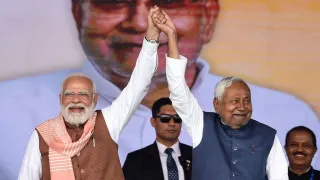
The session’s opening saw sharp political remarks. Prime Minister Narendra Modi urged for cooperation and a constructive atmosphere, emphasizing that Parliament should remain a place dedicated to “delivery” rather than “drama.” His comments referenced a pattern of heated political exchanges dominating legislative functioning in recent years.
The Opposition reciprocated with accusations that the government is minimizing democratic debate by curtailing the session's duration. Leaders from the Congress, DMK, and other parties argued that shorter sessions weaken institutional safeguards and limit legislative oversight.
With both sides standing firm, the opening day set the tone for a session likely to be marked by intense debates, procedural interventions, and strategic floor coordination.
Key Discussions and Cultural Proposals
Among cultural and symbolic matters, the government has proposed discussions on Vande Mataram and the celebration of its 150th anniversary. The Lok Sabha has allocated 10 hours for this discussion, though the date is yet to be finalized. The proposal has received mixed responses, with certain parties showing limited interest during the all-party meeting.
Beyond symbolic themes, the ruling alliance is expected to project its recent electoral victory in Bihar as a mandate for its legislative priorities. This political momentum is likely to shape discussions in both Houses, particularly on reform-centric Bills and national policy shifts.
Stakeholders across the political spectrum are preparing for multifaceted debates that combine governance concerns, cultural identity topics, and electoral narratives.
Session Duration and Scheduling Concerns
This year’s Winter Session comprises 15 sittings, making it one of the shortest winter sittings in recent times. Opposition parties have flagged this as an attempt to restrict the time available for debates on pressing national issues.
Sessions typically allow for deeper discussions on economic performance, foreign policy, administrative reforms, and constitutional obligations. A condensed calendar, as argued by Opposition leaders, risks oversimplifying complex issues and reducing parliamentary effectiveness.
The session runs from December 1 to December 19 and has been labeled a “brief session” by several Opposition leaders. The scheduling decision remains a point of contention and is expected to resurface throughout the upcoming debates.
Opposition Strategy Meetings
In preparation for this session, key Congress leaders—including Sonia Gandhi, Mallikarjun Kharge, and Rahul Gandhi—held a series of strategy meetings to coordinate floor action. The discussions emphasized united Opposition efforts on matters of democracy, federalism, and institutional roles.
The Opposition plans to challenge the government’s decisions and seek detailed debates rather than hurried discussions. With a spectrum of concerns ranging from governance to economic pressure, these strategy meetings aim to synchronize party positions for maximum parliamentary impact.
Political observers expect coordinated walkouts, adjournment motions, and targeted interventions as part of the Opposition’s tactical approach during the session.
Expected Impact of the Winter Session
The Winter Session is poised to influence India’s legislative direction heading into the next year. The government’s ability to pass its priority Bills will shape regulatory frameworks in energy, education, and industrial sectors.
Simultaneously, the Opposition’s questions regarding transparency, security, and democratic norms will define public discourse. The dynamic between these competing narratives will determine the session’s national significance.
With high-stakes legislation, political symbolism, and intense debate on the agenda, the Winter Session is set to leave a considerable imprint on India’s policy landscape and parliamentary tradition.
Also Read: A320 Solar Glitch Triggers Major Delays for Indian Airlines