The question sounds like something straight out of a geopolitical thriller, but right now, it is dominating real-world headlines: will Donald Trump drop a nuclear bomb on Iran tonight? Markets are reacting, global leaders are watching, and millions are refreshing news feeds for clarity.
Here is what we actually know and what remains uncertain.
Trump Statement on Iran War
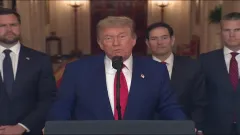
At a tense press conference, Donald Trump refused to confirm whether the situation with Iran is calming down or spiralling further. His exact words, “I don’t know… it depends what they do,” have only added fuel to speculation.
This ambiguity is strategic, but also dangerous. In global politics, uncertainty can act as both a deterrent and a trigger. By not committing to de-escalation, Trump leaves room for aggressive action, but also signals that Iran’s next move could determine everything.
Crucially, there has been no official confirmation or indication that a nuclear strike is being considered. Nuclear weapons are governed by extremely high-level protocols, and such a decision would involve far more than a spontaneous announcement.
Strait of Hormuz Deadline and Oil Impact
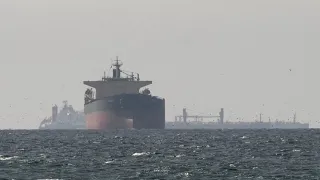
The real flashpoint right now is the Strait of Hormuz, one of the world’s most critical oil routes. Trump has reportedly set a deadline, 8 p.m. ET tomorrow, for Iran to reopen the passage.
Iran, on the other hand, has issued a chilling warning: if the U.S. strikes key infrastructure like energy facilities or bridges, the response will be “more severe and expansive.”
The Strait is not just a regional issue; it affects global oil supply. That is why crude oil prices briefly jumped from $112 to $114 per barrel during Trump’s speech. Even a hint of escalation sends shockwaves through international markets.
Death Toll and Current Situation
Behind the headlines is a devastating human cost. Reports suggest over 3,400 deaths across the Middle East, with the majority in Iran following joint Israeli and U.S. strikes. Lebanon and Israel have also seen casualties, along with U.S. service members.
This is not a hypothetical conflict; it is already active, volatile, and expanding.
However, there is a significant difference between conventional military escalation and nuclear warfare. A nuclear strike would mark a historic and catastrophic shift, likely triggering global retaliation and long-term consequences far beyond the region.
Will Trump Use Nuclear Weapons?
Short answer: There is no evidence to support that claim right now.
Long answer: The current situation is tense, unpredictable, and rapidly evolving, but nuclear action remains an extreme scenario. Political rhetoric, even when aggressive, often operates below that threshold.
What we are witnessing is a high-stakes pressure game where deadlines are being set, warnings are being issued, and military positioning is intensifying, but not nuclear deployment.
Why This News Is Trending?
In the age of real-time updates and viral speculation, extreme scenarios spread fast, and while the idea of a nuclear strike grabs attention, it is important to separate fear-driven narratives from verified developments, as the real risks lie in escalation of regional conflict, disruption of global oil supply, increasing civilian casualties, and diplomatic breakdowns, all of which are serious enough without jumping to worst-case assumptions.
So, will Trump drop a nuclear bomb on Iran tonight? Based on current verified information, no, there is no indication of that happening.
What is happening, however, is a dangerously fluid geopolitical situation where one decision could change everything. The coming hours, especially around the Strait of Hormuz deadline, will be critical. For now, the world watches, waits, and hopes that escalation stops short of the unthinkable.