Venezuelan opposition politics entered the global spotlight after Maria Corina Machado revealed that she presented her Nobel Peace Prize medal to former US President Donald Trump during a recent high-profile meeting. The disclosure immediately sparked international curiosity, blending symbolism, history, and contemporary geopolitics into a single dramatic moment. While Machado did not clarify whether Trump formally accepted the medal, the gesture itself carried deep political and emotional significance.
The meeting came at a crucial time for Venezuela, where opposition forces continue to challenge long-standing political structures and seek international backing. Machado’s action was not framed as a transfer of the Nobel honor, but as a symbolic expression rooted in historical parallels, democratic ideals, and recognition of perceived support for Venezuelan freedom.
As global observers dissect the meaning behind the presentation, the episode has opened fresh debates about political symbolism, international alliances, and the evolving role of global leaders in shaping democratic movements beyond their borders.
Maria Corina Machado and the Nobel Peace Prize Gesture
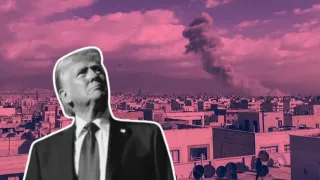
Venezuelan opposition leader Maria Corina Machado confirmed that she presented her Nobel Peace Prize medal to President Donald Trump during their meeting on Thursday. The revelation drew immediate attention due to the rarity of such an act and the stature of both figures involved. Machado emphasized that the gesture was deeply symbolic rather than procedural or legal in nature.
She did not specify whether Trump accepted the medal, leaving room for interpretation and discussion. However, the act itself was widely seen as an acknowledgment of Trump’s role, in her view, in supporting democratic aspirations and freedom for the Venezuelan people.
The Nobel Institute has previously clarified that Nobel Prizes cannot be transferred, shared, or revoked, reinforcing that Machado’s presentation was symbolic. Once awarded, the Nobel honor remains permanently with the recipient, regardless of how associated medals are displayed or gifted.
Historical Inspiration Behind the Medal Presentation
Machado explained that her decision was inspired by a powerful historical precedent involving George Washington and the Marquis de Lafayette. She recalled how a gold medal created for Washington was later presented to Lafayette, a key figure who contributed to independence movements across Venezuela, Colombia, Ecuador, Peru, and Bolivia.
Washington retained the medal until his death in 1799, after which it passed through his family. Decades later, during Lafayette’s farewell tour of the United States in the mid-1820s, the medal was gifted back to him, symbolizing enduring friendship, shared values, and mutual respect.
By referencing this story, Machado highlighted the idea that symbolic gestures can transcend generations, reinforcing alliances and common ideals even when formal power structures or legal ownership remain unchanged.
Trump and the Nobel Peace Prize Context
Donald Trump had publicly lobbied for the 2025 Nobel Peace Prize, citing his diplomatic efforts and foreign policy initiatives. However, the award was ultimately granted to Maria Corina Machado, recognizing her leadership, resilience, and advocacy for democracy in Venezuela.
Following the award announcement, the Nobel Institute reiterated its long-standing rules, stating that Nobel Prizes cannot be revoked, transferred, or shared under any circumstances. This clarification became particularly relevant after reports emerged of Machado presenting her medal to Trump.
The distinction between the symbolic medal and the institutional honor itself has been central to understanding the episode, ensuring that the integrity of the Nobel Prize remains intact.
High-Stakes Trump–Machado Meeting
The presentation occurred during a high-stakes lunch meeting between Trump and Machado, marking their first in-person interaction. The meeting reportedly lasted slightly over an hour and was viewed as a significant diplomatic engagement for the Venezuelan opposition leader.
Following the meeting, Machado held discussions with more than a dozen US senators from both major parties on Capitol Hill. These interactions underscored her efforts to build bipartisan support and maintain international attention on Venezuela’s political future.
Observers noted that the meeting signaled Machado’s intention to position herself as a central figure in any future transition of power in Venezuela, while navigating complex international dynamics.
White House Response and Political Realism
During the visit, White House press secretary Karoline Leavitt acknowledged that Trump had been looking forward to meeting Machado. She described the discussion as positive, while also emphasizing Trump’s realistic assessment of the political landscape in Venezuela.
According to Leavitt, Trump maintained that Machado did not currently have sufficient support to lead the country in the immediate future, reflecting a pragmatic view of Venezuela’s internal power structures.
Despite this assessment, the administration recognized Machado as a courageous and influential voice for many Venezuelans, reinforcing her standing as a prominent opposition leader.
Machado’s Journey and Political Struggle
Maria Corina Machado’s political journey has been marked by resilience and risk. She fled Venezuela in December through a daring seaborne escape, underscoring the personal dangers faced by opposition leaders in the country.
Her visit to the United States has been part of a broader effort to secure international backing and ensure her continued involvement in shaping Venezuela’s political future. Machado is actively seeking to influence decision-makers while competing for attention with representatives of the Venezuelan government.
The Nobel Peace Prize recognition has further elevated her global profile, strengthening her ability to advocate for democratic reforms and human rights.
Symbolism, Freedom, and International Messaging
Machado stated that she presented the medal as recognition of Trump’s commitment, in her view, to the freedom of the Venezuelan people. The gesture was framed as an expression of gratitude and shared ideals rather than a political endorsement or transfer of honor.
Symbolic acts like this often resonate beyond their immediate context, shaping narratives and public perception. In this case, the medal became a focal point for discussions on leadership, solidarity, and international influence.
As the story continues to circulate globally, it highlights how historical symbolism and modern politics can intersect, leaving lasting impressions even without formal outcomes.
Also Read: Counting Begins in 29 Maharashtra Municipal Corporations