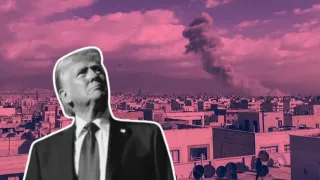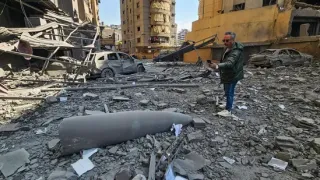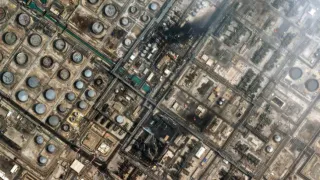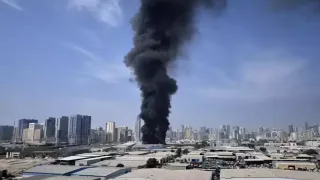
Prime Minister Narendra Modi on Monday described the situation in West Asia as a matter of grave concern, calling for restraint and dialogue amid rapidly escalating tensions in the region. His remarks came in the wake of the reported killing of Iran’s Supreme Leader Ayatollah Ali Khamenei in US-Israel strikes, a development that has triggered global reactions and sharp political debate within India.
While opposition leaders demanded a formal condemnation, the Indian government has chosen a calibrated response focused on peace and stability rather than direct comment on the killing itself. New Delhi’s position reflects a broader diplomatic approach that prioritizes strategic interests, regional balance, and the safety of millions of Indian citizens living in the Gulf.
As global powers weigh in with sharply worded statements or deliberate silence, India’s response has drawn attention for its measured tone. The question now dominating political discourse is not only about foreign policy, but also about how nations navigate complex geopolitical crises without compromising long-term national interests.
PM Modi Emphasizes Dialogue and Stability
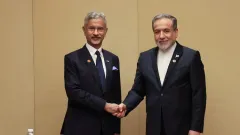
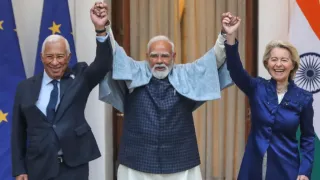
Addressing the media during a joint appearance with a visiting foreign leader, Prime Minister Modi reiterated that India stands for peace and stability. He stressed that dialogue and diplomacy remain the only sustainable solutions to disputes in volatile regions such as West Asia.
Rather than issuing a direct condemnation or endorsement of the events, the Prime Minister’s remarks highlighted India’s consistent policy framework. For decades, New Delhi has maintained that conflicts in the Middle East require de-escalation and political negotiation, especially when regional instability threatens global energy markets and diaspora safety.
This approach underscores India’s attempt to avoid rhetorical escalation while safeguarding its strategic partnerships across competing blocs in the region.
Global Reactions Reveal Divided Landscape
International reactions to Khamenei’s death have varied significantly. Several Western leaders issued strong statements, some openly critical of Iran’s previous leadership, while others framed the development as a turning point for the region. However, many governments refrained from issuing formal condolences.
Among major democratic economies, there has been no uniform pattern of mourning. Instead, statements largely focused on regional security, missile threats, and broader geopolitical implications. European leaders adopted cautious language, emphasizing stability and the avoidance of further escalation.
In the Gulf, responses were shaped by immediate security considerations. Some states reportedly closed diplomatic channels temporarily or reassessed their missions amid heightened tensions. Others maintained official silence while convening emergency consultations.
India’s Strategic Calculations
India’s position must be understood through the lens of national interest. The country maintains deep energy, trade, and security partnerships across the Middle East, including with Gulf Cooperation Council nations that host more than nine million Indian expatriates. Any sharp diplomatic statement could have implications for these relationships.
Energy security is another crucial factor. India imports a substantial portion of its crude oil requirements from the region. Stability in shipping lanes, particularly through strategic chokepoints, remains vital for economic continuity.
Additionally, India has historically sought to balance its relations between Iran, Israel, and Arab Gulf states. Maintaining neutrality during moments of high tension helps preserve diplomatic flexibility.
Historical Context of India-Iran Relations
Relations between New Delhi and Tehran have experienced both cooperation and friction over the years. While the two nations have collaborated on connectivity projects and energy trade, there have also been diplomatic tensions.
Government sources highlight instances where Iranian leadership commented on India’s internal matters, prompting formal diplomatic responses. These episodes created periodic strain in bilateral ties, reinforcing New Delhi’s preference for measured engagement rather than public alignment during sensitive moments.
India has also adjusted its energy procurement patterns in response to global sanctions regimes, diversifying imports to maintain compliance with international frameworks while protecting economic interests.
Opposition Criticism and Domestic Debate
The opposition has questioned the absence of a direct condemnation, framing it as a moral and political issue. However, foreign policy decisions often operate within a strategic calculus that weighs long-term interests against immediate political optics.
Supporters of the government argue that issuing emotionally charged statements during volatile situations could undermine India’s carefully balanced regional diplomacy. They emphasize that restraint does not equate to indifference, but rather reflects a pragmatic approach to international affairs.
The debate illustrates how global crises often reverberate domestically, becoming part of broader political narratives.
Impact on Regional Stability
The killing of a long-standing leader in a geopolitically sensitive region has wide-ranging implications. Analysts warn that retaliatory cycles, proxy engagements, or maritime disruptions could follow, affecting global markets and security dynamics.
India’s call for de-escalation aligns with its broader objective of preventing further destabilization. As a nation with significant diaspora presence and economic exposure in the region, it has a vested interest in ensuring that tensions do not spiral into prolonged conflict.
Maintaining communication channels with all stakeholders enables India to protect its citizens and economic priorities while advocating for peaceful resolution.
A Calibrated Diplomatic Approach
Foreign policy experts describe India’s response as calibrated silence rather than passive inaction. By avoiding direct condemnation, New Delhi retains strategic maneuverability. Such positioning allows it to engage constructively with multiple partners without being perceived as taking sides in a highly polarized conflict.
Historically, India has adopted similar approaches during major geopolitical flashpoints, choosing balanced statements centered on dialogue, restraint, and international law.
This diplomatic posture reflects continuity rather than deviation, signaling that India’s West Asia policy remains anchored in stability, energy security, diaspora welfare, and multilateral engagement.
What Lies Ahead?
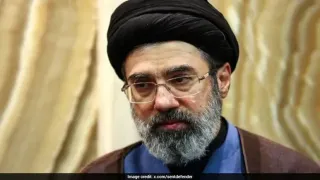
The coming weeks will likely shape the trajectory of regional politics and global alignments. Leadership transitions within Iran, evolving security calculations, and international negotiations will influence the broader Middle East landscape.
For India, the priority remains safeguarding national interests while supporting peace. Prime Minister Modi’s emphasis on dialogue underscores a strategic belief that sustainable outcomes emerge from negotiation rather than confrontation.
As the debate continues, India’s measured stance highlights the complexities of modern diplomacy, where silence can sometimes be as deliberate and consequential as speech. In a world marked by rapid escalation, calibrated restraint may well be the defining feature of responsible statecraft.
Also Read: Meet Ayatollah Alireza Arafi New Iran Interim Leader