The announcement of US military strikes on ISIS targets in Nigeria has drawn global attention, placing renewed focus on security challenges in West Africa and the role of international intervention. The decision, announced by US President Donald Trump, came amid mounting concerns over extremist violence and the targeting of civilians in vulnerable regions.
Trump framed the action as a decisive response to persistent militant attacks, particularly against Christian communities. His statement signaled a continuation of a hardline counterterrorism approach, positioning the strikes as both a warning and a demonstration of US military reach.
As reactions poured in from Nigeria and beyond, the development sparked debate over sovereignty, religious violence, and the effectiveness of foreign military involvement in addressing deep rooted security issues.
Trump Announces Powerful Strikes On ISIS Targets
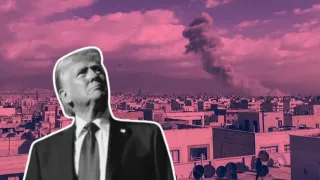
US President Donald Trump announced that he ordered powerful strikes on ISIS positions in northwest Nigeria, describing the militants as a serious threat to innocent lives. He stated that the group had been carrying out brutal attacks in the region, creating fear and instability.
According to Trump, the strikes were executed with precision and were aimed at dismantling terrorist infrastructure and leadership. He emphasized that the action reflected his administration’s resolve to confront extremist groups wherever they operate.
The announcement underscored a broader message that the United States would not remain passive in the face of violence linked to radical ideology.
Focus On Attacks Against Christians
Trump said the militants targeted by the strikes had been viciously killing civilians, primarily Christians. He presented the operation as a necessary step to halt what he described as ongoing slaughter and intimidation of religious communities.
The president reiterated that under his leadership, radical Islamic terrorism would not be allowed to prosper. This framing aligned the strikes with a moral argument centered on protecting vulnerable populations.
Such statements resonated with supporters who view strong military action as essential to deterring extremist violence.
Warnings Issued Months Before Action
The strikes followed months of public warnings from Trump, who had earlier cautioned Nigeria about potential US military intervention. In previous statements, he described the situation facing Christians in parts of Nigeria as an existential threat.
Trump had urged decisive action to stop escalating violence, signaling that failure to do so could prompt external involvement. These warnings set the stage for the eventual strikes.
By acting after issuing repeated alerts, the US administration positioned the operation as a response to continued inaction and worsening conditions.
Nigerian Government Confirms Cooperation
Nigeria’s Foreign Ministry confirmed that the strikes were conducted as part of ongoing security cooperation between Nigeria and the United States. Officials highlighted intelligence sharing and strategic collaboration aimed at countering terrorism and violent extremism.
The ministry emphasized that attacks on any religious or ethnic community contradict national values and undermine stability. It reaffirmed Nigeria’s commitment to protecting all citizens regardless of faith.
This cooperation signaled alignment between Abuja and Washington on the need to confront militant groups operating within Nigerian territory.
US Defense Officials Praise Joint Effort
US Defense Secretary Pete Hegseth publicly thanked the Nigerian government for its support and coordination in carrying out the strikes. He reiterated that the president had been clear about the need to end the killing of innocent civilians.
Hegseth noted that the Department of War remained ready to act against terrorist threats, suggesting that further operations could follow if violence persists.
These remarks reinforced the message that the strikes were part of a broader counterterror strategy rather than a one time action.
Pentagon Signals Military Capability
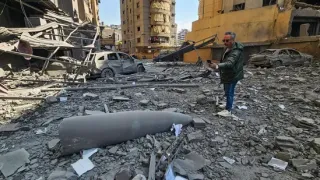
The Pentagon released visuals showing a projectile launch from a warship, underscoring the scale and sophistication of the military operation. Such imagery served to highlight US capability and readiness.
While details of the targets and damage were limited, the visuals added weight to official statements about the effectiveness of the strikes.
The display also functioned as a deterrent message to militant groups operating in the region.
Nigeria Responds To Genocide Claims
Earlier claims by Trump describing the situation in Nigeria as religious genocide were met with pushback from Nigerian leadership. President Bola Ahmed clarified that the country’s constitution guarantees protection for citizens of all faiths.
He stated that characterizing Nigeria as religiously intolerant did not reflect national reality, while still acknowledging security challenges posed by extremist violence.
The response highlighted the sensitivity surrounding international narratives and domestic sovereignty.
Complex Religious And Regional Dynamics
Nigeria’s population is broadly divided, with Muslims primarily in the north and Christians largely in the south. This demographic landscape has often intersected with political and security tensions.
Extremist groups have exploited regional disparities and grievances, complicating efforts to restore peace and unity.
Observers note that addressing violence requires not only military action but also long term social and economic solutions.
Debate Over Foreign Military Intervention
The US strikes have reignited debate over the role of foreign military forces in addressing internal conflicts. Supporters argue that decisive action is necessary to prevent mass casualties.
Critics caution that external intervention can exacerbate tensions or undermine local governance if not carefully coordinated.
This debate continues as Nigeria and its partners navigate the balance between security cooperation and national autonomy.
What The Strikes Mean Going Forward
The operation marks a significant moment in US involvement in West African security. It signals a willingness to act swiftly against perceived threats to civilians.
For Nigeria, the strikes highlight both the seriousness of the extremist challenge and the importance of international partnerships.
As the situation evolves, the effectiveness of the strikes and their impact on long term stability will remain under close scrutiny.
Also Read: Two Indian Students Murdered in Canada in Fortnight


About the Author:

Harshit Raj