Every year, millions of devotees across India and in Hindu communities worldwide wake before dawn, stand waist-deep in rivers and ponds, and offer water to a sun that has not yet risen. It is a breathtaking act of faith. That ritual is the heart of Chhath Puja, and in spring, it takes the form of Chaiti Chhath, a four-day festival of extraordinary devotion dedicated to Lord Surya (the Sun God) and Chhathi Maiya.
In 2026, Chaiti Chhath begins on Sunday, March 22 and concludes on Wednesday, March 25. If you are observing the fast, planning to attend the ghats, or simply want to understand the deeper meaning behind this ancient festival, here is everything you need to know.
What Is Chaiti Chhath?
Most people are familiar with the grand Kartik Chhath celebrated in October-November. Chaiti Chhath is its spring counterpart, observed during the Chaitra month of the Hindu calendar. While it may draw smaller crowds than the Kartik edition, it holds equal religious weight and, for those who observe it, arguably greater personal significance.
The festival is rooted in the belief that worshipping the Sun God and Chhathi Maiya with sincerity removes suffering, blesses families with prosperity, and grants the well-being of children. It is one of the few Vedic rituals that does not involve a temple or a priest as an intermediary. The devotee stands directly before nature's most powerful light source and prays. Raw, unmediated, and deeply moving.
Chaiti Chhath 2026 Full Schedule
Day 1 Nahay Khay March 22 Sunday
The festival opens with Nahay Khay, literally meaning bathe and eat. Devotees wake early, take a ritual bath, preferably in a sacred river, and offer prayers to Lord Surya alongside their ancestral deities. Purity, both physical and spiritual, is the theme of this day.
The meal on Day 1 is deliberately simple and sattvic: kaddu bhaat, a preparation of bottle gourd and rice cooked without onion or garlic. This is not just a dietary preference; it is a conscious shift away from tamasic food to prepare the body and mind for the demanding days ahead.
Day 2 Kharna March 23 Monday
Kharna is the day the fast truly begins, and it is a serious commitment. After sunset, devotees offer kheer (rice pudding made with jaggery) and flatbread to Chhathi Maiya, consume this as prasad, and then begin an unbroken 36-hour nirjal (waterless) fast. No food, no water. For observers, this is a test of both physical endurance and spiritual resolve.
The evening rituals on Kharna are intimate and deeply personal, held within homes, surrounded by family, with the aroma of jaggery kheer filling the air. It is one of those moments in Indian festive tradition that no photograph quite captures.
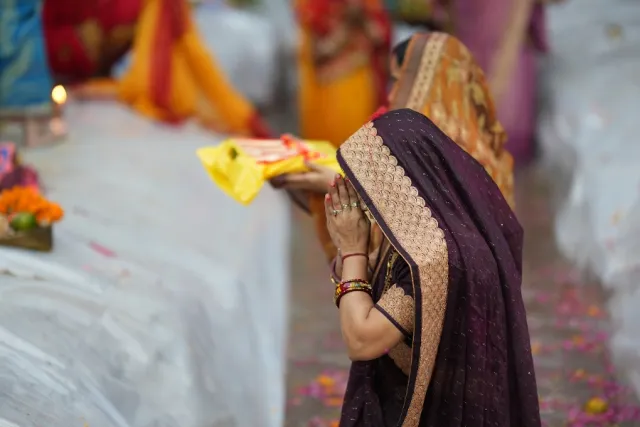
Day 3 Sandhya Arghya March 24 Tuesday
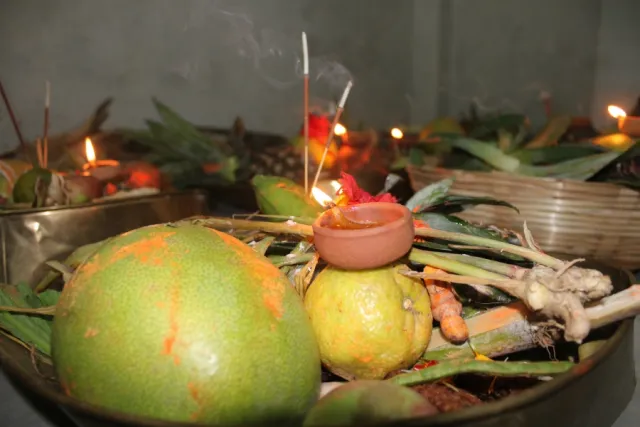
This is the festival's most iconic moment. As the sun dips toward the horizon, devotees gather at riverbanks, ponds, and water bodies carrying sup (bamboo trays) filled with fruits, thekua (a traditional wheat sweet), sugarcane, and other offerings. Standing in the water, they offer arghya, a ritual offering of water, to the setting sun.
In Delhi, sunset on March 24 is at 6:34 PM. Across the country, the timing varies slightly, but the image is universal: thousands of people silhouetted against a golden sky, hands raised toward a descending sun. It is visually stunning and spiritually profound.
There is a beautiful symbolism here that is easy to overlook. Offering prayers to the setting sun, when its power is diminishing, reflects gratitude not just for strength and abundance, but for the cycle of life itself, including endings.
Day 4 Usha Arghya and Paran March 25 Wednesday
The final day arrives before sunrise. Devotees return to the water's edge in the pre-dawn darkness and wait. When the first light breaks on the horizon, they offer Usha Arghya, water offered to the rising sun, welcoming its return and seeking blessings for the year ahead.
In 2026, sunrise on March 25 falls at 6:20 AM. After this offering, the 36-hour fast is formally broken in a ritual called paran, and the festival concludes. The relief and joy on devotees' faces at this moment is something festival-goers describe as transformative.
The Spiritual Core of Chaiti Chhath
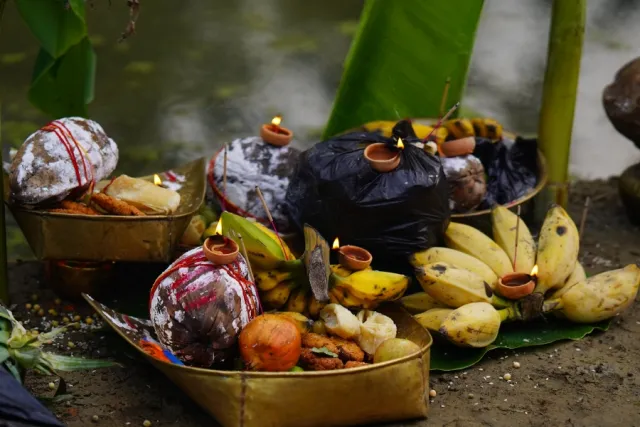
What makes Chhath Puja, in either season, unique in the landscape of Hindu festivals is its democratic, nature-centric character. There is no idol worship, no elaborate temple ritual, and no priestly hierarchy. The devotee, the water, and the sun are the only elements required.
Chhathi Maiya is understood not merely as a goddess but as the divine feminine energy that governs life, fertility, and the well-being of children. Sun worship in this tradition goes back to the Rigveda. Lord Surya is pratyaksha devata, the visible god, the one deity you can literally look up and see.
For the millions who observe this fast, many of them women praying for their children's health and their family's happiness, Chaiti Chhath is also a form of radical trust. The nirjal fast, the early morning cold, the public vulnerability of standing in open water, it is devotion stripped of comfort.
Chaiti Chhath 2026 runs from March 22 to March 25, moving through four spiritually distinct phases: Nahay Khay, Kharna, Sandhya Arghya, and Usha Arghya. Each day builds on the last, culminating in that extraordinary pre-dawn vigil when the faithful stand at the water's edge and greet the returning sun.
Whether you observe the fast yourself or simply witness the ghats come alive with devotion, Chaiti Chhath is a reminder of something quietly radical: that faith, at its purest, needs very little beyond sincerity, water, and light.
Also Read: When Does Chaitra Navratri 2026 Start?