Nine nights. Nine goddesses. One sacred spring. Here is everything you need to know before the festival begins on March 19.
There is a particular quality to the air in late March, something that feels like the earth exhaling after a long winter. Across India, temple bells grow louder, markets fill with marigolds and sindoor, and households begin the quiet work of ritual preparation. Chaitra Navratri is nearly here.
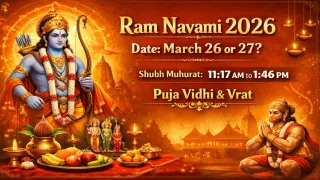
This year, Chaitra Navratri 2026 begins on March 19 and concludes on March 27, coinciding with Rama Navami, the birth anniversary of Lord Rama. For millions of devotees, these nine days are not merely a festival. They are a structured spiritual journey, a chance to press pause on the ordinary and step into something ancient and deeply nourishing.
What Is Chaitra Navratri and Why Does It Matter?
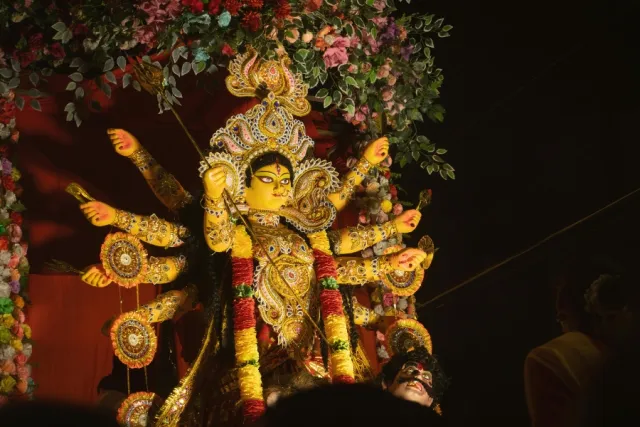
Unlike Sharad Navratri, which most people associate with garba and dandiya, Chaitra Navratri is quieter and more inward-focused. Observed in the Hindu month of Chaitra (typically March-April), it marks the beginning of the Hindu New Year according to the Vikram Samvat calendar. It is a time tied to the arrival of spring, the season of new beginnings, biological renewal, and spiritual receptivity.
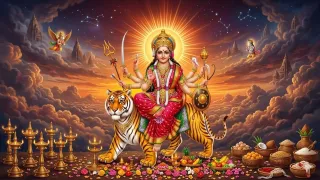
The festival is dedicated to the nine forms of Maa Durga, collectively known as the Navadurga. Each day of the festival is assigned to a different avatar of the goddess, each representing a distinct quality: maternal tenderness, fierce courage, cosmic wisdom. Together, they trace a map of the divine feminine in its full range.
The culmination on March 27 adds another layer of significance. Rama Navami, the birth of Lord Rama, falls on the ninth day, making it a moment where the devotional currents of Shaktism and Vaishnavism briefly converge.
Ghatsthapana Muhurat 2026
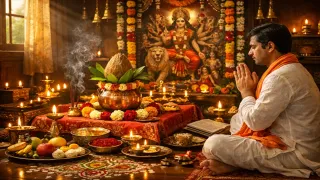
The festival opens with Ghatsthapana, the ritual installation of a sacred Kalash (an earthen pot representing the divine) that anchors the nine days of worship. Timing matters deeply here. Beginning at the right moment is believed to invite auspiciousness and ensure the prayers take root properly.
Primary Muhurat: March 19, 2026
Ghatsthapana: 6:52 AM to 7:43 AM
Abhijit Muhurat (alternative): 12:05 PM to 12:53 PM
The Abhijit Muhurat is considered especially powerful and can be used if the morning window is missed.
According to the Drik Panchang, the festival commences on the Pratipada Tithi of Shukla Paksha in the Chaitra month, the first day of the bright lunar fortnight. Once the Kalash is installed and decorated with mango leaves, a coconut, and threads, it becomes the anchor of daily worship throughout the nine days.
The Nine Days: Colours, Goddesses and Bhog Offered
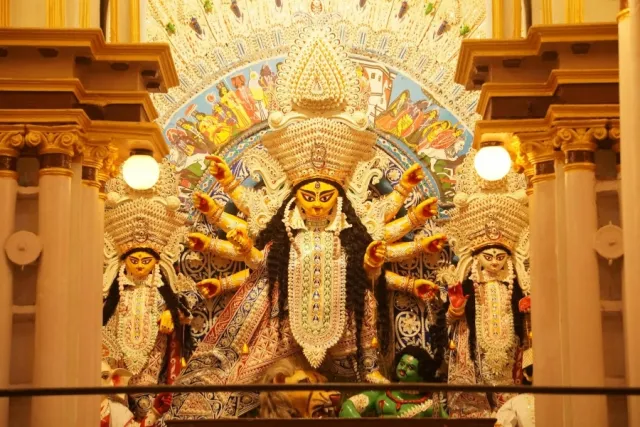
Each day of Chaitra Navratri 2026 carries its own colour, deity, and prescribed offering (Bhog). The colour you wear signals which form of the goddess you are honouring. It is a way to align your visible presence with your inner commitment. Below is the full nine-day breakdown:
Day 1: March 19, 2026 - Colour: Yellow
Goddess: Maa Shailputri
Bhog: Cow Ghee
Day 2: March 20, 2026 - Colour: Green
Goddess: Maa Brahmacharini
Bhog: Sugar and Panchamrit
Day 3: March 21, 2026 - Colour: Grey
Goddess: Maa Chandraghanta
Bhog: Milk-based sweets
Day 4: March 22, 2026 - Colour: Orange
Goddess: Maa Kushmanda
Bhog: Malpua
Day 5: March 23, 2026 - Colour: White
Goddess: Maa Skandamata
Bhog: Banana
Day 6: March 24, 2026 - Colour: Red
Goddess: Maa Katyayani
Bhog: Honey
Day 7: March 25, 2026 - Colour: Royal Blue
Goddess: Maa Kalaratri
Bhog: Jaggery
Day 8: March 26, 2026 - Colour: Pink
Goddess: Maa Mahagauri
Bhog: Coconut (Sandhi Puja)
Day 9: March 27, 2026 - Colour: Purple
Goddess: Maa Siddhidatri
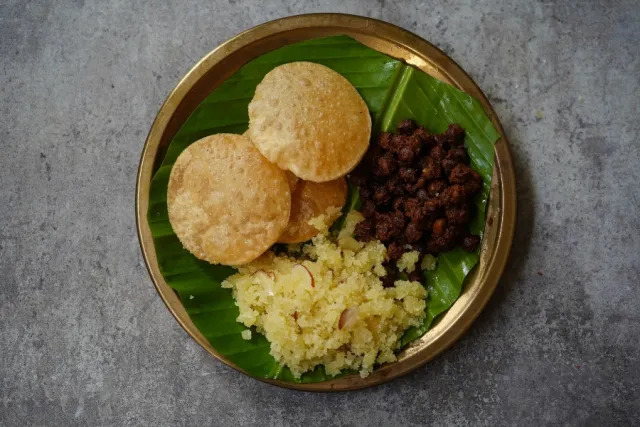
Bhog: Halwa, Puri and Chana
The Bhog offered to each goddess is not arbitrary. Each offering carries a symbolic resonance: ghee for vitality, jaggery for warmth and transformation, and coconut for purity. Many devotees prepare these offerings at home, believing that the sincerity of the preparation matters as much as the item itself.
"The nine nights are considered a journey toward spiritual enlightenment, each day a different stage of awakening."
Navratri Fasting in 2026: What to Eat and What to Skip?
Fasting during Navratri is not simply about skipping meals. At its core, it is a practice of sattvic eating, consuming foods that are pure, light, and conducive to mental clarity. The restrictions are designed to quiet the digestive system and redirect energy toward prayer and contemplation.
Foods Allowed During Chaitra Navratri 2026 Fasting
Sabudana (tapioca pearls)
Kuttu (buckwheat) flour
Samak rice (barnyard millet)
All fruits and sweet potato
Milk, curd, paneer
Almonds, cashews, raisins
Sendha namak (rock salt)
Coconut water and fruit juice
Foods to Avoid During Chaitra Navratri 2026 Fasting
Wheat, rice, barley, oats
Pulses and lentils
Onions and garlic
Meat, fish, eggs
Alcohol
Processed or packaged snacks
Regular (iodized) salt
Refined sugar sweets
The substitution of regular salt with Sendha Namak is one of the most recognisable features of Navratri fasting. Rock salt is considered minimally processed and closer to its natural state, in alignment with the festival's emphasis on purity. Similarly, swapping wheat rotis for kuttu or singhara rotis keeps the fast nutritionally grounded without crossing into tamasic territory.
Practical Tips for First-Time Fasters
If you are observing a complete fast for the first time, start hydrating well the night before. Sabudana khichdi, a classic Navratri staple made with tapioca, peanuts, and cumin, is filling enough to sustain energy through a morning of puja. Supplement with fresh fruit through the afternoon. Breaking the fast on heavily fried foods is a common mistake. Keep the Parana (breaking of fast on Navami) light and gradual.
Kanya Puja and Navratri Parana
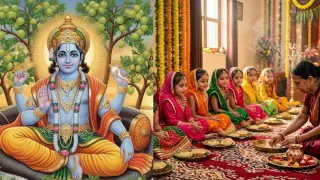
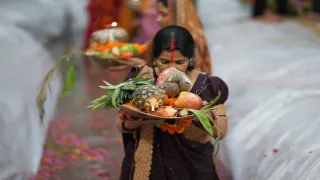
Two rituals bookend the final stretch of the festival. On Ashtami (March 26) or Navami (March 27), many households observe Kanya Puja, the ceremonial worship of nine young girls, each representing one of the Navadurga forms. The girls are invited to the home, their feet are washed, and they are served a ritual meal of puri, halwa, and chana, along with small gifts. It is a moment of unusual tenderness in the festival, the abstract divine made visible, briefly, as a child.
The fast formally concludes on Navami (March 27) after the Rama Navami puja, a fitting close, since the ninth day of Navratri aligns precisely with the birth of Lord Rama. The breaking of the fast, called Parana, is itself considered auspicious, done with gratitude and intention.
The Mantra at the Heart of Navratri
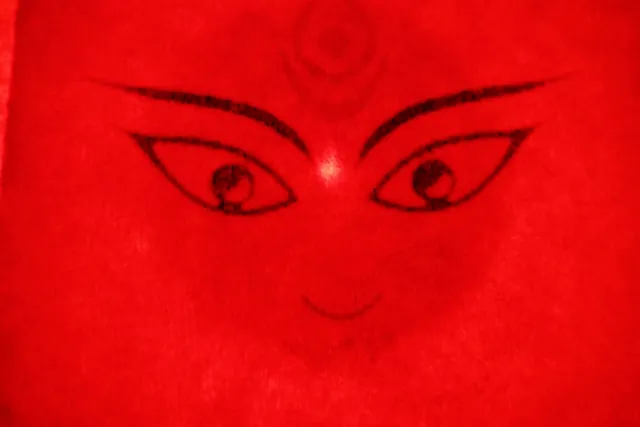
For those deepening their practice, chanting is considered one of the most potent tools available during these nine days. The mantra Om Aim Hreem Kleem Chamundaye Vichche is associated with the collective energy of Maa Durga in all her forms. Each beej (seed syllable), Aim, Hreem, Kleem, corresponds to different aspects of the goddess: wisdom, power, and magnetic grace. Repeated over a mala (108 beads), this mantra is said to clear mental noise and open channels of inner awareness that the busyness of daily life keeps closed.
Even for those who do not observe a strict fast, these nine days offer an invitation: to slow down, pay attention, and reconnect with something larger than the everyday. Whether you light a single diya or maintain the full ritual practice, Chaitra Navratri meets you where you are.
Chaitra Navratri 2026 runs from March 19 to March 27, opening with Ghatsthapana Muhurat at 6:52 AM and closing with Rama Navami on the ninth day. Each of the nine days honours a distinct form of Maa Durga through a specific colour, ritual offering, and prayer. Whether you observe the full fast, join the Kanya Puja, or simply pause to mark these nine days with intention, the festival offers a rare and generous invitation to begin the new Hindu year with spiritual clarity.