Every year, roughly two billion Muslims across the world mark a moment that goes far deeper than festive meals and new clothes. Eid al Adha 2026, expected to begin on Tuesday, May 27, is a festival rooted in one of the most quietly powerful acts of faith ever recorded in scripture: a father, a son, and a willingness to surrender everything to God. If you've ever wondered why this occasion is called the Greater Eid, the answer lies not in its size but in its weight.
When Is Eid al Adha 2026?
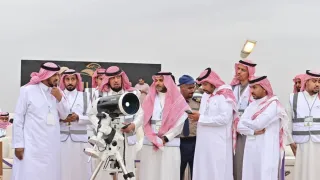
The festival is expected to start on May 27, 2026, corresponding to the 10th of Dhul Hijjah in the Islamic lunar calendar. But, and this matters no date is ever truly fixed until religious authorities sight the new crescent moon. The Islamic calendar moves roughly 11 days earlier each Gregorian year, which is why Eid al Adha shifts seasons over a 33-year cycle. This year, it lands in late May.
Here's the expected schedule:
| Islamic Date | Gregorian Date | What Happens |
|---|---|---|
| 9th Dhul Hijjah | May 26, 2026 | Day of Arafah |
| 10th Dhul Hijjah | May 27, 2026 | First Day of Eid |
| 11th–13th Dhul Hijjah | May 28–30, 2026 | Days of Tashriq |
One important note for communities in India, the UK, the US, and elsewhere: moon-sighting committees operate independently in different countries. Some follow Saudi Arabia's official declaration; others rely on local observation. This can shift the start date by 24 to 48 hours. Confirm your community's schedule with your nearest Islamic centre closer to the date, ideally a day or two before Dhul Hijjah begins.
The Story That Started It All
To understand why hundreds of millions of people sacrifice an animal on a specific morning every year, you have to go back to the source.
The Quran recounts how Prophet Ibrahim received a divine command in a dream to sacrifice his beloved son, Ismail. Rather than bargain or resist, both father and son accepted the trial with a stillness that has become one of Islam's defining examples of faith. At the moment of the act, Allah intervened, providing a ram as a substitute and declaring their devotion accepted.
It is a story about what happens when belief is tested at its most extreme point. The lesson isn't really about sacrifice in the literal sense; it's about the interior posture of total trust. The Quran puts it plainly: it is not the blood or the meat that reaches God, but the sincerity within.
That narrative is what believers step into every time Eid al Adha arrives. The ritual is a re-enactment, but more than that, it's a personal reckoning with the question: what are you actually willing to let go of for something greater than yourself?
The First Ten Days
Eid doesn't begin on the morning of the 27th. For observant Muslims, it begins on the 1st of Dhul Hijjah, ten days earlier.
Islamic tradition considers these ten days among the most spiritually valuable of the entire year, surpassing even the last nights of Ramadan in certain narrations. The recommended practice is to intensify worship: recite the Quran more frequently, increase acts of charity, and keep the remembrance of God, Takbir, Tahmid, Tahlil, constant on the lips.
The 9th of Dhul Hijjah, the Day of Arafah (expected May 26), is a particularly significant milestone. For the roughly two million pilgrims at Hajj, this is the spiritual centrepiece of the pilgrimage, the standing on the plain of Arafah where, tradition holds, supplications are answered and sins forgiven. For those not performing Hajj, fasting on this single day is described in hadith literature as expiation for the sins of two years: the past and the upcoming one.
If you observe nothing else in the lead-up, that fast is worth observing.
Qurbani: What It Is, and What It Actually Means
The word Qurbani comes from the Arabic root meaning to draw near. The sacrifice isn't about the animal, it's about proximity to God.
The Religious Requirements
The act is obligatory (or strongly recommended, depending on scholarly opinion) for every adult Muslim of sound mind who possesses wealth above a certain threshold, essentially, those who are not in financial hardship. The animal must be:
- A sheep or goat (minimum one year old), or a cow/buffalo (minimum two years), or a camel (minimum five years)
- Free from serious defects: not blind, severely lame, noticeably emaciated, or missing large portions of ear or horn
- Slaughtered after the Eid prayer on the morning of the 10th, not before
Cows and camels can be shared between up to seven people, which makes the practice more accessible for those in urban settings or with budget constraints.
The Three-Way Distribution
One of the most socially meaningful aspects of Qurbani is how the meat is divided into three roughly equal portions:
- One-third for your household
- One-third for friends, neighbours, and relatives
- One-third for the poor and those in need
This structure means that even families in the most economically marginalised communities in parts of South Asia, sub-Saharan Africa, or the Middle East receive nutritious meat on a day when the rest of the world is celebrating. For many, it may be the only time in the year they eat meat at all.
For Muslims living in Western countries or cities where performing the slaughter directly isn't feasible, donating to reputable Islamic charities to conduct Qurbani on their behalf in regions facing food insecurity is widely accepted and practised. Organisations like Islamic Relief, Human Appeal, and Penny Appeal coordinate these distributions globally.
The Morning of Eid: What to Expect
The day opens with the Salat al-Eid, a congregational prayer held in mosques or open grounds shortly after sunrise. There's a particular Sunnah practice of eating nothing before attending this prayer, which contrasts with Eid al-Fitr, where eating something sweet beforehand is recommended.
The prayer consists of two rakaat with additional Takbirs. After the prayer, the Imam delivers a khutbah (sermon) focused on the spiritual lessons of the occasion, sacrifice, gratitude, and charity. Then the community disperses for the slaughter, family meals, and the exchange of greetings.
Eid Mubarak. Blessed Eid will be heard millions of times over.
Children receive Eidi, which, across India, Pakistan, Bangladesh, and the wider diaspora, typically means envelopes of money from elders. New clothes are worn. Extended family gathers. The cooking starts early and continues late.
Eid al Adha vs. Eid al-Fitr
People outside the faith sometimes conflate the two Eids, understandably. Here's the short version:
Eid al-Fitr (expected around March 20, 2026) marks the end of Ramadan, the month of fasting. It's a celebration of personal discipline, spiritual purification, and the completion of a demanding obligation. The mood is joyful, and the day is short.
Eid al Adha is longer, stretching across four days, and carries a heavier ritual weight. The Qurbani sacrifice, the connection to Hajj, and the emphasis on communal giving all distinguish it. This is why classical scholars have referred to it as the Greater Eid, not because of its scale, but because of its depth.
Between Eid al-Fitr and Eid al-Adha 2026 lies approximately 70 days, a period that in many ways functions as a transition from inward reflection to outward action.
Eid al Adha 2026
There is something worth noting about the timing this year. Late May means long days in the Northern Hemisphere, especially across India, where the festival will fall during a warm, pre-monsoon stretch. Communities in North India, the Deccan plateau, and coastal cities will all observe under broadly similar conditions, though regional customs vary significantly.
In India, Eid al Adha, locally called Bakra Eid, is a public holiday. Streets around mosques fill before dawn. Butchers are in high demand. The smell of cooking meat drifts through neighbourhoods from midday onward. For Indian Muslims, this is as much a cultural and communal event as it is a religious obligation.
Eid al Adha 2026 is not simply a holiday to mark in a calendar. It's an annual reminder that faith, at its most authentic, is an act, something you do, not just something you profess. The story of Ibrahim and Ismail has survived fourteen centuries not because it demands the impossible, but because it speaks to something that every generation quietly recognises: the hardest surrenders are the ones that make us whole.
Whether you observe through prayer, through Qurbani, through feeding a neighbour, or through a quiet fast on the Day of Arafah, the invitation is the same. Come closer.
Eid Mubarak.
Also Read: Best Eid Outfit Designs for Women in 2026