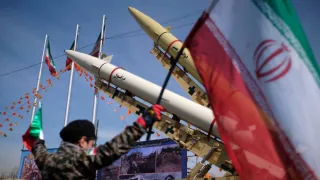
The Middle East is witnessing one of its most volatile escalations in recent years after coordinated military strikes by the United States and Israel on Iranian targets triggered a sweeping regional response. What began as targeted operations has rapidly evolved into a multi-front confrontation involving missile exchanges, drone attacks, air defence interceptions and major disruptions to global energy routes.
Washington has warned that “harder hits” are still to come, signalling that the campaign is far from over. Tehran has responded with sweeping retaliation, including the closure of the Strait of Hormuz and attacks on US and allied military and strategic facilities across the Gulf. Oil markets, aviation routes and diplomatic channels are all under immense strain as tensions intensify.
Here is a comprehensive look at where the situation stands across Iran, the Gulf, Israel, the United States and neighbouring countries as the conflict enters a critical stage.
Strikes Inside Iran and Rising Casualties
In Tehran, multiple high-profile sites have been damaged in the ongoing assault. The Islamic Republic of Iran Broadcasting complex was struck, sending shockwaves across the capital and raising questions about the symbolic and strategic objectives of the campaign. The historic Golestan Palace, recognised as a UNESCO World Heritage
Iranian authorities report that the death toll has surged past 787 people, including senior leadership figures and civilians. Among the casualties, state media confirmed the death of Supreme Leader Ayatollah Ali Khamenei, marking a turning point that could reshape Iran’s political future. Reports also indicate that a strike in southern Iran hit a girls school, killing at least 165 people, intensifying global concern over civilian safety.
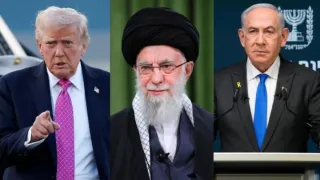
US officials, including Secretary of State Marco Rubio, have indicated that the most severe phase of strikes may still lie ahead. President Donald Trump stated that operations would continue until all US objectives are achieved, while Defense Secretary Pete Hegseth defended the campaign as necessary to cripple Iran’s naval capacity and halt its nuclear and missile ambitions.
Closure of the Strait of Hormuz and Energy Shockwaves
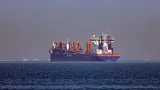
In a dramatic escalation, Iran’s Revolutionary Guard Corps declared the Strait of Hormuz closed, warning that any vessel attempting passage would be targeted. This narrow waterway is one of the world’s most critical energy chokepoints, through which a substantial percentage of global oil shipments transit daily.
The closure has triggered immediate volatility in global energy markets. Tanker operators are rerouting vessels, insurance premiums have surged, and governments worldwide are scrambling to assess the economic fallout. Any sustained disruption could drive oil prices sharply higher, deepen inflationary pressures and impact economies far beyond the region.
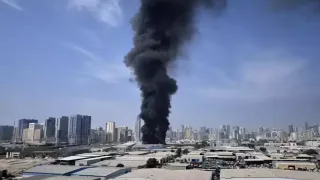
Energy facilities have also become targets. A satellite image showed efforts to control a fire at the Ras Tanura oil refinery in Saudi Arabia after a drone attack, highlighting the vulnerability of key infrastructure in the Gulf.
Escalation Across Gulf Nations
Qatar has intercepted dozens of Iranian ballistic missiles and drones amid direct spillover from the conflict. While many threats were neutralised, two missiles struck Al Udeid Air Base, which hosts US forces, and a drone damaged an early warning system. QatarEnergy, the world’s largest LNG producer, temporarily halted production following attacks, underscoring the strategic stakes.
In Kuwait, three US fighter jets crashed under disputed circumstances, with the US military claiming they were mistakenly shot down. Videos circulating online showed an F-15E Strike Eagle spiralling downward with visible flames and smoke. Kuwait condemned the targeting of the US Embassy, which has since closed indefinitely due to regional instability.
Saudi Arabia intercepted eight drones near Riyadh and Al-Kharj. The US Embassy in Riyadh was struck by at least two drones, causing a limited fire and prompting suspension of all services. Across Bahrain, Oman, Qatar, Saudi Arabia and the UAE, US citizens have been urged to depart immediately via commercial means.
Meanwhile, Dubai International Airport resumed a limited number of flights after widespread cancellations, signalling cautious efforts to stabilise aviation links.
Israel Defends Against Missile and Drone Barrages
Israeli air defence systems have been activated repeatedly as incoming Iranian missiles were detected. Interceptions lit up the skies over major cities, with authorities confirming multiple successful neutralisations. Two drones launched from Lebanon were also intercepted.
Prime Minister Benjamin Netanyahu defended the strikes on Iranian nuclear facilities, arguing that delaying action would have allowed fortified underground sites to become immune within months. He described the campaign as swift and decisive, asserting that Iran’s leadership must face consequences for its nuclear ambitions.
Hezbollah, operating from Lebanon, justified its own missile launches as retaliation for prolonged Israeli military activity and alleged ceasefire violations. Evacuation orders have been issued for dozens of areas in southern Lebanon amid fears of broader ground operations.
US Casualties and Strategic Messaging
The United States confirmed that six service members have been killed and 18 injured during the escalating hostilities. President Trump vowed retaliation while suggesting that boots on the ground may not be necessary. Vice President JD Vance emphasised that Washington seeks to fundamentally alter Iran’s strategic posture and ensure it can never acquire a nuclear weapon.
The State Department has issued urgent evacuation warnings for American citizens across much of the Middle East, citing serious safety risks. Diplomatic facilities have scaled back operations, and embassies in sensitive locations, including Jordan, have temporarily evacuated staff due to unspecified threats.
Regional and Global Implications
The conflict is reshaping the geopolitical landscape of the Middle East. With the Strait of Hormuz closed, energy supplies disrupted and missile exchanges ongoing, the risk of miscalculation remains high. Markets have responded with volatility, and international leaders are urging restraint to prevent a prolonged, multi-year war.
Humanitarian concerns are mounting as civilian casualties rise and infrastructure is damaged. Airspace closures, fuel shortages and disrupted supply chains threaten to compound the crisis. Analysts warn that even a short but intense confrontation could leave long-term economic and political scars across the region.
As Washington signals tougher action and Tehran demonstrates its capacity for regional retaliation, the coming days will determine whether diplomacy can regain traction or whether the conflict deepens into a broader and more destructive war.
Also Read: Trump: Arab Nations Want to Join Fight After Iran Attacks/a>