US-Israel war on Iran: The scent of gunpowder in the Middle East has grown even more intense. Four weeks after the launch of America's 'Operation Epic Fury,' the Gulf region stands on the brink of war—a scenario not witnessed since the Iraq War. On one hand, U.S. President Donald Trump claims to be engaged in dialogue with Tehran; on the other, a massive convoy of thousands of American troops is advancing to encircle Iran.
US Deploys Troops to the Gulf; Will a Ground Invasion Begin?
According to U.S. Central Command (CENTCOM), attacks have been carried out against more than 9,000 Iranian targets to date, ranging from ballistic missile units to the headquarters of the Revolutionary Guards (IRGC).
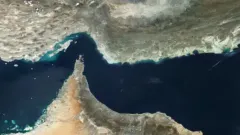
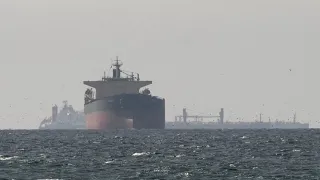
The Strait of Hormuz remains the primary flashpoint of this tension. In response to Iran's attempts to disrupt this vital waterway—through which 20 percent of the world's oil trade flows—the United States has now deployed the deadliest units of its Army and Navy to the front lines.
This move by the Pentagon makes it clear that the United States will not limit itself solely to airstrikes but will also not hesitate to conduct ground operations if necessary.
The Tripoli and Boxer Strike Groups—
The most critical component of the additional U.S. forces heading toward the Gulf is the 'Tripoli Amphibious Ready Group.' This group comprises the formidable U.S. warship 'USS Tripoli' and the 31st Marine Expeditionary Unit (MEU). Having departed from Sasebo, Japan, this fleet reached Diego Garcia by March 23, and it is expected to be deployed to the combat zone by late March or early April.
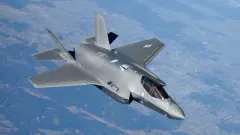
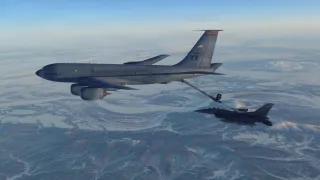
A distinctive feature of the Tripoli is that it functions as a light aircraft carrier. It is capable of deploying modern jet aircraft—such as the F-35B—as well as Marine troops, via both sea and air.
Right behind it, the 'USS Boxer' group has departed from California. It carries 2,200 troops from the 11th Marine Expeditionary Unit. Although it is expected to take until mid-April to cover the 22,200-kilometer distance from San Diego to the Gulf, its departure was expedited by three weeks ahead of schedule.
The 11th Marine Unit has a long and aggressive history in the Gulf region; it played a pivotal role in both the 1990 Gulf War and the 2004 Iraq campaign.
Troops Descend from the Skies—
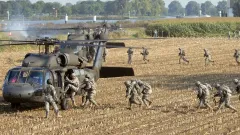
To reinforce the ground front, the Pentagon has ordered the deployment of approximately 2,000 troops from its elite unit—the 'Immediate Response Force' (also known as the 82nd Airborne Division)—to the Middle East.
Stationed at Fort Bragg, North Carolina, this division is considered one of the most agile military forces in the world. It possesses the capability to parachute into any corner of the globe within just 18 hours of receiving an order. Its primary objective is to seize airfields and prepare the ground for heavier forces arriving in their wake.
The history of this division spans from the Normandy Landings of World War II to the tensions that flared following the death of Qasem Soleimani in 2020. Although they do not initially possess heavy armored vehicles, their ability to infiltrate enemy territory and achieve strategic objectives is unparalleled. Tensions have been further heightened by a statement from Senator Marco Rubio, in which he indicated that the U.S. might have to enter Iran to secure nuclear materials.
A Contingent of 7,000 Additional Troops—
Currently, the USS Abraham Lincoln Carrier Strike Group is already active within the theater of operations. Although the USS Gerald R. Ford is currently stationed in the Mediterranean Sea for repairs, the arrival of these new troops will result in a massive surge in U.S. military strength. Comprising a mix of Marines and Airborne troops, a contingent of approximately 7,000 new personnel is joining this front. This combined force—featuring Marine commandos from the sea and paratroopers from the sky—points toward preparations for a 'pincer movement' (a two-pronged encirclement) against Iran.
Iran, too, has shown no signs of backing down. It has continued to launch daily drone and missile attacks against Gulf nations and U.S. bases. Despite the destruction of over 140 Iranian vessels and the looming threat to its oil reserves, Tehran remains unwilling to yield. In this context, the question arises: Are these 7,000 troops merely 'backup,' or do they constitute the initial wave of a major ground offensive? The coming two weeks are poised to prove decisive for the future of the Middle East.